Building a ‘Conservative Agenda for Democracy’
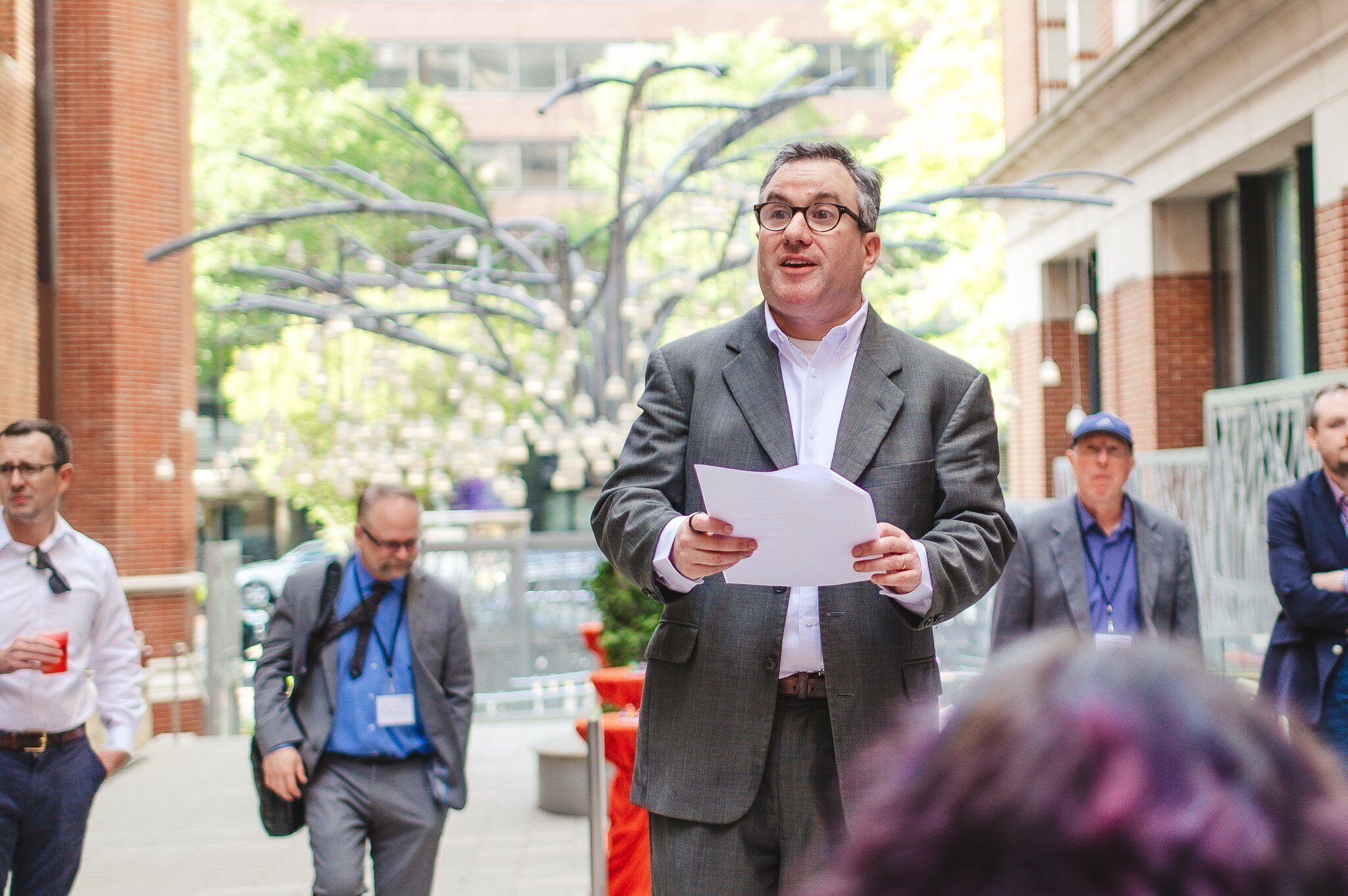
While many charity leaders see Donald Trump as an authoritarian bent on destroying civil society, Eli Lehrer sees a more nuanced picture. A center-right Republican, Lehrer has overseen impressive growth at his nonprofit think tank, the R Street Institute, as it works to advance policy positions in areas like electoral reform and climate change.
Lehrer sees Trump’s attacks on individual institutions such as Harvard University as “an enormous violation of democratic norms” that will set up Republican-favored charities for similar treatment in the future. But on other topics, Lehrer sees the left panicking over traditional Republican approaches.
Trump isn’t the first president to set out to shrink the federal workforce or roll back regulations, Lehrer points out. Trump’s reshaping of the Kennedy Center may be “slapdash” but is entirely within the law, Lehrer argues. Even the sharply higher taxes on big colleges in the tax bill are “probably bad policy” but hardly the mark of an authoritarian, Lehrer says.
How will we know if and when Trump crosses the line, Lehrer asks, when everyone on the left assumes he’s already done so?
“If you look at the mainstream media, everything is an outrage all the time,” he says. “When people see everything as an outrage, that makes it much harder to draw attention to the things that really are outrageous.”
Lehrer has experience discerning the outrageous from the disliked. He left his previous job heading the Heartland Institute’s finance and insurance program — taking his entire unit with him — after the think tank ran a billboard ad linking climate activists to the Unabomber.
That led to the founding of R Street in 2012, with five employees and $700,000 in annual revenue. Steady growth in areas such as voting, climate, criminal justice, and cybersecurity has led to a staff today of about 80 and annual revenue of around $15 million.
Roughly half of R Street’s support comes from foundations and half from corporations. The institute also regularly partners with charities, such as the National Wildlife Federation and Friends of the Earth.
When people see everything as an outrage, that makes it much harder to draw attention to the things that really are outrageous.
“There are things the for-profit sector cannot and will not do,” Lehrer says. “And, frankly, the existence of a broad nonprofit ecosystem in the United States offers constructive alternatives to big-government top-down approaches.”
R Street’s climate work illustrates its willingness to call out those impeding progress on both sides of the aisle. Activists that want bigger markets for clean energy stymie those efforts by insisting on regulations that prevent the construction of transmission lines that would help bring that energy to market, R Street maintains.
But Lehrer says he was also frustrated to see Trump criticize off-shore wind farms through unsubstantiated claims that the turbines are affecting whales. “That’s just a tactic from the left’s playbook.”
John Graham, an Indiana University professor and a former dean of its school of environmental affairs, says Lehrer has proven a willingness to work with moderates on both the right and left.
“Presidential administrations are going to come and go,” says Graham, a former senior official in the George W. Bush administration who now serves on R Street’s board. “I don’t think the Trump administration has had any impact on how R Street is designing its agenda.”
R Street’s latest project, related to the country’s 250th anniversary next year, will feature public celebrations, as well as some private events with a more defined purpose.
Says Lehrer: “We want to develop a conservative agenda for democracy.”