
Fastest-Growing Athletic Fundraisers Focus on Loyal Donors
Charities are finding meaningful ways to connect athletes with a cause and enlisting retailers to boost giving.

By Raymund Flandez
Contributor
May 19, 2013 | Read Time: 5 minutes
Large charities are stepping up their efforts to keep donations strong to walkathons, races, and other events in the wake of competition from smaller groups and the still slow economy, according to a new report from the Run Walk Ride Fundraising Council.
Gifts to the 30 most lucrative athletic fundraising events in the country last year were essentially flat at nearly $1.7-billion, which masked the wide variation in how large, well-established groups did compared with new ones. Thirteen events faced giving losses that ranged from $100,000 to $26.9-million in just one year.
None felt that impact more than the Susan G. Komen’s 3-Day walk program. Donations plunged 32 percent as walkers showed their displeasure with the breast-cancer charity’s controversial decision early in the year in stopping—and then reinstating—support for Planned Parenthood’s cancer screenings.
The lackluster showing proved a boon to the American Cancer Society’s Making Strides Against Breast Cancer walk, which may have seen those Komen supporters switching their fundraising loyalties, says David Hessekiel, president of the Run Walk Ride Fundraising Council.
The cancer group raised $68-million in 2012, $7-million more than the year before.
Rise in Participation
Although the 10 biggest charity events still account for $7 out of every $10 raised, the share has declined from a high of 75 percent five years ago. During that time, other groups, many that are smaller, started to raise more money.
For instance, the fastest-growing athletic fundraising event last year was Pelotonia, an Ohio cycling event supporting cancer research that saw revenue jump by nearly 30 percent in 2012, to $16.9-million, raised from just 6,200 riders.
In contrast, the much larger Light the Night Walk’s fundraising event run by the Leukemia & Lymphoma Society grew more slowly. Its donations in 2012 increased 10 percent from the previous year, to $55-million, raised from 200,000 participants.
Many nonprofits that raise money through athletic events don’t foresee a drop in participation this year even as the Boston Marathon bombings have prompted stepped-up security measures, such as deploying bomb-sniffing dogs. Some charities are even predicting a rise in participation as more people dedicate themselves to run or walk for a cause to honor those who suffered in Boston.
Even so, organizers of this year’s fundraising events plan to continue many of the strategies that worked last year. Among them:
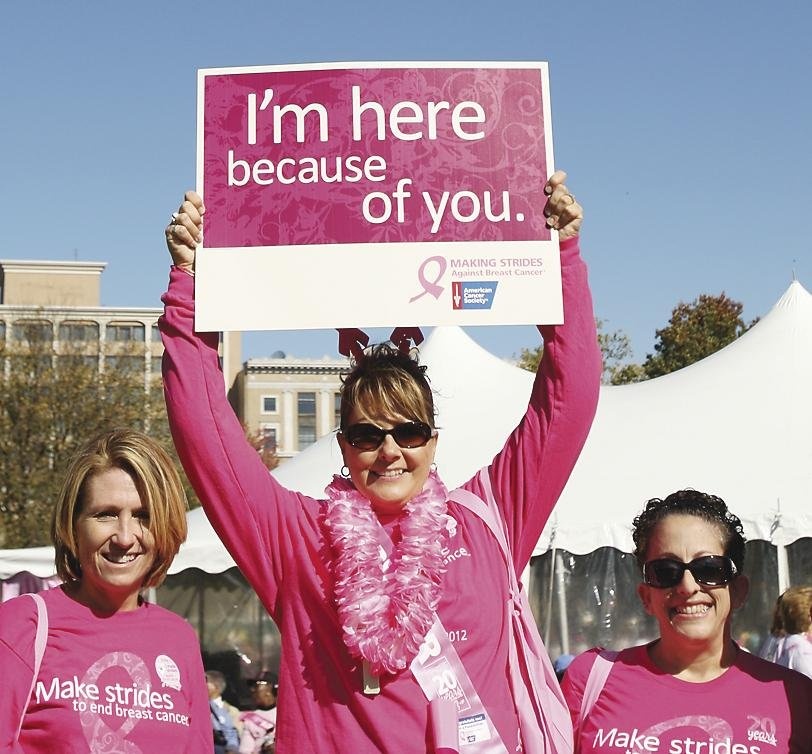
Create meaningful experiences for participants. The American Cancer Society, found from its surveys that participants wanted a better way to connect emotionally with the organization and the cause. The feedback guided its efforts to make sure cancer survivors were easily recognized and heard during the walkathon events.
“We consider our survivors the celebrities of the event,” says Susan Petre, interim nationwide director of the Making Strides program.
So the charity invited local residents who had fought cancer to be recognized at the start or during the event. It also gave them placards to hold up for walkers to see that said: “I’m here because of you.”
Seeing such tangible proof that the walkathon mattered was important, Ms. Petre says.
“Survivors are our strongest fundraisers. They understand the need for funding to find a cure for the disease.”
Increased support for local fundraising. The American Diabetes Association, whose Step Out: Walk to Stop Diabetes raised $24.1-million, up 17.6 percent in 2012, focused on drumming up donations for its walkathon by working with grocery stores and gas stations.
The charity’s national office provided guidance and encouraged stores to get their cashiers to persuade customers at the checkout counter to support the association’s event. After people made a gift, the stores put their names on a sneaker-shaped flier and posted it in a prominent place in the store. The strategy was a “revenue stream that we haven’t really pursued in the past, but it has high fundraising potential,” David McShea, managing director of Step Out, says.
For instance, at the Alberstons chain of grocery stores, the charity’s fundraising staff talked to store employees about setting fundraising goals and creating incentives during the campaign. Staff members monitored how much individual stores were raising, sometimes asking store managers to do more promotions about the campaign. Cashiers who solicited the most donations received gifts and prizes. The top stores sometimes received trophies and pizza parties.
Rodman Ride for Kids, an umbrella group that raises money for social-service nonprofits, saw an 11-percent growth in 2012, to $10-million. The group held in-person monthly meetings for two days to help the 48 charities that participate in the bike ride to collaborate and share their fundraising ideas. Later this month, it is holding its first seminar to train board members to learn fundraising techniques.
Focus on the most loyal supporters. The American Diabetes Association lavished extra attention on walkathon participants who raised $1,000 or more. Staff members offered words of support to those donors as they sought contributions from friends and relatives before the event.
In addition, the group’s chief executive sent them a personalized letter and held a conference call to thank them for the difference they were making.
In 2012, the number of people who raised at least $1,000 through the charity’s walkathons climbed to 2,500, from 2,200 the previous year, and the total raised went from $5.5-million to $6-million.
More important, two-thirds of those who raised $1,000 or more in 2011 did so again the next year. Usually the charity gets only 30 to 35 percent of people who raise at least $1,000 to stay involved another year, Mr. McShea says.
Find a way to tie the event to the charity’s mission. The American Diabetes Association increased online contributions in support of walkers by 20 percent when it offered donors the opportunity to give symbolic amounts, such as $26 to represent the 26 million people who have the disease in the United States, or $245 to represent the $245-billion that diabetes costs the U.S. in health resources and lost productivity.
The symbolic amounts, plus some streamlining of Web pages to make it easier to donate, helped lift the amount collected online from $5.5-million in 2011 to $6.5-million last year.
Says Mr. McShea: “I think it connects with people emotionally.”




