Fears Increase That Economic Woes Will Hurt Endowments, Survey Shows

By Julian Wyllie
Contributor
May 1, 2019 | Read Time: 2 minutes
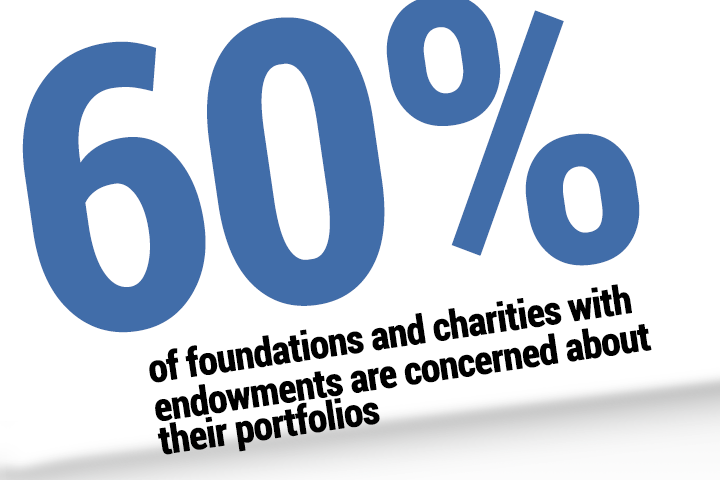
Sixty percent of foundations and charities with endowments fear that a global economic slowdown may arrive soon and could pose a threat to their investment portfolios, up from just 21 percent last year who thought so, according to a new survey.
Other findings from the report said respondents plan to allocate more to impact investing, private equity, emerging markets, and real estate. The survey was completed by NEPC, an investment consulting firm. Respondents include higher-education institutions, private foundations, public charities, and nonprofit health-care organizations.
“How NEPC looks at it, we do think we’re kind of going into the end of the strong equity cycle that we’ve had,” said Cathy Konicki, a partner. “That’s the balance endowments and foundations have to weigh. Investors need to find returns somewhere.”
Konicki said there is potential for equity growth by taking some risks, and investors seem to agree. Forty-one percent said they would allocate more to private equity. Interest is also growing for emerging markets over other asset classes.
“China makes up a huge amount of the emerging-markets growth,” Konicki said. “There’s also the thought of investing in the local companies. It’s those companies producing the washing machines and the dryers that will benefit from consumer demand and middle-class growth.”
Konicki was surprised to see that only 5 percent of respondents said they would plan to increase their cash holdings. If investors want to take more risks, she recommends balancing portfolios with higher-quality liquid assets, like treasury notes, as a safety valve.
Fundraising Concerns
Nearly a quarter of respondents said that giving to donor-advised funds and was cutting into direct cash donations.
Konicki said organizations are trying to adapt to the times as donor-advised funds become more popular for wealthier donors. (If there is indeed a significant slowdown, another recent study suggests that DAFs may be valuable during recessions.)
The survey also showed that respondents were growing cold to cryptocurrency and were unsure if it would ever become a viable way to raise money consistently. There have not been many high-profile donations using blockchain technology, although recently XRP tokens valued at $25 million were given to San Francisco State University to endow chairs in financial technology and entrepreneurship.
“When you look at the world of donors, there’s still a very small percentage who would even have cryptocurrency,” Konicki said, adding that the cryptocurrency market “is still in its infancy.”
Twenty-eight percent of organizations in the survey said their overall charitable fundraising increased, while 55 percent saw no significant change last year.
Survey respondents largely shrugged off the impact of tax reform. Thirty-six percent said they were slightly concerned it would affect fundraising, 18 percent were unsure, and 13 percent weren’t concerned at all. None said they were greatly concerned.