
Federal Volunteer Agency Seeks to Do Better Job of Managing Operations

By SUZANNE PERRY
Contributor
October 29, 2009 | Read Time: 4 minutes
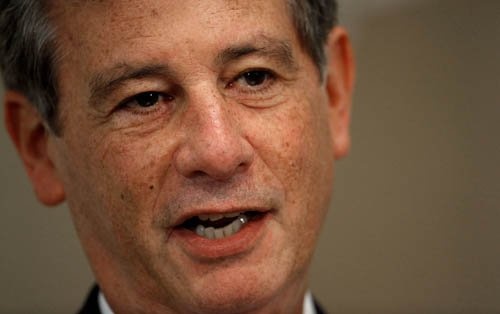
Stephen Goldsmith, a longtime political hand, has agreed to take a job that might be considered both a blessing and a curse.
As the interim board chairman of the Corporation for National and Community Service, Mr. Goldsmith presides over an agency that is set to get more money and new responsibilities, thanks to the Edward M. Kennedy Serve America Act, which expanded national-service programs and created a new fund to provide money to innovative nonprofit groups.
The agency’s mission has never been hotter, with interest in volunteerism exploding across the country.
At the same time, it has been without a permanent chief executive for almost a year, its bipartisan 15-member board is missing seven members, and Sen. Charles E. Grassley, the senior Republican on the Senate Finance Committee, is investigating the way its former inspector general, Gerald Walpin, was fired last June.
Furthermore, the House of Representatives in July voted to trim President Obama’s 2010 $1.15-billion budget request for the corporation by $90-million. Rep. David Obey, the Wisconsin Democrat who chairs the appropriations committee, has said the agency needs to demonstrate it has improved its internal operations enough to handle a bigger role.
Mr. Goldsmith was a Republican mayor of Indianapolis and a campaign adviser to President George W. Bush. He joined the corporation’s board in 2001, becoming chairman, and was the vice chairman until Alan Solomont’s term ended this month. He moved up temporarily to the top job just as the White House nominated a new person for chief executive — Patrick Corvington, an official at the Annie E. Casey Foundation.
In an interview with The Chronicle, Mr. Goldsmith discussed the challenges the corporation faces as it prepares to grow while also putting its house in order. His basic assessment: the agency has organizational problems, but is turning itself around. “The management is not where I would like it to be, but we’re professionally run and, compared to other federal agencies, in pretty good shape,” he says.
With a grant from the W.K. Kellogg Foundation, the corporation hired a consulting firm to help it locate a management consultant who can “come in and reorganize the corporation, look at its business processes, look at how we relate to the field” — a process Mr. Goldsmith hopes will be completed by spring.
In the inspector-general controversy, the White House is accused of failing to properly notify Congress before firing Mr. Walpin. Mr. Goldsmith says board members are in some ways “bystanders” in the current battle, which is largely between Senator Grassley and the White House, which has declined to provide some information on grounds it is “privileged” communication.
Excerpts of the interview with Mr. Goldsmith follow.
How do you respond to concern that Mr. Corvington, while very popular in the nonprofit world, does not have experience managing a big organization?
The most important thing the CEO can do is manage the external relationships with some help from the board chair and be knowledgeable about day-to-day management. Patrick has the intelligence and skill to do that. But there are a few important things he needs. One is a high-quality group of people, and so far I think the Obama administration has done a nice job of finding quality people. The [chief information officer, Mary Cadagin,] is really terrific, for example. She’s completed an outsourcing of the servers that I’ve been asking to have accomplished for six years.
How do you respond to Congressman Obey’s complaints?
Some of those issues were related to bad staff work on our part last year, keeping the congressman and his staff apprised. Some of it has been management hiccups. But when I took over [in 2001], we weren’t even getting clean audits. We’ve gotten clean audits nine years in a row. In President Bush’s red light-green light [performance measurement] process, we got only one red light out of the 10.
This staff group handled the Recovery Act’s allotment of new AmeriCorps slots exceptionally well. My guess is we got our funds out appropriately faster than almost any other agency, with great enthusiasm from the field that received those spots.
My goal is to keep us from the active management of 5,000 [nonprofit organizations]. At some point, the federal oversight … becomes so intrusive that it’s counterproductive. The definition of accountability I’m hoping in the future for Congress will be what did we accomplish, not just how many rules did we impose about how nonprofits should operate.
Does the corporation have a plan for helping groups deal with an increase in volunteers?
Over the last few years, I’ve tried to reorient our focus to that as our mission. We really ought to be thought of as the infrastructure for volunteer management, not as the source for volunteers.
Even though AmeriCorps members get paid — very badly, like $10,000 a year — they still do get paid.
So we ought to think about them as the infrastructure to manage volunteers. We started a few years ago to say, how many volunteers are you leveraging with your AmeriCorpsVista grant? The number was like a million and a half the last I looked.




