

September 18, 2011 | Read Time: 2 minutes
It was not the rampant bloodshed they had witnessed that most bothered Kosovo natives fleeing their embattled land a dozen years ago during the breakup of Yugoslavia. Nor was it the lack of adequate food, medicine, and shelter.
Boredom was what plagued war-stricken refugees at a camp in Macedonia. Caroline Baron learned this about living conditions at the camp as she listened to a story on NPR, and she decided to take action the only way she knew how.
As a producer whose acclaimed independent films include “Capote” and “Monsoon Wedding,” Ms. Baron was used to doing the seemingly impossible with very little time and money. In just six weeks, she sought support from Hollywood, found a film crew with a truck in Eastern Europe, and obtained permission from the United Nations High Commissioner for Refugees to screen movies for the Kosovars.
The effort was so successful that the U.N. commissioner asked Ms. Baron to organize a similar program in Africa in 2000 to entertain refugees from Burundi, Rwanda, and Sudan at the Kakuma camp in Kenya. And so FilmAid International was born, a New York charity that screens films like “Up” and “The Wizard of Oz.”
Liz Manne, the charity’s executive director and co-founder of the film company Fine Line Features, says the organization today still very much embraces the fleet, cash-strapped methods typical of independent film making.
Working in Haiti, Kenya, and Thailand, the group runs on a budget of just under $1.5-million, with two-thirds of that total coming from governments or U.N.-related agencies and the rest from private sources.
To date, FilmAid has reached more than 2 million people and now screens films for over 100,000 people each year.
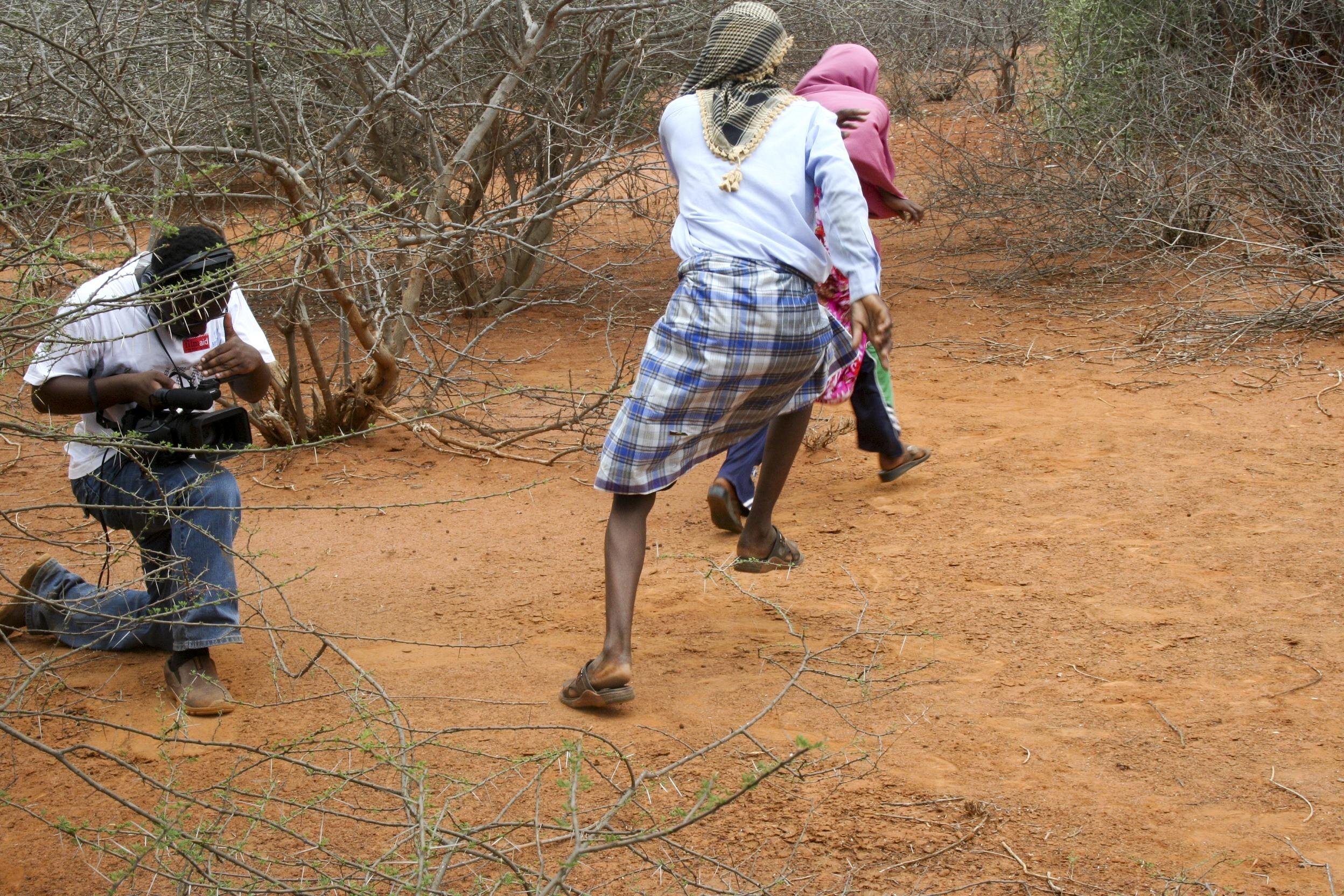
Its focus has expanded beyond holding large outdoor screenings for refugees. The group also creates informative films and conducts video workshops for displaced people that discuss local issues such as how to prevent the spread of AIDS and sexual violence.
Young local people and refugees are employed and trained to make their own films and operate FilmAid programs.
FilmAid’s training programs can offer both salvation and career for the participants. One alumnus of the organization’s program at Kakuma, Simon Lokwang Paul, was hired by FilmAid in 2008 as one of its training facilitators. He now hosts his own music television show on SSTV, the state-owned station of Southern Sudan.
But at its core, FilmAid’s most affecting contribution is to provide escapism for those who are rarely afforded such a luxury. “For people who are in truly dire circumstances,” says Ms. Manne, “being able to be transported away from their troubles is an unbelievably cherished escape.”
Here, the filming of a scene for “Not Me But the Law,” a movie intended to raise awareness about sexual assault, in the Dadaab refugee camp, in Kenya.




