
For Charities Seeking to Boost Their Online Giving, It’s Game On

By Raymund Flandez
Contributor
January 15, 2012 | Read Time: 6 minutes
The “donate” button is so 2011.
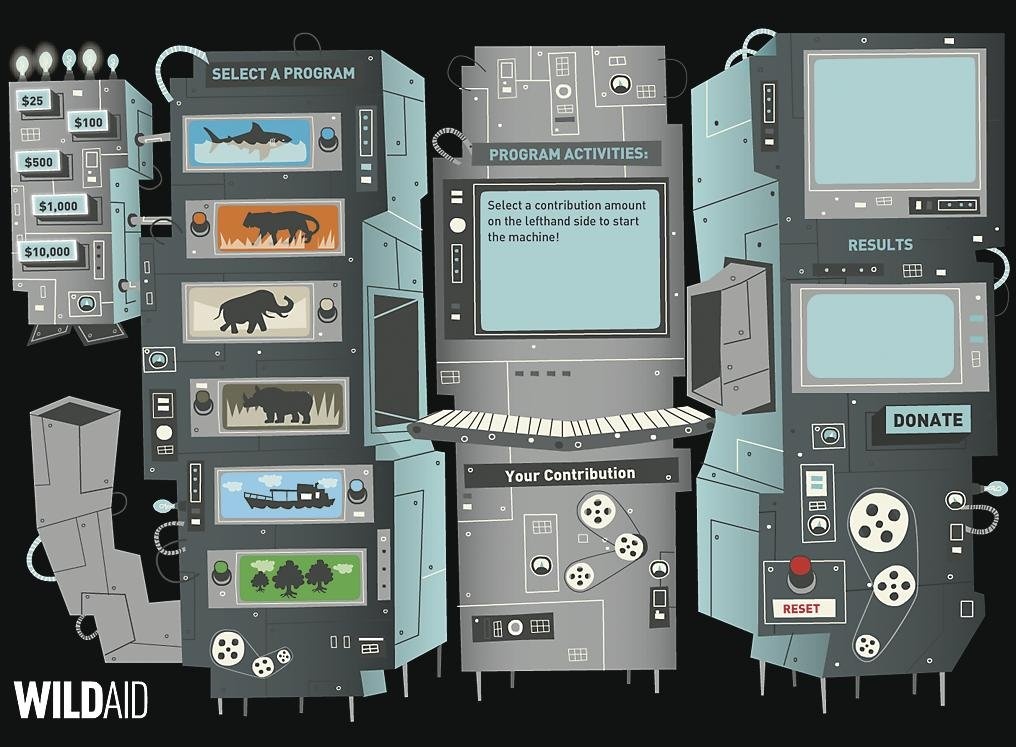
Now a charity’s supporters can do much more: They can build a virtual gingerbread house for Ronald McDonald House Charities, play with a virtual toy from their smartphones as they donate to Toys for Tots, or see how their donations are put to work at a virtual vending machine operated by the conservation group WildAid.
Online games and other interactive efforts helped many charities increase donations during the crucial last months of the year, and many experts now expect to see far more of them in the coming year.
Giving donors a specific activity, such as making gifts or signing petitions online, makes their experience exciting and keeps them involved with the charity in a way that is more powerful than a standard donation page, says Claire Kerr, director of digital philanthropy at Artez Interactive, an online fundraising-software company in Toronto.
But not all observers are sold on the durability of the new approach.
“It sounds fun and exciting, but it depends on who the donor audience is and if it’s going to connect with them,” says Farra Trompeter, vice president of Big Duck, a fundraising and communications consultancy in New York. “Or will it feel like a gimmick?”
Ms. Kerr agrees that the interactive efforts can go overboard. Potential donors could become distracted by long quizzes or flashy animations in interactive games that take a long time to load on a screen, she says: “If no one hits the ‘donate’ button because they don’t finish the game, then that’s a really big problem.”
Holiday Rituals
Charities that released new interactive efforts during the holidays often played off real-life traditions. For example, at Ronald McDonald House Charities, a nonprofit that provides temporary housing for the families of young hospital patients, visitors to the charity’s Web site who donated at least $10 had the chance to beautify one of three virtual gingerbread houses. Modeled after real Ronald McDonald Houses, the gingerbread versions could be festooned with candy canes, gumdrops, icing, and peppermint wheels. The donor’s name was then displayed with the decorated house, which could also be shared with friends and relatives through social networks.
Before coming up with the online game, the charity’s fundraisers asked themselves: “How can we make the donation experience compelling and bring our mission to life?” says Cristine Gasiorowski, a spokeswoman for the group.
The number of donations her group received grew 18 percent during the holiday season over the same period in 2010. By December 31, it had raised all $550,000 of its goal using the gingerbread-house builder.
Currently, the charity is reviewing whether to continue the holiday campaign in 2012 but is hoping to include gaming elements in its other fundraising efforts this year.
Mercy Corps, the global relief nonprofit in Portland, Ore., presented holiday shoppers with its Gift-o-Matic Facebook application.
Visitors could get suggestions on what to buy friends and relatives based on ideas from the charity’s online alternative-gift catalog. Donors could pick from a list of possible answers to the statement: “I am looking for a gift for ____ who is passionate about ___.”
Suggested gifts for “Dad” who is interested in the “environment” included a vegetable garden for $40 and an irrigation canal for $250. The “gifts” were sent as donations to Mercy Corps in the friend’s or relative’s name.
“Saying ‘donate’ over and over again isn’t effective, especially on Facebook and Twitter,” says Megan Zabel Holmes, the charity’s online marketing officer. “In order to stand out from all the noise, we had to be a little bit creative.”
The Gift-o-Matic app has generated more than 10,000 page views since it was started mid-November, helping Mercy Corps realize a 15-percent jump in online contributions during the 2011 holiday season over the previous year’s.
Dancing Bears
The Marine Toys for Tots Foundation worked with eBay to create a holiday-giving experience both real and virtual through the Give-a-Toy Store.
The two organizations set up two temporary shops—one in New York, the other in San Francisco—with store displays featuring huge screens filled with teddy bears, trains, and other toys.
Next to each toy was a dollar amount and a QR, or quick-response, code; passersby could point their smartphones at the code and, through a phone app, go directly to a Web site where they could donate. Once they paid that amount, they could immediately see the toy come alive: a teddy bear might dance and cheer, or a train might run along its tracks.
The creative approach contributed to a successful year that saw Toys for Tots cross the $2-million mark in online donations, which increased by 20 percent in 2011. (The charity says it’s unclear if eBay will be doing the store displays again in 2012.)
“That’s the kind of business we’re trying to cultivate here,” says William Grein, vice president for marketing and development. “We’re trying to appeal to the younger set, who does more of the online giving.”
Other groups didn’t rely so much on holiday themes.
The Web site of WildAid, a conservation charity in San Francisco, displays an interactive online-donation infographic that it describes as a “Willy Wonka-esque vending machine.”
By pressing certain buttons and choosing one of six WildAid programs, potential donors can read and watch how certain dollar amounts—from $25 to $10,000—are spent by the organization. For instance, a $100 contribution to WildAid’s marine program can fuel a ranger boat to patrol environmentally sensitive areas in Indonesia and the Galapagos.
The whole contraption makes noises, delivers a video related to the program, and alerts supporters to a blinking “donate” button.
“We find that our donors and supporters are very results-driven and very serious about return on investment,” says Erin Sullivan, director of development. “We wanted to give a tool with which they’d be able to see the impact of their donation at different monetary levels.”
In the past, WildAid supplied donors with written materials and charts that “were quite static” and “weren’t interactive,” she says. “More and more of our donors are going online to make donations.”
The charity started using the approach in November and says it is a key reason donations jumped 25 percent last year compared with 2011. Some longtime donors increased their gifts by as much as 50 percent. WildAid’s own investment? Less than $10,000.
“This was an innovative way for us to tell our story and to interact with, connect with, and engage with our supporters,” Ms. Sullivan says.
WildAid plans to keep adding updates to the machine graphic throughout the year.
Picturing Donors
Sometimes charities appeal to donors’ vanity as part of their interactive, game-like bids. In one case, an organization used that motivating force to prod online visitors to recruit their friends as supporters.
Charity: Water has started a project called Water Forward, a virtual book that shows pictures of its donors in a grid-like gallery.
Supporters “pay it forward” by giving $10 to get their Facebook profile picture or that of a friend in the Water Forward book. Every additional $10 allows them to include more of their friends’ pictures. The organization, which builds wells to provide clean water for people worldwide, is using Facebook to alert people when someone makes a donation on their behalf.
Since November, the effort has raised $265,000. “It’s a new opportunity to target different donors that weren’t involved before,” says Sarah Cohen, Charity: Water’s communication and development manager. “It’s an experiment in giving.”




