
For Muslim Charities and Donors, Peak Giving Season Is Now

By Rebecca Koenig
Contributor
June 28, 2016 | Read Time: 6 minutes
By the start of summer, many U.S. nonprofits are preparing for the all-important year-end fundraising season. But Muslim charities are already in the middle of their most lucrative time of year: the holy month of Ramadan.
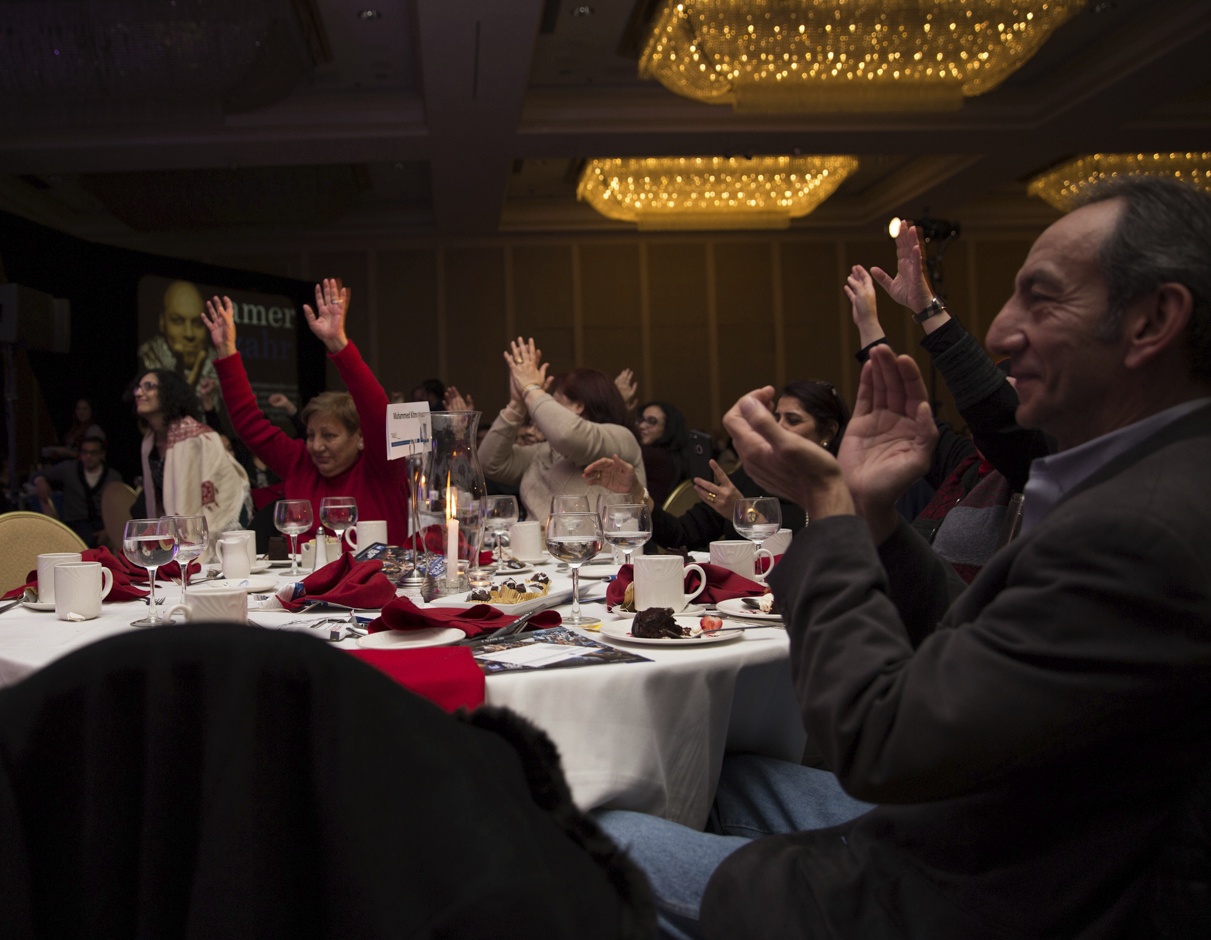
Just before sunset at a recent Islamic Relief USA fundraising dinner outside Washington, men and women sat in a ballroom listening to appeals and occasionally stealing glances at platters heaped with plump dates. Videos of frightened Syrian refugees and thirsty residents of Flint, Mich., prompted many to pull out their checkbooks. But so did something less tangible: their Muslim faith.
Charitable giving is one of the five key obligations of Islam, known as “pillars” of the faith. And many Muslims give their donations during Ramadan, a month of fasting (daily from dawn to sunset) and spiritual purification during which “any good action you do is highly rewarded by God,” says Maha Elgenaidi, chief executive of Islamic Networks Group, a nonprofit that promotes cross-cultural understanding.
Ramadan falls on different dates each year, and this year it runs from June 5 to July 5. Muslim charities in the United States have long taken advantage of this month of generosity; some raise 50 percent or more of their total annual donations in a couple of weeks. But Ramadan-inspired giving is not restricted to religious groups or causes, and those in the American Muslim community say other nonprofits, especially in regions with large Muslim populations, could benefit from the outpouring of charity if they learn how to court Muslim donors.
“The Muslim community as a market, they’re completely untapped,” says Amany Killawi, co-founder of LaunchGood, a crowdfunding site for Muslim causes and creative projects. “I think it’s a huge opportunity.”
High Rates of Giving
There are 3.3 million Muslims living in the United States, according to the Pew Research Center. Although they currently make up only 1 percent of the population, they are predicted to surpass Jews as the second-largest religious group in the country by 2040, Pew estimates. Areas with large Muslim populations include Chicago, Detroit, Los Angeles, New York City, and Washington, D.C.
Giving to charity is integral to Islam. Each year, believers are required to give zakat, or 2.5 percent of their excess wealth, to help specific categories of people, including the poor, the needy, the indebted, the enslaved, and those who administer aid. In addition to their zakat requirements, Muslims are encouraged to give sadaqah, or voluntary charity, a concept similar to tzedakah in Judaism.
That means many Muslim families have resources to offer the nonprofit world. A 2013 British poll found that Muslims gave more money to charity than adherents of other religions: an average of $567 compared to $412 from Jews, $308 from Protestants, and $272 from Catholics.
“I’ve gotten zakat from families from $75 to checks of $10,000,” said Najah Bazzy, founder and president of Zaman International, a nonprofit that serves women and children in southeastern Michigan. While running a capital campaign to purchase a new building, Ms. Bazzy solicited donations of $5,000 from donors, most of whom counted their gifts toward their zakat requirement.
Although zakat can be given any time of year, many Muslims make their donations during Ramadan. It serves as a reminder to give annually, and Muslims believe God provides extra blessings for good deeds performed during the holiday, says Ms. Bazzy, author of the book The Beauty of Ramadan.
Plus, through fasting, they experience a bit of what it’s like to live without basic necessities.
“You feel the hunger, you feel the thirst, you feel the situation of the needy,” says Belkacem Nahi, Mid-Atlantic regional manager of Islamic Relief USA. “Your heart starts to soften a little bit.”
Reaching Muslim Donors
Muslim charity leaders seek to capture Ramadan giving by making in-person appeals at mosques and by creating special radio, television, billboard, and online ads. Some nonprofits, like the Zakat Foundation of America, have online calculators designed to help American Muslims figure out how much they owe, since traditional guidelines tally assets in terms of camels and sheep, not retirement accounts and index funds.
Many charities raise money by hosting iftar dinners, meals at which observant Muslims break their day-long fasts.
At the recent iftar fundraiser hosted by Islamic Relief USA in Northern Virginia, speakers and videos reminded supporters of their duties to give zakat and implored them not to “forget those who are in need.” Annual reports passed out to supporters recalled historic tales of Muslim generosity, such as when Mansa Musa, a medieval ruler of the Mali Empire, gave away so much gold on his way to Mecca that he disrupted local economies for years.
Muslims donate millions of dollars during Ramadan, Mr. Nahi says. Islamic Relief raises about 50 percent of annual revenue — $57 million last year — during the holiday.
So does the Zakat Foundation, says executive director Khalil Demir. And British online giving platform JustGiving estimates that last year it processed £396,000 in zakat-related giving ($605,000, based on the annualized 2015 exchange rate), about half of which came during Ramadan.
LaunchGood also sees an uptick in donations during Ramadan, Ms. Killawi says. To take advantage of that, the site has a Ramadan Giving Challenge campaign that sends one project a day to supporters every day of the month. For example, a recent campaign raised money for Amala Muslim Youth Hopeline, a mental-health hotline based in Sacramento, Calif.
Serving Humanity
Although many Muslims give zakat to faith-based charities, they aren’t required to, Ms. Bazzy says. Her nonprofit isn’t religious, although it does serve many Muslim families.
“The tithing is basically for humanity,” she says. “It can go for the poor, the needy, the homeless, it can go for any humanitarian cause, whether that’s building a well or supporting an organization or orphan care.”
Mr. Nahi agrees.
“Doing good doesn’t have a religion,” he says. “We are guided by Islamic law, but within that Islamic law, it says to us that we have to deal with humans as humans, not as Muslims.”
That sentiment was evident at the Islamic Relief USA iftar. Linda Sarsour, executive director of the Arab American Association of New York, told attendees, “Don’t skip over American neighbors in favor of Muslims abroad,” she said. “Do both.”
Still, not all nonprofits have missions that will attract zakat dollars. Only groups that promote causes broadly “aligned with the principles of Islam” and that provide direct services to society’s most marginalized people qualify, Ms. Bazzy said.
Organizations whose work may be eligible to receive zakat “just need to expose themselves more within the Muslim community,” Mr. Nahi says. “Talk to Muslim leaders.”
Ms. Killawi predicts that reaching out will be worth the effort.
“We have a lot of repeat donors. Donors are generous and they will give again and again,” she says. “If some of these secular nonprofits develop some of these partnerships, it’s a great opportunity to have repeat donors that come back and support efforts.”




