May 7, 2009 | Read Time: 6 minutes
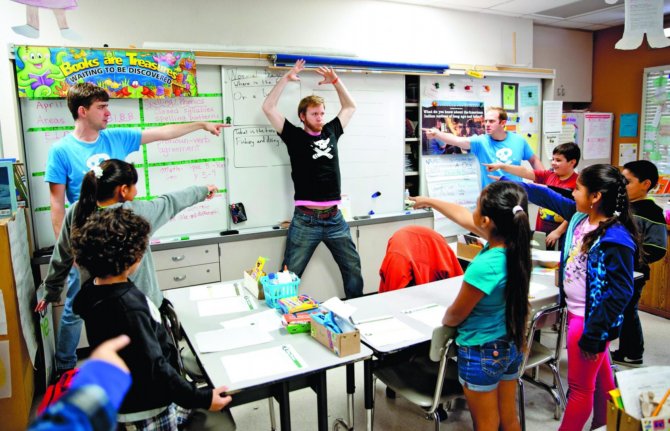
For the past eight years, Common Impact, in Cambridge, Mass., has played matchmaker between corporate volunteers and nonprofit groups, with the goal of helping charities improve how they operate.
In January, Common Impact hired John McGeehan, a veteran corporate executive, to help improve its own operations. Mr. McGeehan joins the group as managing director and will lead alongside its co-founder, Theresa M. Ellis.
Mr. McGeehan, who spent 19 years at Morgan Stanley, the financial-services company in New York, is assigned to examine how the group can extend its reach and to ensure it is spending its time wisely. Common Impact has worked with 19 corporations in Boston, New York, and Richmond, Va., to complete more than 250 projects for charities, including redesigning Web sites and enhancing personnel policies.
“I give credit to Common Impact for really eating their own dog food here,” says Mr. McGeehan. “They are an advocate for bringing for-profit disciplines to this process of infrastructure and capacity building at nonprofit groups, but they are also a sponsor: They hired me.”
Initially the charity was seeking a chief operating officer to replace Zach Goldstein, Common Impact’s other founder, who moved to California last year to be closer to his family. But Mr. McGeehan, 51, was among the most experienced of the 148 job applicants, says Ms. Ellis, and she decided he merited a hand on the wheel.
“It was clear we had complementary skills,” says Ms. Ellis. “And we could hammer out disagreements. It sounds very squishy, but it’s very important if you are going to do some sort of shared leadership.”
Mr. McGeehan, who will work from New York, is the first person with an extensive corporate background to join the charity. He declined to reveal his salary, partly because he says he does not want to discourage other executives from considering nonprofit jobs, allowing only that he will be earning significantly less than what he earned at his previous job. With an annual budget of $1-million, Common Impact’s revenue comes from fees collected from participating corporations and, to a much smaller extent, charities, and from donations, mostly from foundations.
Mr. McGeehan’s tenure at Morgan Stanley included a six-year stint as a managing director in Tokyo. In 2006 he quit the company to spend more time with his wife and figure out what he calls his second act.
“Having spent 10 years abroad, I came back to a very different company,” says Mr. McGeehan. “I had an extraordinary experience in Japan, arguably a small-company experience that made repatriation very difficult.”
During his self-imposed sabbatical, Mr. McGeehan delved deeper into his volunteer work as a board member of the Orpheus Chamber Orchestra, in New York, and offered his time to leaders of several nonprofit groups in his hometown of Weston, Conn. For example, he introduced business-planning principles to his church’s budgeting process.
Those experiences helped Mr. McGeehan push aside thoughts of working at smaller financial firms and decide instead to focus on nonprofit jobs that would use his business skills. “I was wondering how long it was going to take you to come over to our side,” he says his youngest daughter told him when he spoke of his decision. None of Mr. McGeehan’s five grown children work in business, and his wife is studying to be a social worker.
“I see 50 to 65 as my most impactful years,” he says. “I’m not sure I want to spend them on a golf course. I’m not saying it’s the wrong thing for other people to do, but it’s the wrong thing for me.”
In an interview, Mr. McGeehan discussed his new job.
Why did Common Impact appeal to you?
They fill a gap in the nonprofit world. Capacity building, infrastructure building — it’s an area that doesn’t get a great deal of attention because it’s not the sexy side. Frankly, it’s hard to connect the dots from infrastructure investment to impact on the nonprofit group or, more importantly, their beneficiaries. But you have to do well before you can do good.
Why are you the right person for this job?
Common Impact has had strong success embedding its services as part of employee-development programs where it’s equivalent to on-the-job training in the four areas we work in: human resources, finance, marketing, and technology. But nobody at Common Impact has substantial corporate experience, and navigating a big company when you are a small nonprofit is not an easy thing. To bring someone in who has managed these functions is a huge plus.
Does Morgan Stanley work with Common Impact?
They do, but I had nothing to do with it. Among our longtime corporate partners are State Street, Fidelity, and Cisco.
Is corporate volunteerism going to be a hard sell now that companies have to focus more on the bottom line?
As companies have cut back on the work force, the reality is they don’t have the ability to attract people based on compensation. Employee development is a great recruiting and retention tool, especially for workers under 25. Also, the company may be giving less money away because its foundation has taken a hit. You can make up for that in giving employee time to charities.
What are your plans for your new organization?
We have been having a debate internally: Should we go wide or deep? We could easily focus on fewer large companies and broaden our programming mix beyond the four areas we now offer. I’m also looking at our pricing structure. Right now our revenue is equal parts earned and contributed, and I think maybe there’s room for earned income to cover all our costs, and then we’d use our contributed income as working capital. I hope to see growth in more diverse services that might include running conferences and Webinars.
What internal changes have you advocated for at Common Impact?
I’m sharing more of the charity’s financial data with staff members. There is a business angle here that people need to understand and appreciate. At a recent staff meeting we discussed this year’s budget: How do we plan our time so we can meet the projections? People are now tracking their time in half-hour increments.
I appreciate that the people who work here come with perhaps a different motivation than a for-profit person, but these changes shouldn’t scare people away from working at Common Impact. It should encourage them to stay. We want to run like an efficient business. We should not be advocating in any way something we are not doing ourselves.
ABOUT JOHN MCGEEHAN, MANAGING DIRECTOR, COMMON IMPACT
Previous employment: Mr. McGeehan spent 19 years at the financial company Morgan Stanley, in New York, where he worked for a decade in the company’s Tokyo office (from 1994 to 2004); during the last six of those years in Japan, he was managing director, helping to double branch revenue to $1.2-billion and the number of employees to 1,100. He quit the company in 2006 and was on a sabbatical until joining Common Impact.
Education: Earned a bachelor’s degree in history at College of the Holy Cross, in Worcester, Mass., in 1979 and a master’s in business administration at New York University, in 1984.
Nonprofit board membership: Orpheus Chamber Orchestra, in New York.
Book he’s currently reading: High Performance Nonprofit Organizations: Managing Upstream for Greater Impact, by Christine W. Letts, Wiliam P. Ryan, and Allen Grossman.