
Foundation Assets Are Climbing, but Grants Are Still Competitive

By Sarah Frostenson and Doug Donovan
March 23, 2014 | Read Time: 8 minutes
A skyrocketing stock market helped boost the assets of the Gates, Hewlett, and other big foundations last year to their highest levels since the Great Recession gutted endowments six years ago, according to a new Chronicle survey.
Yet grant makers still aren’t as rich as they were before the downturn, and that’s putting a damper on their giving. What it’s not doing though: crimping ambitious new grant-making efforts to deal with vexing problems.
America’s biggest foundations are unveiling a range of new grant programs to deal with complex challenges like income inequality, cybersecurity, and climate change.
They’re also seeking new ways to get veterans of Afghanistan and Iraq settled back into society, make ObamaCare work well for everyone, and find a way past Washington’s partisan gridlock.
Still, the amount of dollars that foundations have in their coffers means grant making will continue to be extremely competitive.
Among 66 foundations that provided seven years of data, assets in 2013 were still 16.6 percent below the total $223.7-billion reported in 2007.
And grant making last year among those organizations was 6.5 percent lower than in 2007.
The year-to-year comparisons that foundations provided show reasons for at least some optimism among grant seekers.
Assets at the 83 grant makers that provided data showing how they fared in 2013 compared with 2012 grew by 7.5 percent, a sign that giving may increase by that much this year.
The foundations studied are among the nation’s largest. The 83 that provided 2013 asset figures represent 35 percent of the wealth held by the more than 78,000 foundations operating in 2011, according to the most-recently available data from the Foundation Center.
Taking Another Look
Tight grant-making budgets and a focus on evaluations are prompting many grant makers to re-evaluate their spending and redirect it to new causes.
Such shifts are under way at the William and Flora Hewlett Foundation, the nation’s fourth-wealthiest private foundation, with $8.3-billion in assets. The organization is gearing up this year to end its Nonprofit Marketplace Initiative, which has awarded $20-million to 30 organizations since 2006. It has financed work by organizations like GuideStar, GiveWell, and Charity Navigator to produce in-depth information about nonprofits’ performance.
Hewlett had assumed that donors badly wanted such information to make the best use of their donations and that more progress could be made if donors channeled their money mostly to the best groups. But a recent evaluation by Hewlett found that donors remained more inclined to give for subjective reasons, such as loyalty to a cause, than to base their decisions on objective performance standards.
Hewlett, whose assets grew 7.3 percent last year, believes it can instead improve the state of giving by “shifting to a strategy to foster openness and transparency and collaboration” among foundations and nonprofits, says Larry Kramer, Hewlett’s president.
In addition, Hewlett and several other foundations are working to reorganize ClimateWorks, an organization that promotes policies to slash annual greenhouse-gas emissions, push adoption of clean-energy technologies, and monitor deforestation, Mr. Kramer says. In 2009, Hewlett joined the McKnight Foundation and the David and Lucile Packard Foundation in providing $1-billion to establish the organization.
The effort was supposed to attract other big grant makers. “That never happened,” Mr. Kramer says.
One reason, he says, is that political divisions over climate change, and many other policy issues, grew more intense soon after ClimateWorks got started.
Finding ways to close the political divide is a goal of a new grant-making effort at Hewlett, whose board last week approved a $50-million three-year effort to determine how best to reduce partisan bickering and find candidates willing and able to compromise.
The Hewlett Foundation board also last week approved a $20-million five-year effort to make grants to develop and identify long-term policies promoting cybersecurity.
Mr. Kramer said security concerns remind him of the nuclear-arms race that escalated after World War II without any intellectual or policy framework until the concept of mutually assured destruction emerged.
Health-Care Priority
Getting beyond one of the most politically divisive issues in America—ObamaCare—is another issue that is stimulating a lot of grant making. Foundations are supporting efforts to lower the costs of health care by improving how people in urban and rural areas get services.
“There’s an attempt to try to create better market incentives so that poor people have access to the medicine they need,” said Brad Smith, president of the Foundation Center.
The Helmsley Charitable Trust has spent $67-million over the past five years on a rural telemedicine program in seven Midwestern states.
Much of the money, $27-million, has gone to Avera Health, which has built a telemedicine system that connects emergency medical experts at large hospitals with patients and their medical providers in small, far-flung rural facilities through real-time video links. Pharmacists at central hubs can dispense needed medications through a vending-machine pharmaceutical system in rural facilities.
The telemedicine system, which involves 169 hospitals and clinics in 545,000 square miles, has served nearly 200,000 patients. Helmsley Trust and Avera say the system has saved $124-million in health-care costs associated with transporting patients over long distances for emergency and intensive care.
To help reduce health-care costs in urban areas, the Commonwealth Fund has made such efforts a new priority in its grant making.
The foundation is supporting efforts to determine how to reduce health-care costs incurred by poor patients who rely on emergency rooms for their primary care. That practice by many low-income people with chronic health problems drives up costs across the entire system while the patients get little preventive care to improve their health and reduce the likelihood of repeat visits.
“There’s no way to manage our aggregate health-care costs without making health care better for this population,” says David Blumenthal, Commonwealth’s president. “If you’re talking about reforming the health delivery system, it requires focus on this.”
Other grant makers are working to make sure the Affordable Care Act meets its promise to help more Americans get health care.
The California Endowment decided in January 2013 to allocate $225-million over four years to help smooth implementation of the Affordable Care Act in California.
The endowment made $18-million in program-related investments to expand and build community health centers in low-income neighborhoods, where many more people are expected to seek care under their new insurance coverage.
And the Charles Stewart Mott Foundation, whose grants increased 31 percent last year to $114-million, awarded $7-million to Michigan State University to build a flagship public-health campus in the economically depressed city of Flint, Mich.
The campus will also provide health services to people in and around Flint.
Besides focusing on health care for the poor, grant makers are seeking to do more to help low-income Americans in other ways.
Perhaps the most intensive new effort is at the William T. Grant Foundation, which is now directing nearly all of its grant making toward devising policies to reduce inequality.
The foundation’s priorities have long included the financing of research to help policy makers make better decisions about issues that affect young people.
But the foundation recently ended, after a decade, its support for studies of how social settings influence young people.
Even before the foundation’s president, Adam Gamoran, arrived in September, he had started talking to the board during his interviews about the urgency of focusing the organization’s research on issues of inequality.
The board agreed, and last month Mr. Gamoran announced that the foundation will award $11-million a year in grants to researchers studying the “impact of economics, race and ethnicity on a young person’s life chances.”
“It’s pretty clear we have a problem with inequality,” Mr. Gamoran says.
Some of the research, for example, is likely to include assessing whether teaching personal-finance skills to young people from needy families improves their chances of being successful in college.
As with its previous efforts, the foundation hopes to encourage greater reliance on evidence in devising programs to tackle social ills with an array of proven programs.
“We hope the research will accumulate over time to produce new knowledge that can help reduce disparity among America’s young people,” Mr. Gamoran says.
Tangible Interest
The use of data to assess the tangible results of programs continues to be increasingly important to grant makers.
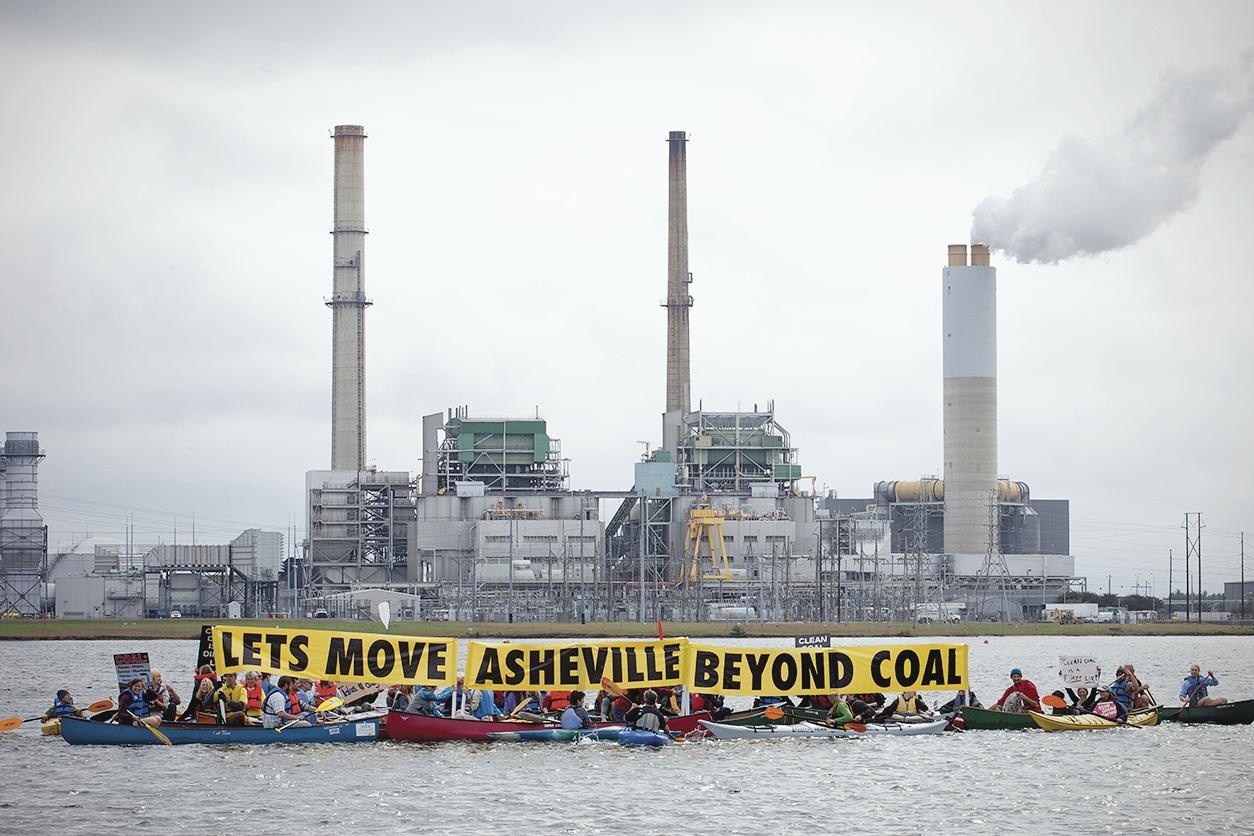
The foundation of Michael Bloomberg is supporting fracking efforts to help advance its “Beyond Coal” campaign, which relies heavily on the use of data and measurement to guide efforts aimed at retiring a third of U.S. coal plants by 2020.
Its large data team, for example, has identified 403 coal boilers in the United States that are scheduled to be retired, and the foundation is committed to promoting the retirement of the remaining 900 by 2030.
“We insist on using data to guide our work and ensure we’re delivering results,” Mr. Bloomberg wrote in his annual letter about his philanthropies, published last month.
His letter captures many of the trends and frustrations at today’s foundations.
“When national governments are slow to act,” the statement said, Bloomberg Philanthropies will work with cities. It will partner with public and private organizations to “enhance our impact” and “work to multiply the power of philanthropy by helping local communities advocate for themselves and create change that lasts.”
“We don’t shy away from controversy if we can make a difference,” Mr. Bloomberg wrote.
The Slow Recovery of Foundation Wealth and Grant Making
How Assets Have Fared Since the Recession

Figures are adjusted for inflation, and 2013 data are estimates. Based on 66 of America’s biggest foundations.
Pace of Grant Making

Figures are adjusted for inflation, and 2013 data are estimates. Based on 60 of America’s biggest foundations.
Joshua Hatch and Anu Narayanswamy contributed to this report.




