
Foundation Support Grows for Projects That Use Data to Tackle Problems

By Sarah Frostenson
Contributor
December 8, 2013 | Read Time: 4 minutes
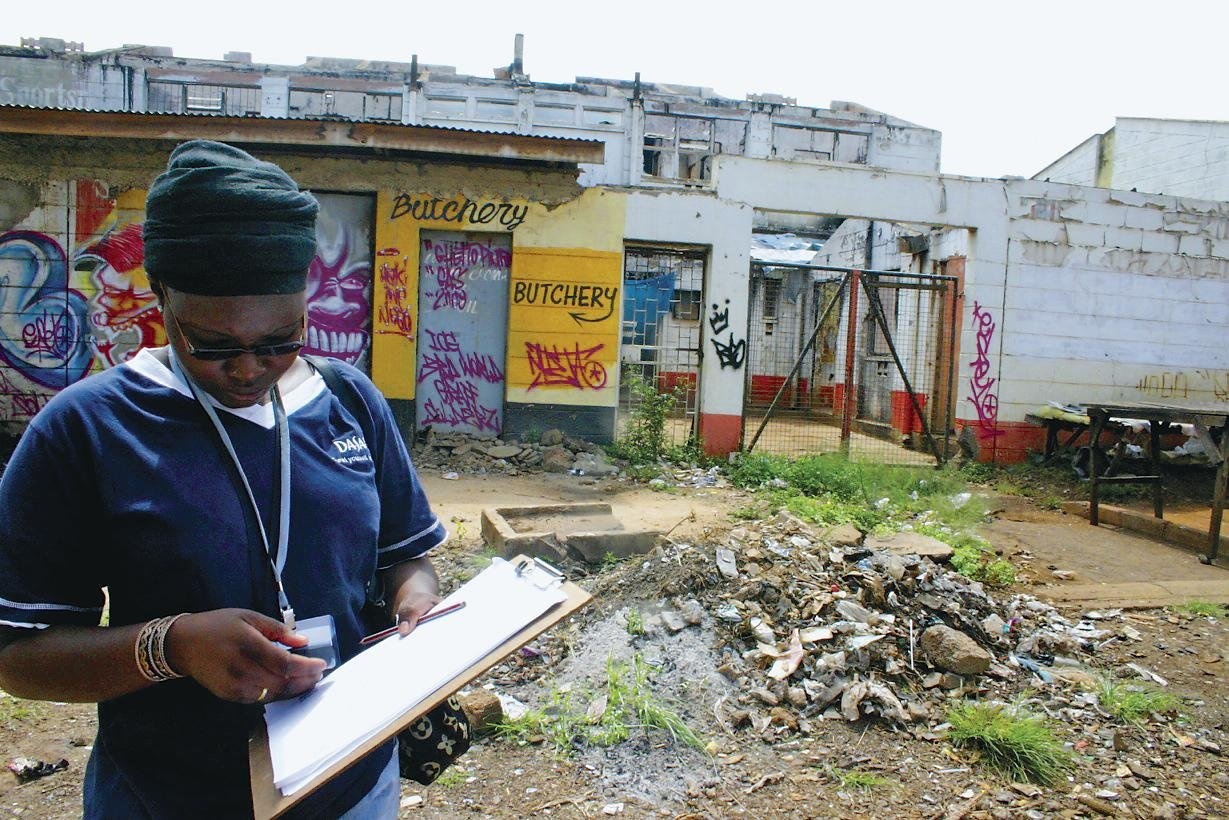
Children who live in Kenya’s slums often struggle to enroll in public school. To promote alternative education approaches, two American organizations—Development Gateway and GroundTruth Initiative—are documenting everything they can about informal “pop-up” schools poor children can attend in the slums of Nairobi. For instance, the groups track the number of students and teachers per school, and what parents think of the schools’ performance.
Now the nonprofits want to make it easier for slum residents to get access to that information, ideally through text messages that can be read on mobile phones.
The project could make more progress soon, thanks to a $100,000 grant from the Bill & Melinda Gates Foundation, one of six awarded to programs that seek to combine sets of data to help solve social problems.
Other winners include NetHope’s work to create a tool to help humanitarian charities share their data more widely and in real time during disasters, and GuideStar India’s push to make data on charities more available.
Emerging Trend
The Gates grants are one in a handful of new philanthropic efforts to draw on complex sets of data to tackle humanitarian challenges. More are likely to come soon, say experts.
“All this hype around data is making nonprofits and government pay more attention,” says Rayid Ghani, chief scientist for President Obama’s reelection campaign and founder of a fellowship program that pairs data-science students with charities and government agencies. “Foundations have the power to direct what companies and nonprofits do and are pushing to make nonprofits more data savvy and better data collectors.”
Last summer the John S. and James L. Knight Foundation put out a call for projects that use sets of data to improve public health. The foundation plans to award $2.2-million in grants to a handful of groups, with recipients to be announced in January. In September, 40 semifinalists were selected from a pool of 686 applications.
“We’ve received entries that use existing health databases or crowdsourcing to develop databases that don’t exist,” says Michael Maness, a vice president at the foundation.
The Robert Wood Johnson Foundation and the California HealthCare Foundation, which helped Knight design the grant challenge, have offered an additional $100,000 each for proposals that further their missions.
Robert Wood Johnson is looking to support progress in merging public-health data with other information from hospitals to make health information more easily accessible electronically. Over the past year, the foundation has financed health-data projects that focus on information collected by patients.
The grant maker sees “the opportunity for changing the set of relationships amongst stakeholders, so patients and citizens are actually participants in how we think about diseases,” says Paul Tarini, a senior program officer at the foundation.
In recent months, the foundation has awarded $3.8-million to groups that want to develop online platforms that allow patients and health-care experts to interact and share data on health issues.
One of the grantees, PatientsLikeMe, has built an online network so patients who have similar diseases can share information about their conditions and available treatment options.
‘Freeing’ Data
Meanwhile, the California HealthCare Foundation is working to make the state’s health-care data more widely available through its “Free the Data Initiative.” The program encourages state and local governments to improve access to their publicly-published data.
The foundation is particularly interested in making health-care data more accessible to local officials to help them shape policy, says Andrew Krackov, a senior program officer.
“We learned that in some ways the data revolution has bypassed the county supervisor,” he says. “They are inundated with data, but don’t have the tools to find the data they need to make decisions on our behalf.”
But it’s not just large foundations supporting data-driven projects in the nonprofit world. Smaller funds, like the Rita Allen Foundation, are getting in on the action too.
The foundation awarded $350,000 to Feedback Labs, an online network that helps charities get ideas from the people they serve. Developed by Dennis Whittle, founder of GlobalGiving, Feedback Labs seeks to make the voices of beneficiaries better heard and help governments and donors be more responsive to the needs of the populations they serve.
Nonprofits and foundations have made strides in using data to help solve social problems, but there’s still a long way to go, says Darin McKeever, a director at the Gates foundation.
“There is a lot of terrific data that is being opened up and set loose in the wild,” he says. “But it is still costly to access and to use.”




