
January 11, 2022 | Read Time: 2 minutes
Many of us have felt lonely or isolated at some point over the past two years. But even before the pandemic, the RFF Foundation for Aging made social connectedness one of its four priority areas because stronger social bonds improve older people’s quality of life.
One fourth of people over age 65 struggle with social isolation, which puts them at greater risk for dementia and lower life expectancy, says Mary O’Donnell, the foundation’s president. “Social isolation can kill.”
Research on what’s effective in RFF’s other priority areas, such as housing and economic security for older adults, is much more advanced than it is for social connectedness.
“We’ve been really trying to home in on what’s working, what’s not,” O’Donnell says. “And we’ve been starting to become a little more broad-minded in what we accept as forms of data and research.”
The foundation made a grant to Encore.org for its Gen2Gen Innovation Fellowship, which supports social entrepreneurs who have started ambitious efforts to bring people of different ages together.
The programs emphasize what both younger and older participants have to offer and how they can benefit from spending time with one another, says Janet Oh, director of innovation at Encore.org.
“It’s like a puzzle that comes together where both sides need one another and fit together to create something that’s more powerful than any of the individual pieces,” she says.
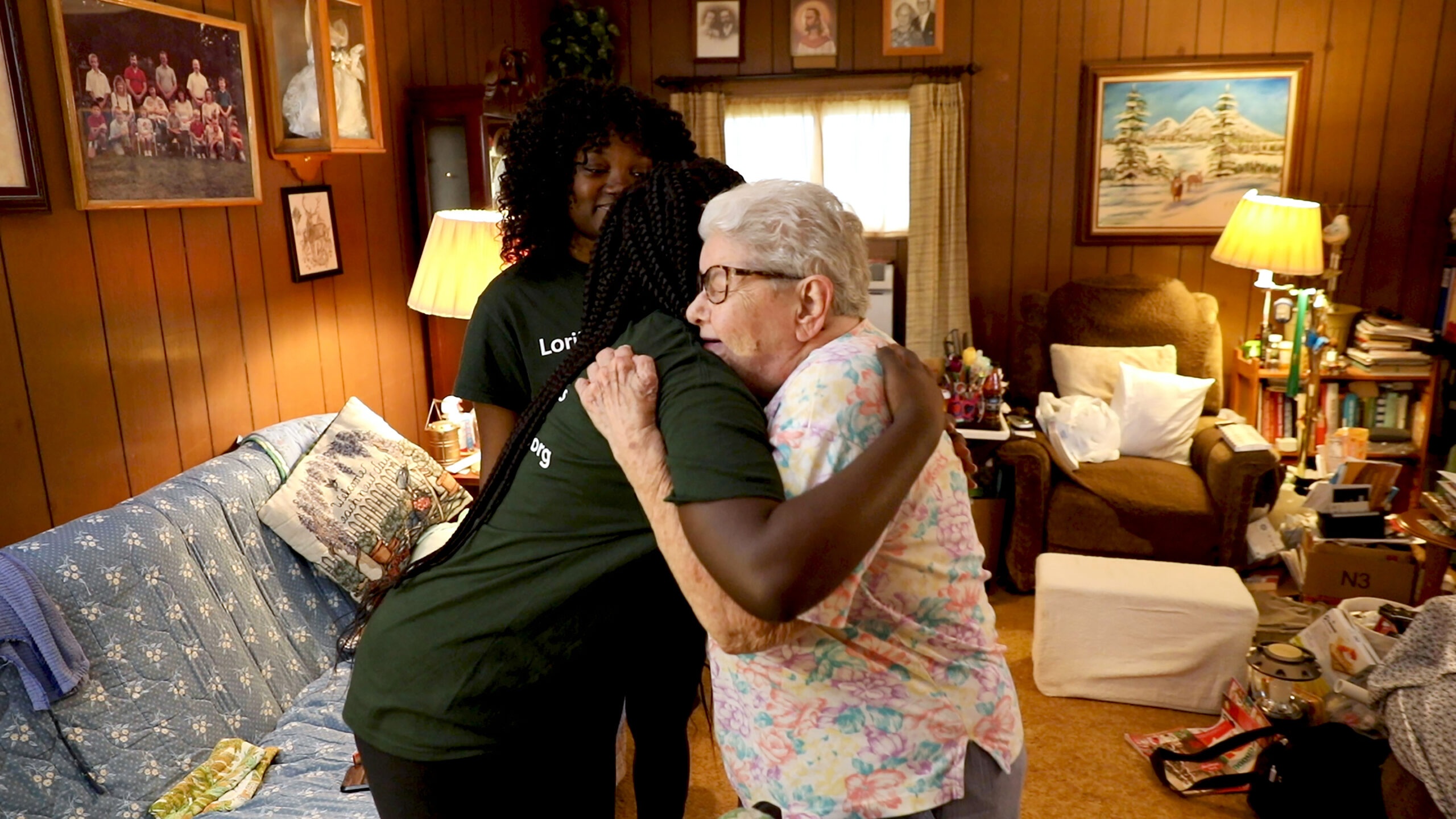
Lori’s Hands, the service-learning organization co-founded by Gen2Gen fellow Sarah LaFave, pairs college students with older adults living with chronic disease in Baltimore and Newark, Del., and will soon expand to Detroit. Students, such as Derica Nyameke and Afua Owusu-Donkor from the University of Delaware (shown here, before the pandemic, visiting Peggy Neil in her home), offer companionship and help with daily activities like housework and grocery shopping. Clients, in turn, teach students about health care in a way that isn’t possible in the classroom.
Students from any major can participate. For those who go into medical professionals, the impact can be long-lasting, LaFave says.
“Every single time that they discharge a patient or they write a prescription,” she says, “they’re going to be thinking in the back of their mind, ‘Is this patient going to be able to get the pharmacy to fill this prescription when they get home?’”