Foundations Are Supporting More Local Groups Working in Tandem

By Doug Donovan
Contributor
March 23, 2014 | Read Time: 5 minutes
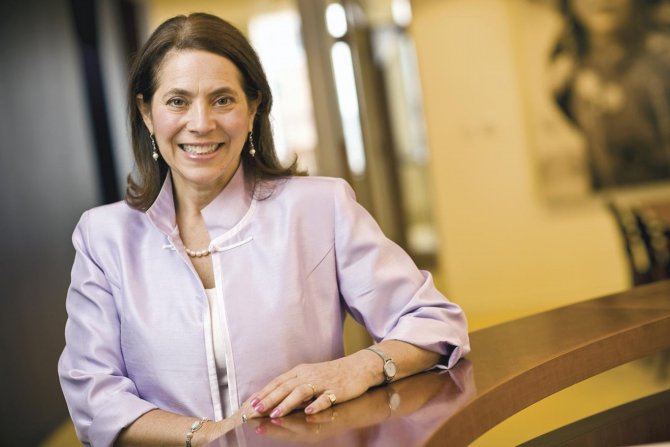
When Jennifer Ford Reedy became president of the Bush Foundation in September 2012, the organization was entering its fifth year of exploring ways to support community groups that work to solve local problems.
Ms. Reedy soon noticed that the foundation’s staff had become increasingly drawn into helping to devise and carry out many of the proposed solutions, a process that tended to keep the grant maker working with the same groups and working beyond the role that she thought Bush should be playing.
She wanted to change course by opening up the organization’s grants to a competitive process.
“We didn’t have a great way of finding the nonprofits we didn’t know,” she said. The second part of her goal: “Do less, enable more.”
So last year, Ms. Reedy embarked on a new approach: asking nonprofits to form local coalitions to “develop and test” new concepts for tackling community problems. In December, Bush awarded $7.5-million to 64 groups that are building coalitions to prevent domestic violence, help cities expand their volunteer ranks, protect shared watershed areas, and spread child-care centers to rural parts of Minnesota, among other goals.
The grants aim to give the nonprofits the freedom to determine how best to spend the money. The $3.5-million given to 30 groups can be used for any operating needs, and $4-million awarded to 34 organizations will help them find solutions for community issues that the groups, not the foundation, say are critical.
‘That Takes Money’
That approach of reaching out to local groups so broadly has drawn applause from the National Committee for Responsive Philanthropy, a watchdog group that seeks to channel more money to groups that serve the needy. The committee says such support is rare because foundations are increasingly putting money into efforts to solve a single problem.
“Groups that have longstanding roots in communities and that work to address multiple issues confront great difficulty in fundraising while foundations overwhelmingly direct grants to professionalized, often well-resourced, organizations working exclusively on that grant maker’s preferred issue,” says a new report from the center, titled “Smashing Silos in Philanthropy.” Aaron Dorfman, executive director of the group, says that prevailing approach “is short-sighted.”
Ms. Reedy says she shares Mr. Dorfman’s concern that too many funds are putting their money into single-issue causes while telling nonprofits to experiment to find new approaches and work collaboratively.
“That takes money,” said Ms. Reedy. She says her foundation developed its approach to demonstrate that Bush was “putting our money where our mouths were.”
In a second call for grants that ended March 13, at least half of the $3-million in grants will be awarded to groups that work together to reduce “racial and economic disparities.”
The foundation’s staff projected that about 300 groups would apply for the first round of grants. More than 618 did. As a result, instead of spending $1-million as planned on the effort to finance community coalitions in 2013, Bush spent $4-million.
Focus on Collaboration
A handful of other foundations in the past year have increasingly made collaboration a key part of their work.
Since 2005, a Houston nonprofit called the Independent Arts Collaborative had been pushing to build an arts center that small arts organizations could use for performances, rehearsals, and gallery space.
The effort gained a powerful ally in 2010 and 2011, when the $1.67-billion Houston Endowment awarded the group $760,000 to pay for a business plan, consulting services, and an architectural design. The endowment supported the concept of a shared space backed by multiple arts groups, the community, and city government.
So in 2012, the endowment gave $6-million to the group, which had changed its name to Midtown Arts & Theater Center Houston, or Match, said Sheryl Johns, the endowment’s executive vice president.
The money came with a significant challenge: The group had to raise $20-million before breaking ground and it had to secure financial support from the city government.
The gift was the “stamp of approval” the project needed, said Jill Jewett, Match’s project consultant. To date, the organization has raised $19.4-million and the city of Houston has agreed to provide $450,000 annually for eight years to support the project.
She can safely say that the project will break ground in late April because several other commitments have put the group over the $20-million goal.
Joint Efforts
While the Houston Endowment was proving its support to local groups, community organizations in Philadelphia were fearful that a $770-million gift in 2009 to the William Penn Foundation was going to turn the grant maker’s attention away from regional concerns and toward more national and international causes.
The windfall from the Haas family, which created the fund, put the organization’s assets at more than $2-billion. And even more money, totaling about $2-billion, was committed to the foundation years into the future, resulting from the sale of a chemical company that was the basis of the family’s fortune.
It took the foundation until 2012 to formally announce that it was going to remain a regional grant maker. Then, in November 2012, the executive director resigned and the foundation went for a year without a permanent leader.
Peter Degnan, the foundation’s new top executive as of this month, said he intends to focus the organization’s grant making on regional issues in areas such as the environment, arts and culture, and education. He said the group expects to spend $90-million in 2014, a 12.5-percent increase from 2013.
The foundation will continue its focus on expanding community coalitions that work to restore the health of the Delaware River watershed.
“An array of constituency building grants work to bring together diverse stakeholders of the watershed, including various recreational stakeholders—hunters, anglers, birders and boaters,” Mr. Degnan said in a statement. “The William Penn Foundation is on the move now that the leadership transition is complete.”