
Foundations Call on Peers to Hire People With Criminal Records

By Rebecca Koenig
Contributor
November 3, 2016 | Read Time: 6 minutes

Kirn Kim’s job as communications coordinator at the California Endowment is pretty typical. His path to the philanthropic world, however, is anything but.
Before coming to the foundation a year ago, he spent 20 years in prison for his role in the death of a fellow teenager.
“I was really appreciative of the fact they gave me a chance,” he says of the grant maker.
Foundation leaders hope that Mr. Kim’s post-prison path will soon become more common. The movement to “ban the box” that asks job applicants to indicate whether they have criminal records is gaining steam in philanthropy. Darren Walker has thrown the weight of the Ford Foundation behind it, and 46 other foundations have signed a pledge to remove questions about convictions and arrests from their applications.
But it’s not enough for hiring managers to simply refrain from asking job candidates about their rap sheets, foundation leaders say. They’re calling on their peers at other institutions to actively recruit former prisoners, and they’ve published a new tool kit explaining how to get started.
“We foundations are often very good at rhetoric. But we also need to be held accountable for concrete action within the walls of our own institutions,” Mr. Walker says. “We should be modeling the behavior we wish to see in the private sector.”
Movement Gains Steam
The ban-the-box movement started in the early 2000s with advocacy from formerly incarcerated activists in the Bay Area, says Michelle Natividad Rodriguez, senior staff attorney at the National Employment Law Project.
Now 24 states and 150 localities have policies that prohibit government recruiters from asking applicants about their criminal backgrounds early in the hiring process. Only a fraction of those policies also prohibit private employers from doing the same.
We should be modeling the behavior we wish to see in the private sector.
The movement has been endorsed in the highest halls of power. In August 2015, foundations affiliated with the Executives’ Alliance for Boys & Men of Color asked President Obama to ban the box in federal-government and contractor hiring. He responded in November 2015 by asking Congress to pass legislation (the Fair Chance Act) to that effect.
And in April 2016, the Obama administration introduced the White House Fair Chance Business Pledge, asking employers to ban the box and offer employment opportunities to people coming out of prison. More than 160 companies and organizations have taken the pledge, including Walmart, Starbucks, and Catholic Charities USA.
Philanthropy got its own version of the challenge in February, when leaders of 42 foundations announced that they had banned the box from their own job applications and called on other philanthropies to do the same.
Because of its moral authority and ties to the business and government sectors, the philanthropy world has a special part to play in spreading the message, Ms. Rodriguez says: “To have leaders like that step up and say, ‘We believe in hiring people with records because it’s good for society as a whole,’ that makes a tremendous difference.”
Going All the Way
The new Fair-Chance Hiring in Philanthropy tool kit, created by human-resource experts, lawyers, and others who work with formerly incarcerated people, aims to push foundations to think beyond simply banning the box, says Patrick McCarthy, chief executive of the Annie E. Casey Foundation.
The main idea? “Don’t just go three-quarters of the way” toward helping people re-enter society, says Christina Voight, program associate at the Open Society Foundations.
To recruit people who have been in prison, the tool kit outlines steps that include limiting the use of background checks to those jobs that legally require them and cultivating relationships with nonprofits that serve formerly incarcerated people. It recommends focusing on skills, not credentials, when hiring, since people coming out of prison may not have had opportunities to pursue advanced schooling.
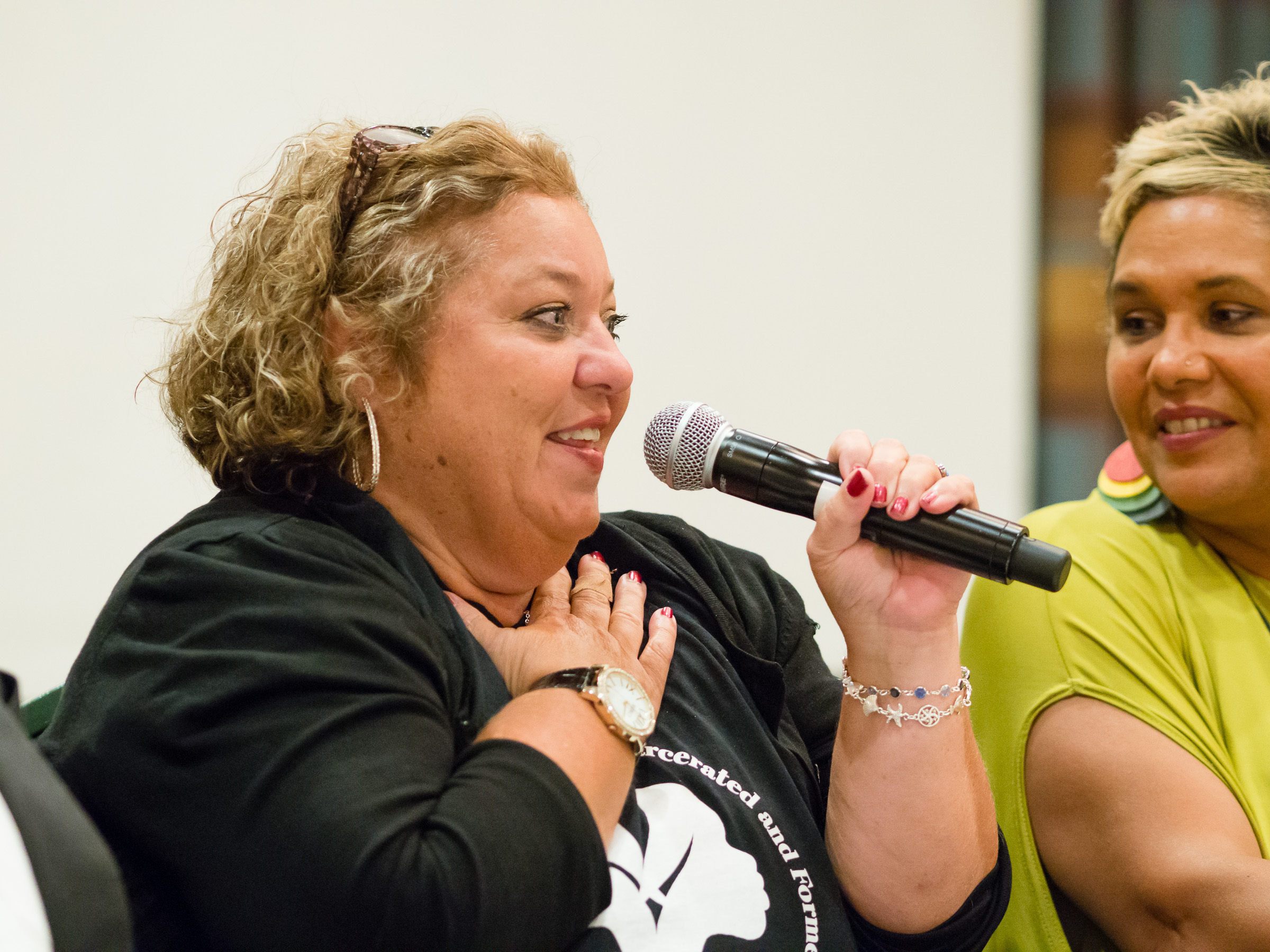
That rings true for Ms. Voight, who has worked at the Open Society Foundations for 14 years after spending four years in prison on arson charges she contested in court.
“Foundations do themselves an injustice by not opening up to people’s everyday experience outside of the Ivy League,” she says.
Fixing Blind Spots
Helping former prisoners — a disproportionate number of whom are people of color — reintegrate as citizens was one main motivation for creating the tool kit.
“If we want a justice system that is restorative and not punitive, we have to consider the ways in which formerly incarcerated people can regain their dignity,” Mr. Walker says. “There is nothing more important to one’s dignity than the ability to hold a job and to sustain successful employment.”
Another motivation was to spread the idea that foundations and nonprofits can benefit from former prisoners’ expertise. There is value in having diverse views in the workplace, according to Nicholas Turner, president of the Vera Institute of Justice, a nonprofit that works to end mass incarceration and promote equality in the justice system.
“If you have a nondiverse workplace, you have blind spots, an inability to see things that ultimately have a negative impact on decisions that are made,” he says.
That’s especially true at institutions that prioritize criminal-justice reform, says Daniel Zingale, senior vice president of the California Endowment.
“Having someone who knows the system is really valuable,” he says. “If you’re really serious about rehabilitation and reducing recidivism, you need everyone’s experience about this.”
Intentional Recruiting
Several foundations and charities already have hiring programs that reach out to formerly incarcerated people. The Vera Institute of Justice intentionally recruits employees who have served time in prison, and as a result at least 8 percent of its staff has had contact with the criminal justice system.
…we could be missing talent if we are not open to people with backgrounds similar to his.
This past summer, after Mr. Walker visited college classes held by the Bard Prison Initiative in a prison in New York, the Ford Foundation created a yearlong paid internship program for three of its graduates. The goal of the internship is to offer people work experience and opportunities to try out different career paths, says Kamilah Duggins, talent-acquisition manager at the Ford Foundation. The institution got many strong applications, and the interns have been doing so well that the foundation will increase the number it accepts in 2017.
Other organizations have hired formerly imprisoned people somewhat unintentionally, like the California Endowment, which hired Mr. Kim after banning the box from its job applications.
“In one sense, he was the most qualified person and an outstanding employee who happens to have a criminal record,” Mr. Zingale says. “He raised our awareness and understanding about the fact that we could be missing talent if we are not open to people with backgrounds similar to his.”
Mr. Kim is optimistic about the increased attention formerly incarcerated people are getting from employers and encourages hiring managers to treat them the same way they would treat any other job candidate.
“I see a huge difference from when I came home in 2012 to today. The thinking wasn’t there yet,” he says. “People coming home today are much better off — but less than they can be.”





