
Foundations Gear Up to Bolster New Federal Aid to Innovative Schools

By SUZANNE PERRY
Contributor
July 11, 2010 | Read Time: 9 minutes
Eli Broad, the California philanthropist, has spent about $400-million so far trying to overhaul the country’s urban public schools—a quest he describes as a battle against the status quo that has produced “equal parts success and frustration.”
But after more than a decade of promoting concepts like charter schools, performance pay for teachers, national learning standards, and school accountability, he believes the time is right to make real progress. Not only are those ideas winning wider acceptance, he says, but they now also have a powerful ally with deep pockets: the Obama administration, which is pumping billions of dollars into school-improvement efforts with those goals in mind.
“It’s starting to pay off,” says Mr. Broad, who used proceeds from the sale of SunAmerica, a retirement financial-services giant, to set up the Eli and Edythe Broad Foundation. “We’re at the tipping point.”
Foundations big and small have lined up to support two new federal grant programs—the Race to the Top Fund which is in the process of awarding $4.35-billion to states, and the Investing in Innovation Fund, known as i3, which will award $650-million to school districts, nonprofit groups, and school networks by September.
High Stakes
The stakes are high for both the federal government and private donors in this latest effort to tackle one of the nation’s most intractable social problems—poor student achievement and high dropout rates, especially among minority and low-income students.
“If these efforts don’t succeed, it could set back large-scale education-reform efforts for a generation,” says Steven Lawrence, research director at the Foundation Center.
Whatever the results, the education experiment will shed light on questions that regularly dog philanthropy: How much should grant makers coordinate with government versus stand apart? Should they prescribe solutions or let them evolve from the grass roots? And how should they measure success?
Moment of Opportunity
More than 30 private and community foundations have joined forces to support the Investing in Innovation program, which has attracted almost 1,700 applications.
Working in consultation with Arne Duncan, the secretary of education, the grant makers have pledged to spend more than $500-million to help applicants get the 20-percent matching funds they need to win the federal grants—or to pay for other promising school projects.
The coalition has also set up an online registry where grant applicants can signal they are in the market for foundation money.
“We see this as a real moment of opportunity for the country,” says Michele Cahill, a vice president at the Carnegie Corporation of New York, which is helping to coordinate the foundation coalition.
Separately, the Charles Stewart Mott Foundation, in Flint, Mich., has spent more than $300,000 since last August on a new Web site, Foundations for Education Excellence, operated by the Foundation Center, which offers news, statistics, and other information about Race to the Top and Investing in Innovation.
But critics see something ominous in the budding alignment between grant makers and the administration, especially those who question the more businesslike approach to philanthropy that emphasizes concepts like testing and competition among schools.
“There’s a part of me that doesn’t like this mind meld between the federal government and the biggest foundations,” says Diane Ravitch, a research professor of education at New York University and author of a new book, The Death and Life of the Great American School System: How Testing and Choice Are Undermining Education. “The federal government seems to have enough money to do what it wants to do without having this echo chamber,” she says.
Ms. Ravitch’s book is harshly critical of what she dubs “the billionaire boys club” of Mr. Broad, Bill Gates, and Sam Walton, the founder of Wal-Mart, who in 1987 started the Walton Family Foundation.
The trio of business moguls, she writes, have tried to impose a corporate-management model on public education—deciding how they want to make changes, rather than asking for ideas from the grass roots, with no accountability to voters.
If foundations really wanted to improve education for minority students, she says, they would do something the federal government can’t do, like creating a foundation to preserve Catholic education.
To Mr. Broad, however, people like Ms. Ravitch, whom he calls “a semi-apologist for the status quo,” are running against the tide. “Everyone knows we’ve got to change public education and make it more effective or else our standard of living will go down; we’re going to be noncompetitive,” he says.
Government Alliances
Some experts worry that it may be shortsighted for foundations to hitch their wagons to federal programs—especially since Race to the Top and Investing in Innovation were adopted as part of last year’s federal economic-stimulus law and thus could represent temporary cash injections.
“The hot issue several years ago was No Child Left Behind,” says John H. Jackson, president of the Schott Foundation for Public Education, in Cambridge, Mass., referring to the school-accountability program enacted during the George W. Bush administration. “The next hot issue is Race to the Top. It will change because political agendas will change.”
Foundation alliances with government can be politically dicey. In the District of Columbia, for example, the decision by four foundations, including Broad, to help pay for a new teachers-salary accord triggered a complaint in June to the District’s Office of Campaign Finance, which agreed to investigate. The foundations reserved the right to review their financial commitments if the schools chancellor, Michelle Rhee, left her post. Eyebrows were raised because Ms. Rhee is closely tied to the mayor, Adrian Fenty, a Democrat who is facing a tough primary-election challenge.
Mr. Broad, whose foundation was among those supplying the money, says the condition makes sense since the foundations support the plan that Ms. Rhee presented, which raises teacher pay but gives the District more power both to reward and to penalize teachers based on performance.
“If she’s fired, we don’t have confidence that whoever replaces her is going to follow through. If they did, we’ll revisit it.”
Allan G. Golston, president of the United States Program at the Bill & Melinda Gates Foundation, says supporting government programs is simply a matter of making the foundation’s money go further. “When there’s alignment between what we believe and what government believes, or what the private sector believes,” he says, “you’d be crazy not to partner and find ways to align those resources.”
Mr. Golston makes no apologies for what others call a “prescriptive” approach to philanthropy. “It’s important to remember that philanthropy is a drop in the bucket” compared with government spending, he says. “We have to be extra thoughtful around what our strategies are, where we choose to focus.”
Heartened by the Obama administration’s efforts, Mr. Broad says he plans to concentrate more of his spending—projected to be about $85-million in new money from 2010 to 2012—on efforts to support federal projects, as well as those of like-minded state governors and mayors.
“That’s where the change is coming from,” he says. “It’s not coming from local school boards.”
Change in the Air
The current school-improvement efforts, of course, will be judged on whether they succeed where others have failed.
Critics say some of the solutions the Department of Education is pushing—such as charter schools, tying teacher salaries to test results, and alternative teacher-certification programs like Teach for America—have simply not worked, at least on a broad scale.
“We’re accepting pockets of good outcomes,” says Mr. Jackson, of the Schott Foundation. But, he says, there has been little of the kind of systemic change that lifts up entire school districts.
His group issued a report last year that examined how many states provided all low-income and minority students a good opportunity to learn, as measured by reading and math scores and access to the best schools. It found that only eight made the grade.
Education philanthropy can be challenging. The Gates foundation said in 2008 it was disappointed by an effort to curb dropouts and prepare more low-income and minority students for college by breaking large, low-performing high schools into smaller schools. It said some schools had made gains, though, by working to change the classroom culture. Gates switched gears and announced a big project to study how to make teachers more effective, which it describes as the most important element in student success.
The Broad and Gates foundations tried to make education a front-burner issue in the 2008 presidential campaign, planning to pump up to $60-million to get candidates to back national standards, more time in school, and improving teacher quality. Both agree the effort fell short and pulled back on their spending, their issue overshadowed by the Iraq war and the economic crisis.
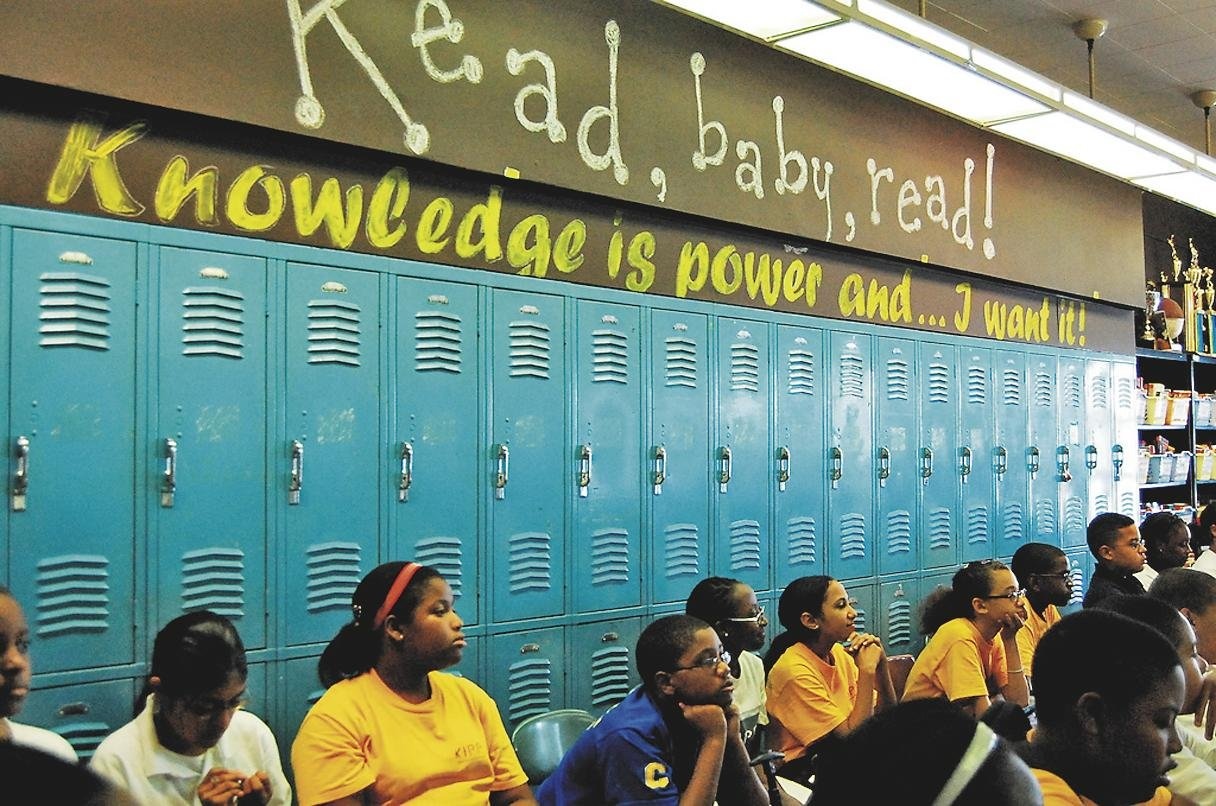
Even so, many education advocates are optimistic that philanthropy and government are on the right track, partly because they are giving higher priority to measuring effectiveness and spreading techniques with evidence to back them up. They note that the education landscape has changed markedly over the past 15 years. The number of charter schools has grown from 1,297 in 1999 to more than 5,000 today, according to the Center for Education Reform, some (though not all) showing impressive results.
Foundations have helped nurture charter-school networks like the Knowledge Is Power Program and Green Dot Public Schools, in Los Angeles; Teach for America, which attracts droves of high-achieving college graduates to the classroom; and groups like New Leaders for New Schools, which trains principals and conducts and shares research on which techniques lead to better student achievement.
Frederick Hess, an education scholar at the American Enterprise Institute, says efforts to “change the talent pipelines” in the public schools through groups like those is one of the new philanthropy’s biggest contributions. “These same people 15 years ago were much more likely to get frustrated,” he says.
Mr. Golston of the Gates foundation highlights signs of progress like the national standards in math and reading that were recently developed by governors and state school officials across the country and that 48 states and the District of Columbia have agreed to adopt.
Mr. Broad concedes that student achievement has improved only modestly since he started making education grants. But he sees change in the air. He points to “reformers” like Ms. Rhee, who has had some success in boosting achievement at Washington’s troubled schools.
And he has another way of judging how effective he and his allies are becoming: growing criticism on blogs about education. “When we started, we were ignored,” he says.




