Foundations Work Together to Amplify Their Grant Making

By NICOLE WALLACE
Features Editor
October 6, 2013 | Read Time: 8 minutes
Foundations with big goals but small staffs often struggle to find the nonprofits that are doing the best work.
But 12 philanthropies that fight poverty in developing countries think they might have found an answer. The grant makers have banded together in an alliance called Big Bang Philanthropy that goes far beyond most other grant-making coalitions. Members share tips about promising nonprofits and social-purpose businesses, work together on projects, and drive more money and attention to high-performing organizations.
And in the process, Big Bang is creating an approach grant makers could use to work together to solve other problems. But as the effort builds, members are wrestling with the question of just how big it can grow without losing the personal connections and trust that brought the group together in the first place.
“There’s a lot of ego in this group, but it’s a different kind of ego,” says Amy Herskovitz, executive vice president for programs at the Pershing Square Foundation. “It’s ambition to drive the programs to be the best they can and do the best job at it.”
Seeking Impact
The foundations that make up Big Bang Philanthropy talk often, work together closely, and meet face-to-face at least once a year. But each fund makes its own decisions about which organizations to support. To be part of the alliance, grant makers must award more than $1-million annually to groups that seek to improve the lives of the very poor and make grants to at least three organizations in common with other members. In total, members award more than $60-million annually to fight international poverty.
Big Bang grantees—organizations that receive money from three or more members of the group—work on a wide range of issues, including agriculture, economic development, and health care. But the nonprofits and social enterprises all have two things in common: They carefully measure the results of their work, and they seek to grow significantly to help many people.
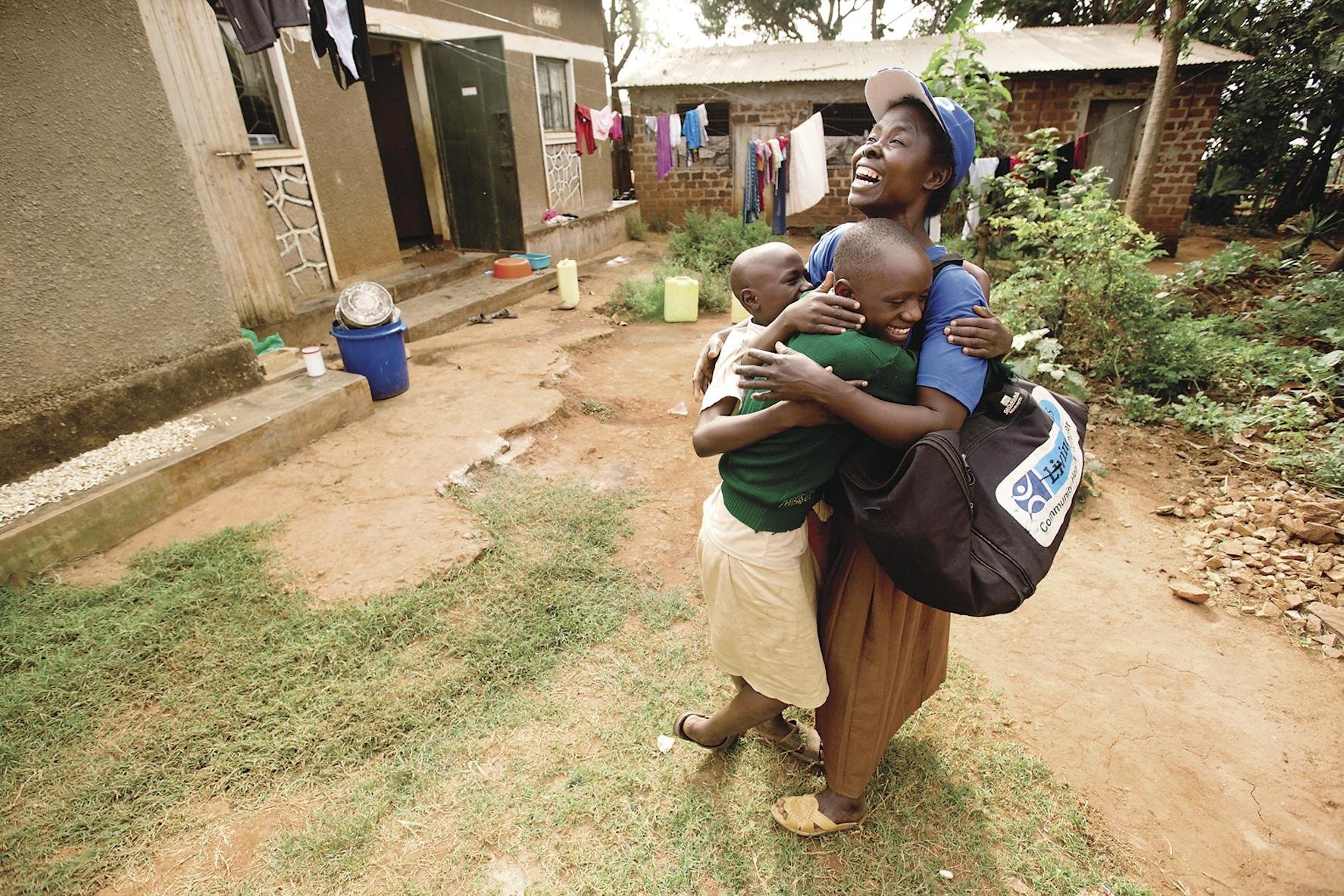
 Kate Cummings
Last Mile Health, an organization that trains, equips, and supervises community health workers who provide care in remote villages in Liberia, is a ‘Big Bang’ grantee.
Last Mile Health, which has won grants from three Big Bang foundations, tackles the problem of how to bring health care to people living in rural parts of Liberia, hours away from the nearest clinic.
Liberia’s devastating civil wars led to an exodus of doctors, leaving just 51 in a country the size of Ohio, says Raj Panjabi, who co-founded the group after returning to his native country as a medical student.
“If you got sick in the city where those few doctors were, you’d stand a chance,” says Dr. Panjabi. “But if you got sick in a remote village hundreds of miles from the nearest clinic, you’d die anonymously.”
Last Mile’s solution is to train, equip, and supervise community health workers in remote villages.
The early results are promising. In the isolated district of Konobo, five times as many children get vaccinated now compared with the number before Last Mile Health started its work. The treatment rate for HIV has tripled, and twice as many children receive care for malaria.
The group’s immediate plans are to increase from 30,000 to 150,000 the number of people it serves in the next four years.
But Last Mile Health is also thinking about the estimated 400 million people in the rest of Africa who lack health care because they live in remote areas and whether the approach it’s creating could be used to help people outside Liberia.
Last month the Pershing Square Foundation and the Segal Family Foundation, both members of Big Bang, hosted a dinner during the Clinton Global Initiative to highlight the work of Last Mile and two other grantees, Educate and Root Capital. The event was designed to raise the profile of the organizations’ work and introduce their leaders to grant makers, business executives, and other potential donors.
“The very clear mission of this is to drive more money toward great organizations fighting poverty,” says Kevin Starr, managing director of the Mulago Foundation and the driving force behind creating Big Bang. “We’re not coy about that.”
Sharing Information
While Big Bang is still experimenting to find the best ways to help grantees raise funds outside the network, says Mr. Starr, the foundations’ close cooperation has already resulted in more money flowing to the groups from grant makers in the network.
One of the most basic yet important ways Big Bang foundations collaborate is by sharing information, which helps members learn about nonprofits they’re interested in supporting and refine their thinking.
Sometimes that means a quick phone call or a briefing after one of the grant makers returns from a site visit. Or it might entail sharing documents. Some of the foundations conduct extensive research before awarding grants.
For example, the Draper Richards Kaplan Foundation has spent as long as a year talking to an organization about its approach and interviewing references before it accepts the group into its fellowship program, which provides three-year grants and extensive coaching.
“If you’ve gone to all this effort to do due diligence, you’d like it to be useful beyond just your organization,” says Mr. Starr.
‘Different Lenses’
The Mulago Foundation first learned about Off-Grid Electric, a start-up company in Tanzania that rents solar-light systems to people who don’t have electricity, from another grant maker in the group, Jasmine Social Investments, in New Zealand.
In April, Mr. Starr and another Mulago employee visited the company with two officials from Jasmine. The grant makers’ different areas of expertise complement each other, says Sam Morgan, who started Jasmine after selling his Internet company in 2006.
Mr. Morgan says Mulago’s strength is its focus on the effort’s social impact, such as the health benefits of reducing kerosene use, while he and his Jasmine colleague have a strong understanding of Off-Grid’s operations and financing.
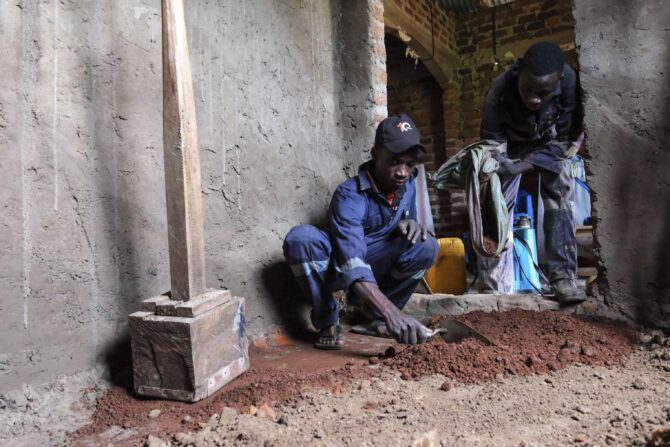
 Off-Grid Electric
Off-Grid Electric, a Tanzanian company that rents solar-light systems to people who don’t have electricity, is one of Big Bang Philanthropy’s grantees.
“We have different lenses, but we’re learning a lot off each other,” says Mr. Morgan. “You come away with a much more well-rounded understanding.”
Frank Talk
Members prize Big Bang as a forum for frank, substantive discussion, something many of them say is hard to find in the world of philanthropy.
At a recent meeting, participants had some “bare-knuckle conversations” about several struggling groups, which at first made some members uncomfortable, says Mr. Starr. “What made me really happy in thinking about it later was that everybody had been willing to have” the discussions, he says, despite their discomfort.
Because members make their own choices about which projects to support, they can have tough conversations without feeling like they need to come to a consensus, says Heiner Baumann, director of global programs at the Barr Foundation.
“You lay it out there, and that’s the end of it,” he says. “Everyone goes home and makes his or her own decision.”
Chuck Slaughter, the founder of Living Goods, says there was a time when knowing the foundations that support his group were working together so closely would have made him nervous. Living Goods, a charity that sets up networks of entrepreneurs who sell low-cost health products, like malaria treatments, to people in Uganda and Kenya, has received money from 10 of the 12 foundations in the network.
But Mr. Slaughter says the benefits of Big Bang for grantees outweigh any potential drawbacks.
“Because this group is so like-minded, each year we write one business plan, one set of objectives and targets, and we provide the same blueprint to everybody,” he says. “Their coordination has helped us tremendously. It’s made the whole process much more efficient.”
Big Bang is looking to bring other grant makers into the fold. The alliance currently stands at a dozen members and is now talking to several European grant makers who might join by the end of the year.
Staying Close
But members say determining just how big to grow is a dilemma. Stay small and the alliance won’t have the heft to promote the organizations it cares about. Grow too big and members fear the group will lose the intimacy that makes it so helpful.
“If there are 200 people involved, I’m not interested,” says Mr. Morgan of Jasmine Social Investments. “But equally if there are three people getting together and having secret dinners, that’s also not meeting the objective.”
Mr. Starr thinks the magic number is probably somewhere around 20. He says the key to the group being successful is strong ties of trust and respect between members.
“You’re never going to sit around with 50 people and have a really candid conversation about an organization that may be stuttering,” he says. “You’re just not. Everybody’s going to pull their punches.”
The 12 Grant Makers That Make Up Big Bang Philanthropy
Barr Foundation
Bohemian Foundation
David Weekley Family Foundation
Dietel PartnersDraper Richards Kaplan Foundation
Jasmine Social Investments
Lundin Foundation
Mulago Foundation
Peery Foundation
Pershing Square Foundation
Planet Wheeler Foundation
Segal Family Foundation