
Funneling Volunteers’ Passion Into Fund Raising Can Reap Rewards

By Jennifer C. Berkshire
Contributor
March 20, 2011 | Read Time: 7 minutes
The Friends of the Greenwood Public Library, the nonprofit arm of a Delaware institution, has long been a magnet for volunteer fund raisers. Year after year, local residents help organize benefit events, including a popular after-hours pajama party for women only to raise money for the library.
But recently the nonprofit organization decided to take a different approach to how it uses volunteers. These days, instead of spending their time planning major benefits and galas, the group’s 20 volunteers are out spreading the word about the library and its mission.
“They are really our ambassadors,” says Jane Weisenbach, director of development at the library and the coordinator of its nonprofit division. The volunteers’ first assignment: getting friends, colleagues, and other potential supporters into the library for a first-hand view of its programs—and its challenges.
The new approach, adapted in response to a loss of support due to plunging local tax revenues, has already paid off for the charity, says Ms. Weisenbach. “We raised five times as much money last year, and it’s because we’ve got a corps of volunteers who are effectively cheerleaders for the library.”
Volunteer fund raisers can provide a major boost to a charity’s bottom line. But managing them effectively requires work, even strategy, says Terry Axelrod, chief executive of Benevon, a fund-raising consulting firm in Seattle. “Being able to recruit and engage fund-raising volunteers is essential for charities that want to become financially self-sustaining,” she says.
Following are some tips from nonprofit experts and leaders on how to make fund raising rewarding for both volunteers and the charities they help.
Recruit with passion. For many charities, the first challenge is to find people who will give up their time to raise money.
David Weaver Jr., chief executive officer of the South Plains Food Bank, in Lubbock, Tex., asks food-bank volunteers if they’re interested in helping the charity find the resources to feed their neighbors. “You’d be amazed at how often the answer is yes,’” says Mr. Weaver. “The mind-set is that people don’t like to ask people for money, but our volunteers are already motivated by passion. Fund raising is the next obvious step.”
Make a plan. The Humane Society of Elkhart County, in Ind., has more than 100 volunteers who raise money for the charity, which operates a shelter and arranges for animal adoptions. And although the volunteers come from many backgrounds—they include students, farmers, and retired people—they share a common understanding of their role in the charity’s work.
“The first conversation that we have is about goals and expectations,” says Anne Reel, the group’s executive director. “You really want to make sure that people understand exactly what is being asked of them and that there is clear communication between management, volunteers, and board members.”
In fact, the key to managing volunteer fund raisers is to treat them not like volunteers at all, but like staff members, says Lilya Wagner, director of the Philanthropic Service for Institutions, a division of the Seventh-day Adventist Church, in Silver Spring, Md.
“If your volunteers are going to be effective fund raisers, they need to fit into the structure of the organization,” says Ms. Wagner. “Educate them, orient them, and give them a plan that fits into your plan.”
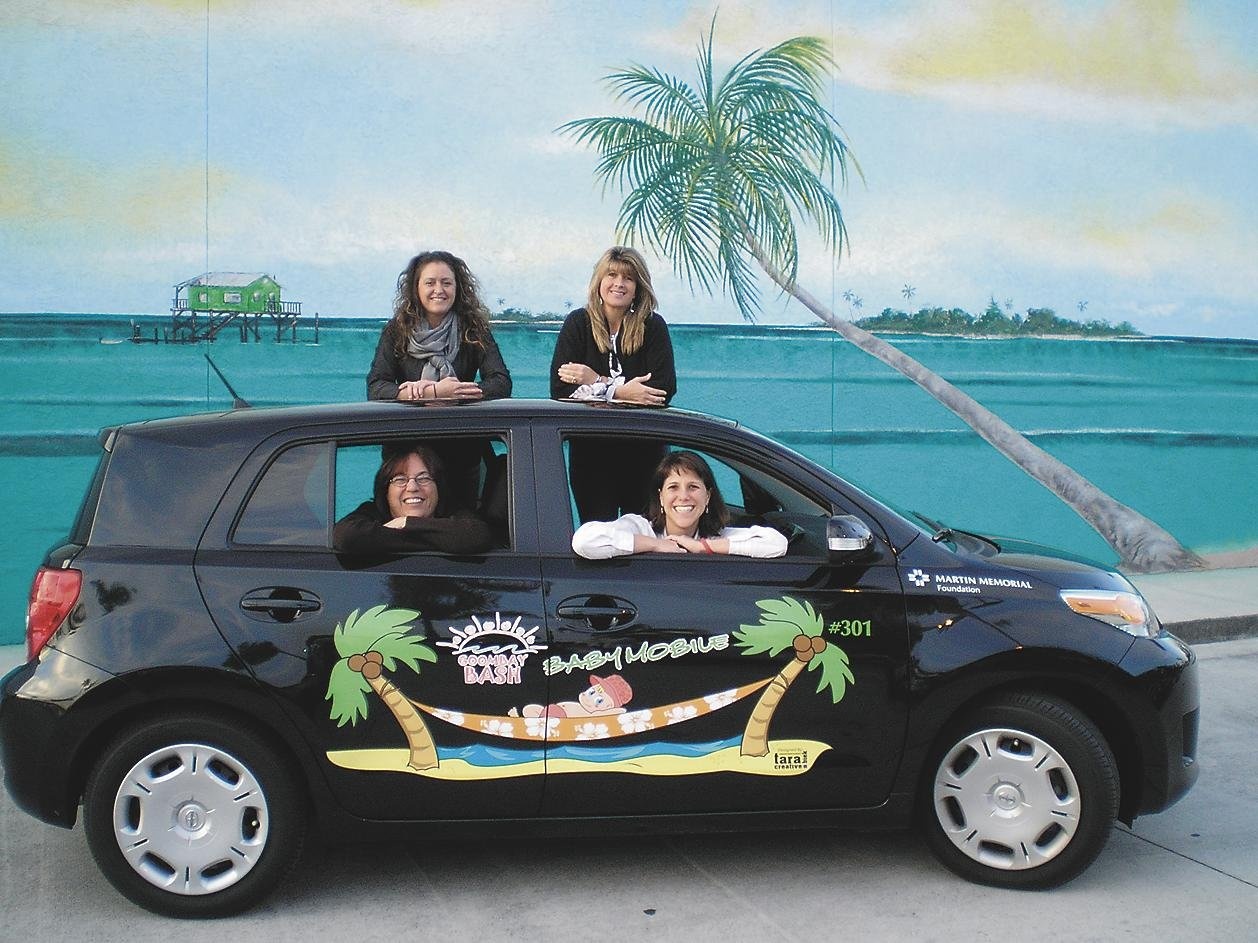
Cultivate social bonds. Ten years ago, the Martin Memorial Foundation, the charity arm of Martin Memorial Health Systems in Stuart, Fla., wanted to encourage more volunteers to help raise money for children’s services at the hospital. But there was a problem: Stuart, a coastal city of 16,000 people, is known primarily as a haven for retired workers.
“Our goal was to cultivate a group of volunteers using the hospital’s pediatric and obstetric services,” says Kelly Rowell, the foundation’s fund raiser.
Today the LifeSavers program has evolved into a tightly knit group of more than 70 volunteer fund raisers for the hospital. Tops on the LifeSavers’ agenda: putting on the annual Goombay Bash, which brought in $130,000 last year. The most recent event, advertised exclusively through social networks, was the group’s best-attended event to date.
Ms. Rowell attributes the success of the LifeSavers program to a simple fact: Its participants enjoy being together.
“They think of themselves as a social group with a purpose, and that’s to be passionate advocates for the hospital,” she says. “They’re all starting their families, and the care that they and their families will receive is really important to them.”
Spur friendly competition. When staff members at Horizons for Homeless Children, in Boston, sat down with members of the Board of Directors last year to talk about a vision for the future, a handful of board members had a complaint: Too much of the responsibility for fund raising rested on their shoulders.
Meryl Sheriden, chief development officer at the charity, which provides children in local homeless shelters with places to learn and play, saw their criticism as a challenge.
“This was a chance to really rejuvenate the entire board and encourage all of our board members to engage in more fund-raising activities,” she says.
To help meet the charity’s goal of raising $4.6-million this year—and to get its most powerful volunteer fund raisers engaged—Ms. Sheriden and her staff recently began what they call the Board Game, a system of points by which teams of board members compete against each other.
In the game, a board member who provides the name of a potential donor scores one point; a player who secures pro bono services for the charity earns 20 points; a board member who arranges a site visit for a likely donor prospect earns 25 points.
The winning team gets a dinner hosted by a board member. The game is already paying off for the charity, says Ms. Sheriden: “We have board members who’d never done any fund raising participating for the first time. These are successful, highly competitive people, and the game is a fun way of capitalizing on that.”
Think small. Charities often rely on volunteers, including board members, to bring in big gifts, but don’t overlook volunteers who bring in smaller donations, says Elizabeth Macomber, vice president of philanthropy at Hospice for the North Shore & Greater Boston. While the charity plays host to big fund-raising events every year, including a regatta and an annual walk, each of which brings in more than $200,000, Ms. Macomber is celebrating some smaller gifts and the pint-size fund raisers who delivered them.
“We had a kindergarten class raise $57 for us last summer to go towards the cost of a new wing we just opened,” she says. “We’ve even got a 12-year-old boy who has raised over $1,000 for us by collecting cans and bottles and raking lawns.”
And while such dollar amounts may seem trivial in a $32-million budget, the charity’s youngest volunteer fund raisers are contributing something bigger. “They’re helping us tell the story of our program and how it makes a difference,” Ms. Macomber says. “That’s priceless.”
Say thanks—often and appropriately. James Lacerenza, a recent college graduate, has raised more than $86,000 for the Muscular Dystrophy Association over the past decade, much of it to help send children to a summer camp in Spring Valley, N.Y. So when it came time for the charity’s Hawthorne, N.Y., branch to thank Mr. Lacerenza, who has cerebral palsy, no ordinary plaque would do. Instead, the charity arranged for Mr. Lacerenza, a lifelong fan of Jerry Lewis, to attend Mr. Lewis’s annual Muscular Dystrophy Association Telethon.
“I told the office that if they gave me any more plaques, I was going to open a museum and charge admission,” says Mr. Lacerenza. “When they told me that they were going to send me to the telethon, it really was a dream come true for me.”
Thanking volunteer fund raisers for their work is essential, says Carol Weisman, the president of Board Builders, a consultancy in St. Louis that works with charities to strengthen their boards of directors. She often seeks out special gifts to convey gratitude for a volunteer’s hard work.
But Ms. Weisman doesn’t always wait until the project is at an end or the check has been secured to say thanks.
“I recommend rewarding people when they take on an assignment,” she says. “Find a way to recognize them in a personal way and make them feel great from the beginning to the end of the process.”
And make sure those thank-you gifts are appropriate ones, she says, noting an example of a gift she got from a charity for which she volunteered that sent the wrong message.
“I once received an engraved Montblanc pen for serving on the board of a charity that was in huge financial trouble,” she says. “Not a great idea.”




