

October 3, 2010 | Read Time: 2 minutes
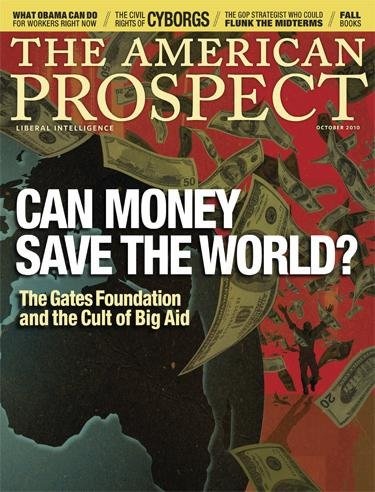
The Bill & Melinda Gates Foundation, with its $34-billion in assets, may be the “800-pound gorilla” of the philanthropy world, Dayo Olopade writes in The American Prospect (October), but some in the charity world wonder whether its enormous grants, especially in developing countries, are making a lasting difference.
The Gates foundation has a reputation for “rigor and reach” in its grant making, says Phil Buchanan, president of the watchdog Center for Effective Philanthropy, in the Prospect article. But a survey last year of more than 1,000 Gates grantees, conducted by Mr. Buchanan’s group, found dissatisfaction in how the foundation maintained communication with charities it supports after grants are made. And its methods—a focus on measurements, such as doses of vaccines distributed, for example—do not always translate into “the sustainability of the change produced,” writes Ms. Olopade. “And is harder to judge.”
As an example of the problems critics have with the outcome of grants made by Gates, Ms. Olopade spotlights Avahan, a network of Indian charities to which the Gates foundation pledged $100-million over 10 years, beginning in 2003. By 2005 the group had opened 6,000 HIV/AIDS treatment centers in India, but all but 800 clinics had closed four years later.
“The real problem,” writes Ms. Olopade, “is that aid is often badly spent—trapped in bureaucracies or banks, or siphoned away by opportunistic foreign governments.”
And yet, money will continue to pour rapidly out of the Gates foundation’s coffers in the coming years, Ms. Olopade notes, as the conditions of Warren Buffett’s 2006 pledge require it to pay out at least $1.5-billion annually.
“The Gates method brings to philanthropy what the Powell Doctrine brought to war: overwhelming force,” writes Ms. Olopade. “But the eye-popping figures on the foundation’s balance sheets raise not just the question of how best to give away billions but whether such sums should be given away at this pace.”
The article is available online at: http://www.prospect.org/cs/articles?article=gatekeepers.
ALSO OF NOTE
Many of America’s most generous philanthropists grace the newest edition of the Forbes 400, the magazine’s ranking of the country’s most affluent individuals.
The top 10 includes list perennials such as Bill Gates (No. 1), Warren Buffett (No. 2), the Oracle founder Larry Ellison (No. 3), members of the family of Sam Walton, the late founder of Wal-Mart (Nos. 4, 5, 8, and 9), brothers Charles and David Koch (tied for No. 5), and New York Mayor Michael Bloomberg (No. 10). The list also includes America’s newest megadonor, Mark Zuckerberg (No. 35), the 26-year-old founder of the social network Facebook, whose new $100-million foundation to aid public schools in Newark, N.J., has drawn headlines.





