Gates Picks an Oncologist as Its New Leader, the First Chief Executive Not From Microsoft

By Doug Donovan
Contributor
January 13, 2014 | Read Time: 5 minutes
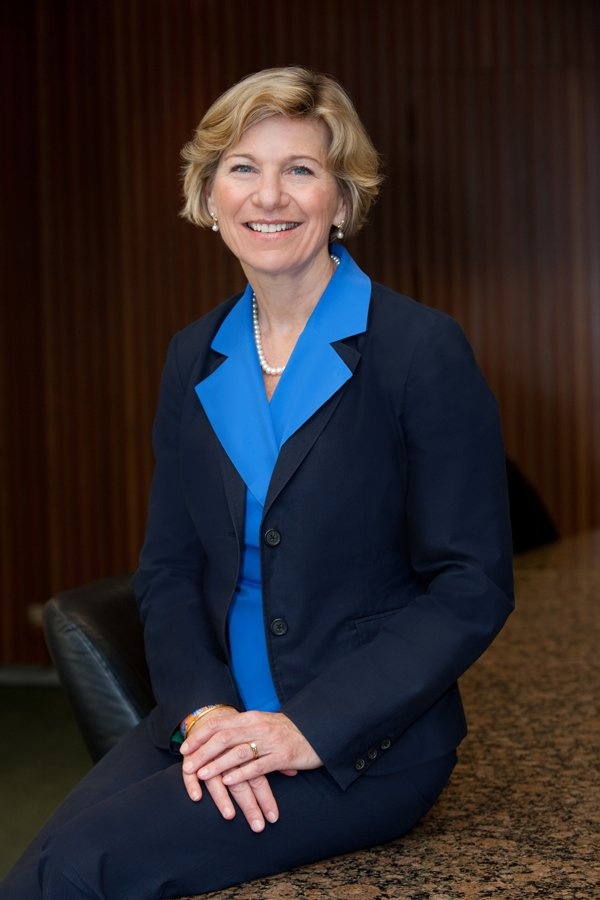
As chancellor of the University of California at San Francisco, Susan Desmond-Hellmann has come to know quite well the Bill & Melinda Gates Foundation’s largess.
The foundation has awarded nearly $70-million in grants to the university since the oncologist and former Genentech executive became chancellor in 2009.
By May 1, when she becomes president of the world’s largest philanthropy, Dr. Desmond-Hellmann will have to become much more familiar not only with the foundation but with Bill and Melinda Gates themselves.
Her appointment presents a rare managerial moment at Gates: Dr. Desmond-Hellmann is the foundation’s first leader hired from outside Microsoft. She is someone with no preexisting working relationship with the technology billionaire. She is also the foundation’s first chief executive with expertise in one of its chief missions: fighting disease.
“There aren’t many models for this,” said Stanley Katz, a Princeton University professor who studies large foundations. “It will be new for the Gateses as well.”
High-Profile Move
Dr. Desmond-Hellmann is not the only one facing such a scenario.
She is among several leaders who are new to foundations created by wealthy living donors. James Canales, president of the James Irvine Foundation and incoming leader of the Barr Foundation in the spring, must build a relationship with its low-key billionaire donors, Amos and Barbara Hostetter. So, too, must Bruce Reed, who is the first chief executive of the Eli and Edythe Broad Foundation.
“They’d better figure out how to get along with their donors,” Mr. Katz said.
Dr. Desmond-Hellmann’s situation is especially high-profile, given the scale of the Gates Foundation. So far, however, the relationship appears to have gotten off to a good start.
When the Gateses wanted to talk to Dr. Desmond-Hellmann about the job, they invited her to their Lake Washington mansion on Halloween night last fall while they were preparing their children for trick-or-treating.
“They were juggling their kids and me and all that we were talking about,” she said. “And I was going through in my mind how wonderful things were at UCSF, how much progress we had made, how gut-wrenching it would be to leave.”
But then the Gateses “started telling me about why they started the foundation and what they hoped to achieve in the world.”
“Listening to them talk about their passion and why they spend time doing this really resonated,” she said. “So I went home and told my husband.”
She was taking the job.
“Although I wasn’t looking for a different job, given the mission and the incredible leadership of Bill and Melinda, I felt I couldn’t say no,” she said.
Since then she has spent more time with the Gateses and will be participating in the foundation’s comprehensive annual strategy review sessions in February and March, a foundation spokesman said.
Well Prepared
Dr. Desmond-Hellmann, 56, a native of Reno, Nev., has never before managed a foundation. But several experts say her medical, scientific, and higher-education experience gives her the skills needed to run the $40-billion foundation.
“No one comes into these jobs with 100 percent of the skills they need,” said Brad Smith, president of the Foundation Center. “The learning curve for her will be in the business of philanthropy.”
Before her work at the university, Dr. Desmond-Hellmann was Genentech’s president of product development, “where she led the development and introduction of two of the first gene-targeted therapies for cancer, Avastin and Herceptin,” according to a recent statement announcing her new position. She worked at the pharmaceutical company for 14 years.
She said her experience as a leader and manager at Genentech and the university have adequately prepared her for her new job.
“There’s never a perfect way to get ready for a job that is as broad and complex as this role,” she said.
She added that she already has some important qualifications: She knows how to manage “very talented people who are technical experts in their fields, both in biotech and in higher education,” and has had to become adept at working with government regulators in the United States and internationally.
Dr. Desmond-Hellmann often appears on national lists of influential scientists and biotech leaders.
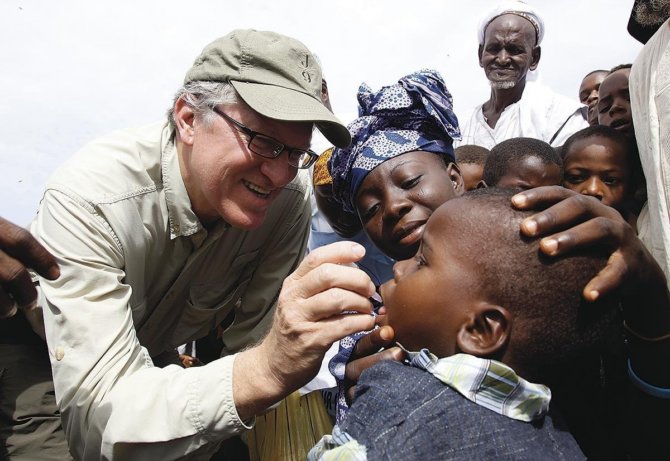
She and her husband, Nicholas Hellmann, worked in Uganda from 1989 to 1991 treating patients, teaching at Makerere University’s medical school, and studying AIDS transmission and an AIDS-related cancer, she said.
Joining Select Group
In her new job, Dr. Desmond-Hellmann may well become one of the highest-paid female chief executives of a nonprofit.
The current Gates chief executive, Jeff Raikes, makes $975,000.
The foundation and Dr. Desmond-Hellmann did not disclose her salary, but if she makes close to what Mr. Raikes earns, she will join a very select group of female leaders in the ranks of the best paid. Only two of the 20 highest-paid nonprofit leaders on The Chronicle’s most recent compensation survey are female.
Dr. Desmond-Hellman earned $462,000 at the university, and according to news reports is independently wealthy from her time at Genetech.
During Mr. Raikes’s tenure, the value of the foundation’s grants from 2008 to 2012 increased 21 percent, from $2.8-billion to $3.4-billion.
In an interview with The Chronicle in November, Mr. Raikes said his successor “will inherit a lot of momentum.”
“I don’t expect any shifts or pivots in strategy related to the selection of the new CEO,” he said. “That is the fundamental point that Bill and Melinda made. They are very satisfied with our core strategies.”
Will Dr. Desmond-Hellmann share that same satisfaction?
Mr. Katz said that although it’s unlikely she will change the foundation’s direction in working to improve American education, her expertise may lead her to re-evaluate the foundation’s approach to improving health in the developing world, He added: “She’s going to have to pick her spots.”