

February 13, 2018 | Read Time: 2 minutes
The Theory
There are legions of he-men out there ready to help the environment, as long as their masculinity is affirmed, according to a group of researchers who studied the gender associations of green causes.
Women have long taken the lead in buying green products and donating to environmental groups, because their benefit is often framed in ways that highlight nurturing and communal responsibility, which are often perceived as having feminine attributes.
To get more men involved, nonprofits should create fundraising material with bolder, angular fonts, darker colors and graphics, and motifs designed to look more macho. It’s a method used by the soda industry. Coke Zero, for instance, isn’t much different than Diet Coke. But to get young men to drink it, the company put it in a black can and cut the word “diet” because it was perceived as too feminine.
“If you make men feel more confident in their masculinity, if you boost their masculine identity so that it’s not really questioned, they’re more willing to adopt something that’s feminine,” says James Wilkie, assistant professor at University of Notre Dame’s Mendoza College of Business, who worked on the study.
The Test
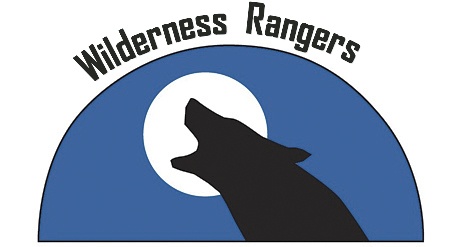
The researchers displayed two environmental group logos to 322 participants in an online survey. One design was for “Friends of Nature.” It had a frilly font and a light green and tan logo with a tree. The other, for “Wilderness Rangers,” was black and dark blue and was emblazoned with a howling wolf. The participants were then asked how likely they would be to donate to each group.
Results
The men were 12 percent more likely to donate to the group with the wolf. The rugged animal image helped, the researchers posit, as did the use of the term “wilderness” which has more adventuresome connotations than “nature.”
Dig Deeper
So did women balk at supporting the testosterone-fueled pitch? Not really. Their proclivity to donate did not decline in a statistically significant way. “Women are less deterred on average,” Mr. Wilkie says. “For men, there is more pressure to not be seen as feminine.”— Alex Daniels
Find It
“Is Eco-Friendly Unmanly? The Green-Feminine Stereotype and Its Effect on Sustainable Consumption,” Journal of Consumer Research, Vol. 43







