Google’s Gift Powers a Mobile Shower Service for Homeless People

By NICOLE WALLACE
Features Editor
December 3, 2014 | Read Time: 2 minutes
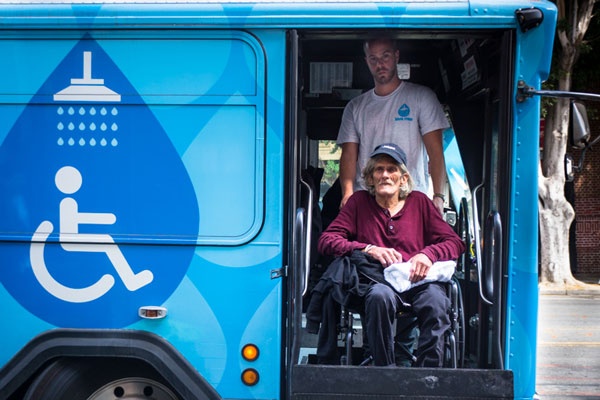
With a big gift from Google and a lot of little ones through Indiegogo, a fledgling nonprofit in San Francisco has converted an old city bus into a mobile shower facility for the homeless.
“Because we’re in a bus, we can go to where the people are,” says Doniece Sandoval, the founder of Lava Mae.
The service takes its name from the Spanish word lávame, which means “wash me.” Ms. Sandoval grew up in the South, where it’s not uncommon for people to have two first names, so the word became Lava Mae.
The idea for the hygiene service grew out of an encounter Ms. Sandoval had with a homeless woman who cried that she’d never be clean again. Around the same time, Ms. Sandoval read that the city’s transit system was decommissioning some old buses.
“My fascination with everything mobile-food just made me think, ‘Oh, my gosh, those buses,’ ” says Ms. Sandoval. “We could convert those into bathrooms on wheels.”
The need for Lava Mae’s service is great. According to Ms. Sandoval, San Francisco has 16 to 20 shower stalls for the 3,500 people who live on the city’s streets.
Converting the donated bus into a mobile shower facility cost $75,000. Google contributed $100,000, and an Indiegogo campaign this past fall brought in slightly more than $51,000.
In focus groups, people who are homeless said their primary concerns about bathing were safety and privacy. So the bus has two shower areas, each with its own entrance. After one person leaves the shower area another can enter.
The bus has been on the road three days a week since June during a testing phase. After Lava Mae begins full-time service in the spring, the bus will provide an estimated 12,000 showers annually. The group plans to have a second bus in service by March.
Ms. Sandoval says mobile showers are a cost-efficient way of providing hygiene services throughout the city in light of the city’s “astronomical” real-estate costs.
“Every nonprofit we know that doesn’t own their own property is terrified about the time when their lease comes up. Many of them are worried about getting displaced from their homes,” she says. “By going mobile, we don’t have to worry about that.”