Grant Makers Chip Away at a Stubborn Unemployment Problem

By Ben Gose
Senior Editor
June 13, 2010 | Read Time: 8 minutes
For some Chicago residents, the city’s failed bid for the 2016 Olympics may be a blessing in disguise.
A $2-million philanthropic fund created to assist poor people in certain neighborhoods who might have faced hardships because of the Olympics is now helping Chicago tap into $18-million in federal stimulus funds and put 2,200 unemployed city residents back to work. The effort in Chicago is one of a handful around the country in which foundations are helping cities and states obtain federal stimulus money that covers 80 percent or more of the cost of subsidized jobs.
“This is a tremendous opportunity for us to be able to have a big impact in our priority communities,” says Maria P. Hibbs, executive director of the Chicago Community Trust, where the 2016 Fund for Chicago Neighborhoods is housed.
With the nation’s unemployment rate still hovering around 10 percent, foundations are using that strategy and others to help get low-income people back to work.
But efforts to place unemployed workers into permanent, full-time jobs are still moving slowly in many areas.
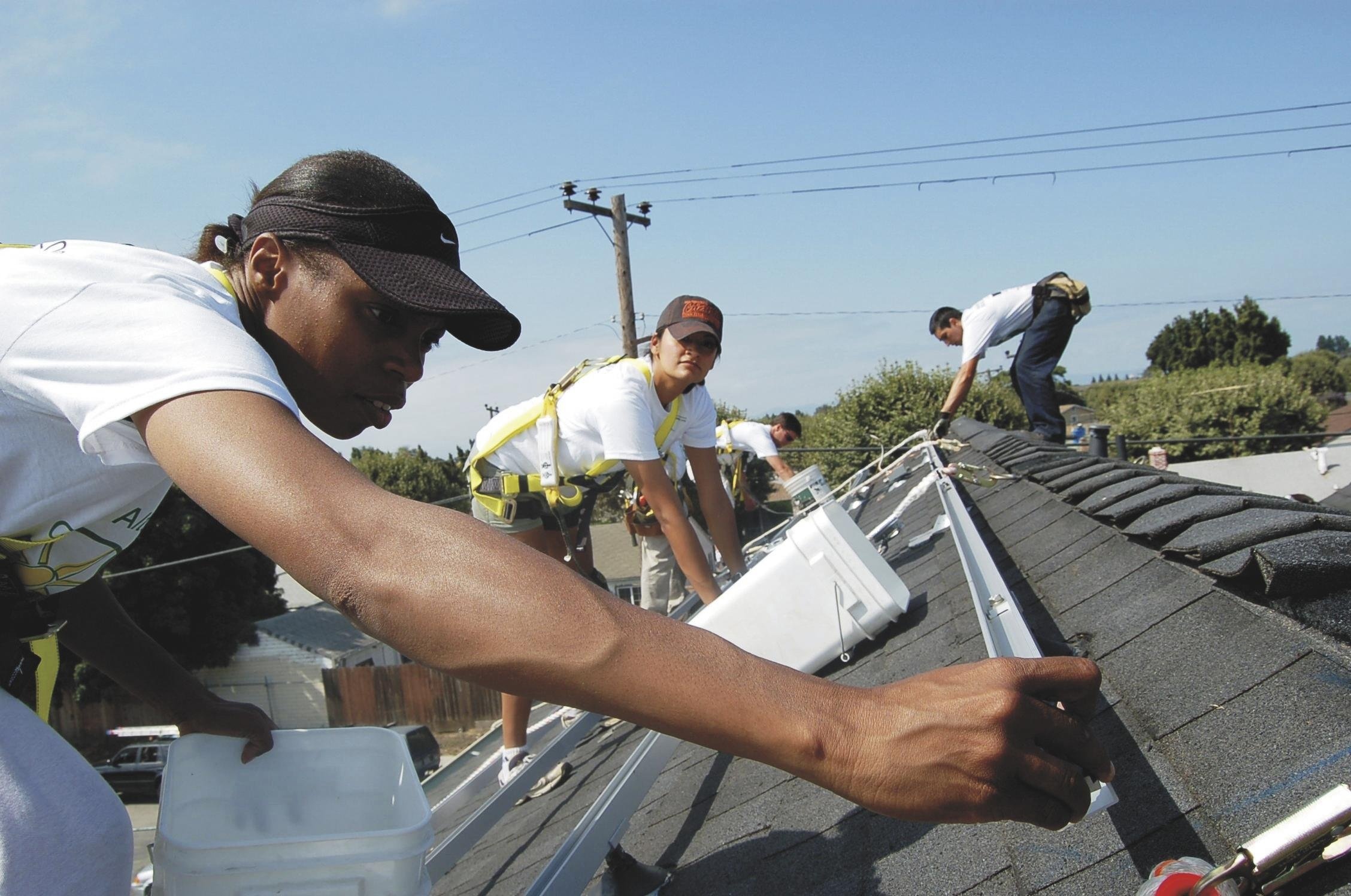
Some three months after completing a program in Philadelphia that uses foundation and stimulus money to prepare people for “green” jobs, such as installing solar panels, only two of the 13 graduates have found jobs related to their training.
“It’s really a struggle because the jobs aren’t opening as fast as we were hoping they would,” says Jerry Tapley of the Federation of Neighborhood Centers, which administers the program. “You hear about all this stimulus money that’s available, but it takes a while for it to trickle down to the actual creation of jobs.”
Adding to the challenge: The stimulus money runs out in 2011, and it is unclear whether such government aid will continue.
Other sources of federal money that could unlock jobs include the $5.7-billion Cash for Caulkers legislation, which has passed the U.S. House of Representatives and is expected to be approved by the Senate. It would provide homeowners with rebates for making their homes more energy efficient and would create an estimated 170,000 green jobs.
“Will Congress make a commitment to continue that spending within the regular budgeting process?” asks Stephanie Powers, project director at the National Fund for Workforce Solutions, a foundation collaborative that supports the Philadelphia jobs program. “That’s going to be a real challenge for 2011. And it’s all the more reason why it’s important for foundations to play an important role.”
Focus on Severe Cases
In the meantime, some foundations have decided to concentrate their job efforts in parts of the country with especially severe unemployment.
Last month the Ford Foundation announced that it would spend $200-million over five years in metropolitan areas, including Detroit, on needs such as job creation and improving transportation so that low-income people can get to jobs.
And the Surdna Foundation last month awarded a $500,000 grant to the Fund for Our Economic Future, a Cleveland-area organization focused on economic development, to create NEO@Work, a project designed to connect dislocated or low-skilled workers to employment opportunities.
NEO@Work, which is also seeking several million dollars from the federal Social Innovation Fund, aspires to elevate the education levels and skills of 10,000 northeast Ohio residents over three years.
“Philanthropy can’t replace the public sector,” says Brad Whitehead, the fund’s president. “But by partnering with the public sector, there may be ways that we lift the whole system.”
Foundations also have focused on making sure that the currently available federal dollars do not go wanting.
The stimulus legislation set aside $5-billion for an emergency fund to reimburse states for 80 percent of the cost of providing subsidized jobs or short-term assistance to families.
But as of early June, only three states—Delaware, North Carolina, and Washington—had tapped the full amount for which they were eligible, according to Clasp, an organization that advocates for low-income people.
The Annie E. Casey Foundation, in Baltimore, gave a $25,000 grant to Clasp so it could hold a series of Webinars to show state officials nationwide how they can gain access to the fund.
The Chicago Community Trust worked with the Illinois Department of Human Services to obtain federal aid to start Chicago Neighborhood JobStart, which will provide jobs to 2,200 young people ages 19 to 22.
The 2016 Fund, which was established by a group of donors that included six foundations, contributed $2-million and valued the training that companies will provide the new workers at $2.5-million. That enabled JobStart to obtain a match of more than $18-million from the emergency fund.
The jobs, which pay at least $8.25 per hour and last four months, will be offered to low-income people in distressed neighborhoods on Chicago’s south and west sides.
In other states, foundations are serving similar roles, including the Open Society Institute, in Maryland, the Joyce Foundation, in Illinois, and the Charles Stewart Mott Foundation, in Michigan, among others.
As of early June, 30 states and the District of Columbia have received $581-million from the emergency fund for subsidized jobs. The funds are being used to put more than 180,000 people to work.
But the fund expires on September 30. Advocates are worried that it will end before some states can fully enact their plans. “It took a while for the states to get going,” says Elizabeth Lower-Basch, a senior policy analyst at Clasp. “Now they are finally getting serious about this, and it’s just frustrating that the door may slam.”
Lasting Influence
Historically foundations have been small players in the job-training and employment arenas. Employers spend about $130-billion per year on skills training. The federal government spends $4-billion in a typical year under the Workforce Investment Act and is spending far more this year, thanks to the stimulus legislation.
Foundations spent only about $1.3-billion on employment-related grant-making in 2007, according to a study commissioned by two foundations—less than 3 percent of total foundation grant making that year.
But the foundation dollars may be the most likely to have a lasting influence on employment prospects for displaced and lower-skilled workers.
The vast majority of the corporate spending never reaches entry-level workers—it goes to help mid- and upper-level managers further hone their skills.
Some 200 foundations have joined the National Fund for Workforce Solutions, which takes an innovative approach to job training in 23 cities.
The training is preparing unemployed and low-skilled workers for careers in nursing and in green industries like home weatherization.
The fund is supported by nine national foundations—including Annie E. Casey, Hitachi, and Wal-Mart—which have given a total of $23-million to the fund. Local donors and foundations must match the support from the national grant makers with $4 for every $1 they receive.
By the end of March, they had contributed a total of $110-million to the programs.
Working With Employers
One practice championed by the National Fund involves collaborating with all the employers in one field—like, say, the health-care industry—in the planning stages of a training program.
“The obvious reason for that is we want to make sure that our folks get jobs at the end,” says Damian Thorman, national program director for the John S. and James L. Knight Foundation and vice chair of the National Fund. (The Knight foundation has given $1.3-million to the fund.)
Community colleges hope to play a growing role in job training as well.
A network of 25 community colleges in distressed automotive communities is seeking grants from several foundations to hire a coordinator. The newly formed coalition, called the Auto Communities and Community Colleges Network, will develop strategies for serving dislocated auto workers and explore how colleges can help stimulate economic development in their areas.
Green Jobs
Despite the slower start than many had hoped for, green jobs continue to be one of the primary areas for expanding the job market.
Mr. Tapley, of the Federation of Neighborhood Centers, says the green-jobs readiness program in Philadelphia has hired a new employee to find jobs that might be available for the program’s graduates and to take advantage of opportunities that will open up if the Cash for Caulkers legislation becomes law.
In the meantime, some trainees have taken other, more certain paths.
Alvin Smith, a 50-year-old Philadelphia resident who lost his job at an Oriental-carpet business more than a year ago, was one of 13 graduates from the green-jobs readiness program in March.
The program, primarily supported by a $1-million stimulus grant from the Labor Department, prepares trainees for jobs like weatherizing homes and installing solar panels.
Mr. Smith was a member of the first nine-week class in the training program, which works with the Sustainable Business Network of Greater Philadelphia to identify what math and literacy skills the trainees would need on the job.
Mr. Smith, for example, was assigned a math problem that required him to calculate volume in determining how much foam insulation to put in a wall during a weatherization project.
In the spring, Mr. Smith began a two-month apprenticeship program offered by a Philadelphia center that specializes in solar-panel installation.
But he quit the program when he was offered a full-time, $30,000-a-year job with benefits hauling trash for the city of Philadelphia.
“I can’t really turn down an opportunity like that, given that I was unemployed for a year and a half,” Mr. Smith says.