Greater Openness About Finances Helps a Chicago Charity Make Plans

By NICOLE WALLACE
Features Editor
December 4, 2011 | Read Time: 2 minutes
Budgeting and monitoring expenses used to be the domain of a few key people at Big Brothers Big Sisters of Metropolitan Chicago, but now, after the charity’s experience in a financial-management program sponsored by the Wallace Foundation, the whole staff is involved.
Under the new system, the group creates its budget from scratch each year, starting with its program goals and building it “detail-by-detail” from there, says Johanna Sigurdardottir, the group’s director of finance, who meets regularly with members of the program staff during the process.
Involving more staff members in the process leads to a more complete budget, and managers feel more confident because they understand the details, says Ms. Sigurdardottir.
“Instead of coming to me and asking, ‘Can I afford to do this?’ they can actually make those decisions based on, ‘OK, I have X amount for the year, and I’m going to run my program this and that way,’” she says.
The charity is one of 26 Chicago social-service nonprofits enrolled in the Wallace Foundation’s program designed to bolster their financial management. The groups were chosen because they run strong after-school programs, a longtime giving priority of the New York foundation.
Colorful Scorecards
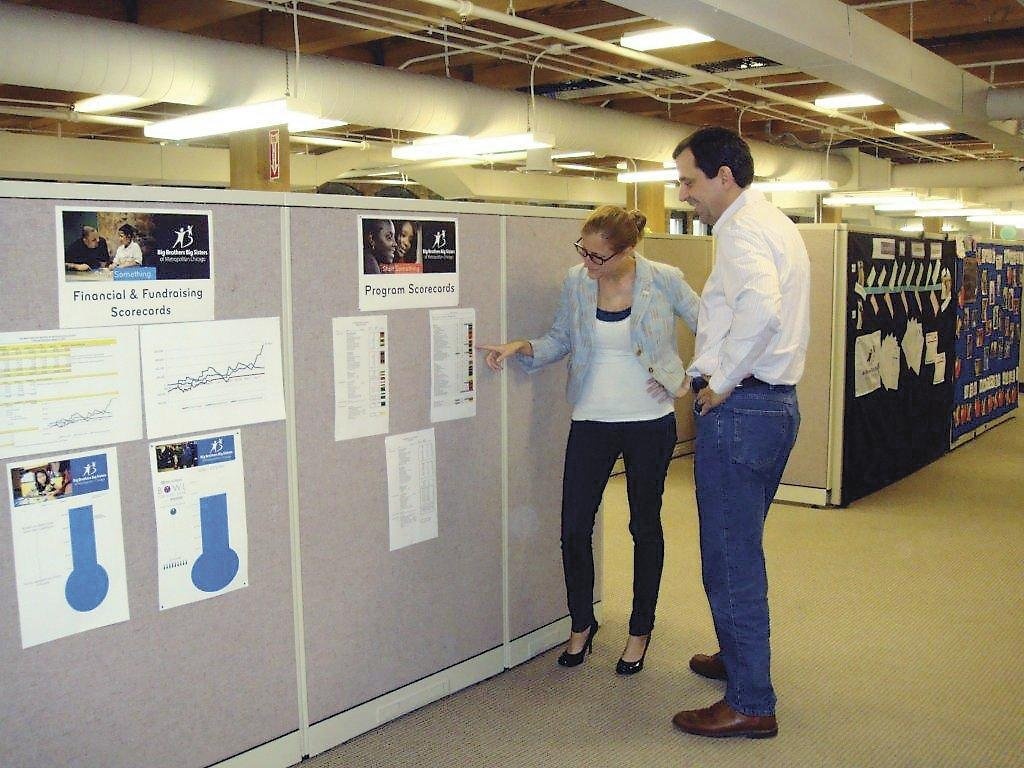
At Big Brothers Big Sisters of Metropolitan Chicago, employees receive monthly scorecards by e-mail—usually the day after the previous month’s reporting closes—that show how the organization is doing on its financial, program, and fund-raising goals. Each item is shaded a different color. Green means the organization is on target, yellow that the group is up to 10 percent below its target, and red that it is 10 percent or more off its target.
The scorecards also hang on a bulletin board in the group’s offices and always draw the attention of visitors, says Art Mollenhauer, the organization’s chief executive. He says it’s a great way to show people exactly how the group is doing but that some employees question whether it might be a little too transparent.
“The red thing is controversial,” says Mr. Mollenhauer. “Say you’re a foundation: We’re showing you very openly where things are red, where things are yellow, where things are green.”