
Half of Donors, and 85% of the Wealthiest, Say They’ll Give More This Year

By HEATHER JOSLYN
Contributor
November 20, 2018 | Read Time: 3 minutes
Nearly half of donors plan to give more to charity this year than in 2017, according to a new survey.
More good news for fundraisers: The wealthiest donors appear to be the most eager to give. Among people whose households have an income of more than $150,000, 85 percent said they will give more this year.
However, roughly half of people with household incomes under $100,000 plan to give the same amount as in 2017. Despite grim predictions that the new federal tax law will dampen giving, only 10 percent of Americans said they would likely give less money in 2018 than they did last year. That might be because fewer than 10 percent of adults surveyed said tax benefits are their primary reason for giving.
However, 42 percent of all people surveyed said they would definitely or probably donate less if they knew they would receive less of a tax incentive.
Generation X (people now in their late 30s to mid-50s) and men of all ages were particularly adamant: Sixty-two percent of Gen Xers, and 59 percent of males, said they would give less if they knew they would receive less of a tax break. (Only 22 percent of all women surveyed said the same.)
The question now is whether low- and middle-income donors will be surprised when they do their taxes next year. The new tax law is expected to reduce giving by more than $16 billion because only upper-income people now have easy access to the charitable deduction. Under the new law, people would need to have tax deductions of at least $12,000, or $24,000 for a couple, to make it worthwhile to write off their charitable gifts.
If donors are asking the charities they support about what the new tax law means for their giving, they should be directed to their financial adviser, suggests Stina Rubin, Classy’s director of account management, in an email shared with the Chronicle.
“Taxes are both personal and complex, making it difficult to have a one-size fits all communication approach,” Rubin said in the email.
The survey is a follow-up to a survey of 1,000 adults taken in September and released in October by Classy, an online-fundraising company. The latest study was conducted in the week after the midterm elections as a means of gauging their impact on year-end giving.
Voting and Giving
In addition to the booming economy, other factors are likely to boost giving at the end of 2018, according to the study:
Continued disasters and violence. The October report said that disaster relief was the top cause for which survey participants expressed support. In the latest report, it retained its top-priority status: Fifty-four percent said they have given or plan to give to Hurricane Michael or Hurricane Florence relief and recovery efforts. Forty-four percent said the mass shooting at the Tree of Life synagogue in Pittsburgh will make them more likely to donate to charity this year.
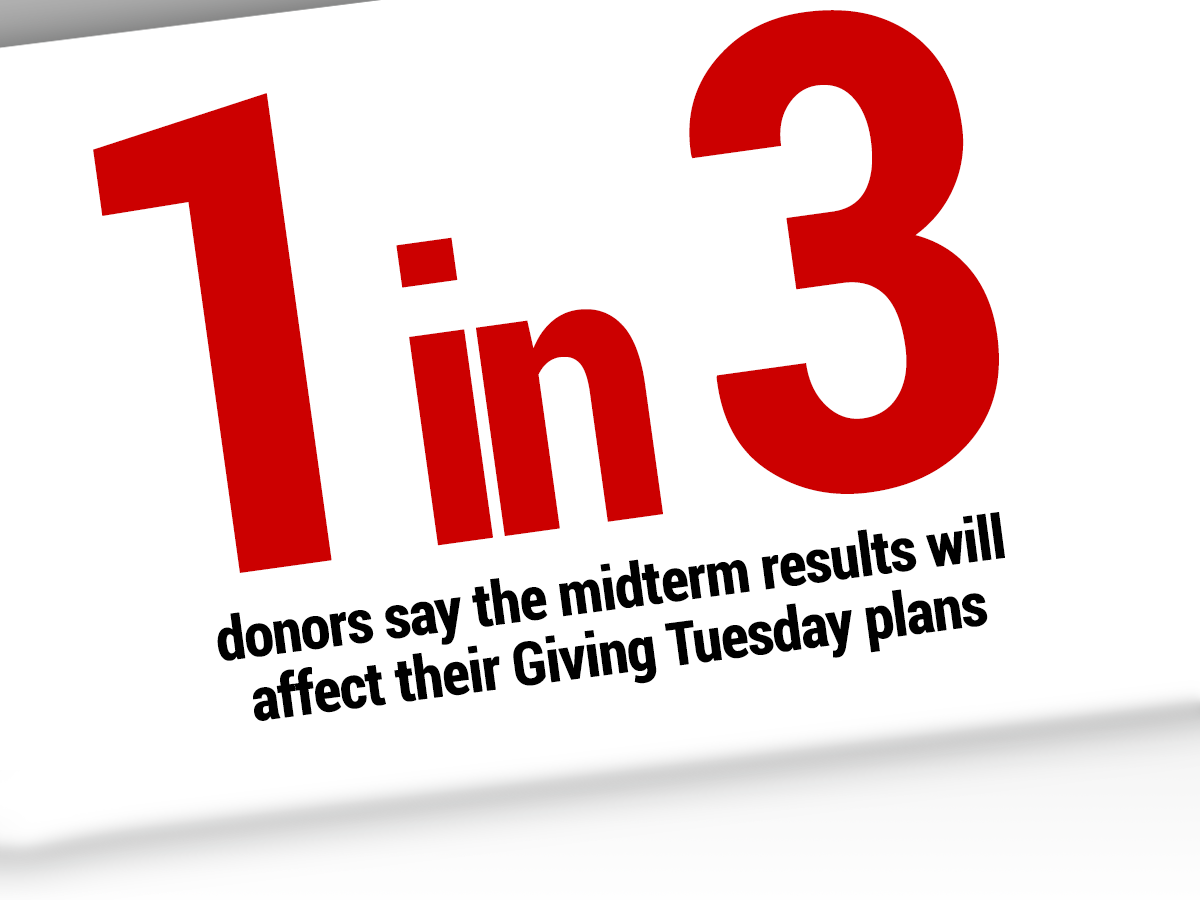
The midterm election results. One third of survey participants said the election results would influence their plans for Giving Tuesday. This is an increase from the October report, when one in four people said the same. Republicans were more likely than Democrats to say the election would influence their Giving Tuesday plans, 44 percent compared with 32 percent.
Civic engagement. The November election saw the highest level of voter turnout, just over 49 percent, of any midterm election in a century, numbers that could translate into more giving. Survey participants who said they voted this month were twice as likely as nonvoters to say they would also donate on Giving Tuesday.





