
Health Care for People — and for the Planet
Poor people living in rainforests rely on illegal logging, which contributes to climate change. One charity is trying to change that.

By Ariella Phillips
Contributor
July 9, 2019 | Read Time: 2 minutes
On a trip to Borneo in 1993 to study orangutans, Kinari Webb saw rainforest habitat being lost to illegal logging.
People living in the Indonesian region would cut down trees and sell the wood for a variety of subsistence needs, including medical care.
After spending 400 hours speaking with locals, Webb founded Health in Harmony in 2005. The goal was twofold: provide medical care for locals and combat the loss of rainforests in Gunung Palung National Park.
With the depletion of rainforests contributing to climate change, the nonprofit says combining medical care with environmental protection makes perfect sense. Both are crucial to human health.
“Scientists are united in telling us we have about 11 years in order to stop our destructive behaviors,” says Jonathan Jennings, executive director.
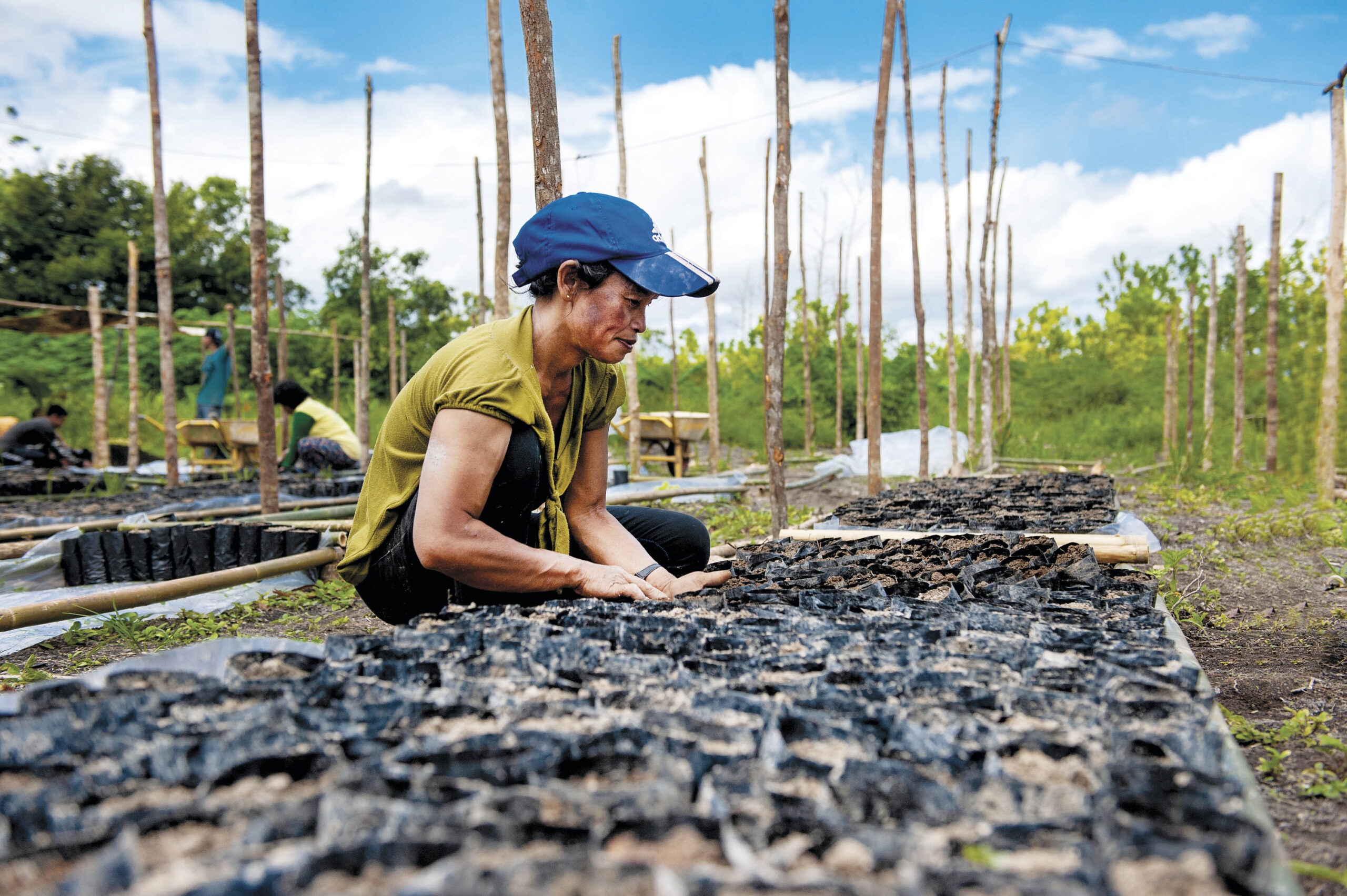
The nonprofit runs a hospital in Borneo that works in tandem with conservation. The hospital accepts noncash payments such as seedlings, which are then used to grow more trees at a reforestation site.
Families used to have to cut down 20 to 30 trees to pay for a C-section, Jennings says.
Over the past 10 years, Health in Harmony’s work has helped deliver an 88 percent drop in the number of households illegally logging inside Gunung Palung National Park and a more than 60 percent drop in the rate of infant mortality, according to data analyzed by Stanford University.
Families were logging because they had no other options for income, he says. They now run their own businesses such as juice stands and poultry farms. Health in Harmony will soon work in Brazil and Madagascar, too.
“We’re not the typical organization that does only health or only does livelihoods or only does agriculture,” says Jennings. “We often say we work at the intersection of human health, ecosystem health, and planetary health.”




