
Heart Charity Takes Pulse of Its Organization and Gets Better Results

By GRANT WILLIAMS
Contributor
October 17, 2010 | Read Time: 7 minutes
The Great Rivers Affiliate of the American Heart Association achieved a 7-percent, $1.2-million increase in revenue over the past year in its 110 fund-raising events such as walkathons, black-tie dinners, and luncheons—a substantial rise at a time when the economic downturn has battered events at many other charities.
The five-state Great Rivers regional office credits these and other successes in large part to the American Heart Association’s ambitious, nationwide effort to set precise goals and compare results in almost every part of its operations.
The charity regularly measures how well it is doing not just in fund raising but also in meeting its mission in such ways as paying for research and helping hospitals treat heart disease and stroke.
The heart association says its efforts to focus on the numbers, an approach adopted more than a dozen years ago, has helped it work successfully with governments, medical centers, researchers, and others to fight disease. Federal figures show a 35-percent reduction in the death rate of Americans from coronary heart disease since the association set health goals in 1998 and began its efforts to persuade hospitals to follow its treatment guidelines.
As more and more charities have focused on ways to measure the results of their programs, the American Heart Association has emerged as a leader in such efforts.
“What strikes me about the heart association is how it takes into account both the hard-and-fast numbers—such as fund-raising figures—while also focusing on measuring the impact of their programs,” says Mark C. Dowis, associate executive director of Paralyzed Veterans of America. “Most nonprofits don’t develop these systems and are not nearly as metrics-driven.”
Curbing Deaths
The heart association began its intense focus on measuring progress in the 1990s when it started to streamline its operations (eventually consolidating more than 50 affiliates into just eight). In 1998 it decided to set a “bold goal” for 2010 that the organization could rally behind. A chief priority: a 25-percent reduction in deaths from coronary heart disease and stroke and in key risk factors, such as uncontrolled blood pressure.
“We knew we wouldn’t achieve the bold goal by ourselves, but we decided to hold ourselves accountable to work on this and to focus, focus, focus,” says Cass Wheeler, who as chief executive of the American Heart Association from 1997 to 2008, helped set the goal and counts its development as “the single most significant thing that occurred while I was the CEO.”
Mr. Wheeler says the charity’s board of directors and volunteers were supportive from the start and energized by the action.
“Developing the goal changed everything within the organization,” he says, “from the alignment of resources to a context for volunteers to say, ‘Oh my gosh, what I’m doing is XYZ and that’s contributing to the 25-percent reduction.’”
The heart association began to measure its progress and succeeded in meeting or exceeding most of its 2010 priorities. Statistics from the Centers for Disease Control and Prevention and other government and private sources confirm the progress is real.
Last year, the charity set new goals for 2020, chiefly to improve the health of all Americans by 20 percent while reducing deaths from cardiovascular disease and stroke by 20 percent.
Much of the association’s health push has involved working with hospitals to encourage them to adopt treatments and therapies that have been proven to make a difference for patients. Armed with research on what works, the organization recruits hospitals into a program called Get With the Guidelines and provides them with seminars, Webinars, and other assistance for patients with heart disease, heart failure, and stroke.
Among the steps that hospitals are encouraged to take: Give every patient who enters a hospital with heart failure a “heart-function” test to see why the patient has the condition and to treat it with specific drugs.
Hospitals participating in Get With the Guidelines provide electronic reports to the heart association about their treatment of patients under the guidelines at least every three months.
Nancy Brown, the American Heart Association’s chief executive, says if all of the nation’s acute-care hospitals had fully followed the program’s guidelines for all patients with heart disease, deaths from such disease would have fallen by 18 percent—a good chunk of the 25-percent reduction in deaths sought by the organization by 2010.
To date, 1,585 acute-care hospitals have adopted at least some aspects of the Get With the Guidelines program, meaning the association has reached all but about 200 of these medical institutions. More than 2.3 million patients have been treated under the guidelines.
Hospitals like the program because it gets results, Ms. Brown says, and they appreciate the chance to share information with one another.
At the same time, Ms. Brown says a “healthy competition” among hospitals has been created because the heart association gives them reports of how they are doing compared with other facilities (without naming names) and provides publicized annual “recognition awards” to hospitals that do the best.
“That is a very clever way to promote the program,” says Daniel O’Dea, chief of cardiology at Vassar Brothers Medical Center, in Poughkeepsie, N.Y. The center is among those that have received an award.
“It’s something that a hospital can put on its wall or on its Web site. It looks good for you,” he says. “And when you look at that list, it’s not all the Cleveland Clinics and the Mayo Clinics of the world but those that do it just as well as they do it.”
Effort Pays Off
Focusing on the numbers has helped the American Heart Association pinpoint its strengths and weaknesses, its officials say.
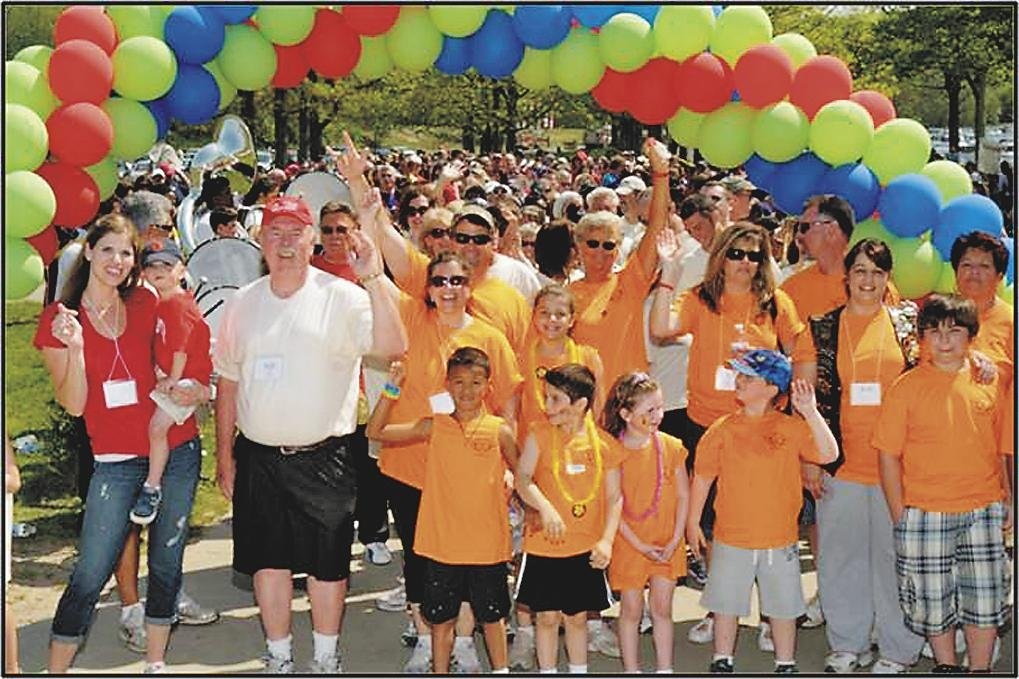
For example, in the spring and fall of each year, the charity’s affiliates hold a total of more than 340 walkathon fund-raising events in which hundreds of thousands of people participate with their co-workers, friends, and families.
In recent years, the heart association started to notice that the average amount of money collected by each walker in its walkathon events had started to decline. In the fall of 2007, the figure was $266, in 2008 it was $253, and in 2009, $233.
The solution? “You can’t force a walker to raise more money than they are going to raise, but you can try to get more walkers,” says Ms. Brown.
So far so good. The number of people who raised money in fall walks, for example, has climbed from 237,433 in 2007 to 265,214 in 2008 and 282,024 in 2009. The goal for 2010 is 300,000.
Looking carefully at other aspects of what it takes to make events of all kinds succeed has also been a key to fund-raising success.
A couple of years ago the charity calculated that it could raise more money if its eight affiliates lined up volunteers to chair events three years in advance.
The calculation was proved correct, bringing gains to the Great Rivers Affiliate and others.
“When we were focused on lining up only one chair at a time, we had a big gap after each event in planning for the next one,” says John Meiners, who recently joined the heart association’s national office after a stint as the Great Rivers Affiliate’s executive vice president. “And it was an undeterminable lapse, because we didn’t know when we were going to get a new chair on board and start to get things moving.”
While thinking ahead requires extra effort, it has helped the affiliates raise more money and has proven popular with the volunteer chairs, he says. “They don’t like to be ‘last-minuted’ themselves, and this gives them time to plan, to get ramped up with the organization and event,” says Mr. Meiners.
Progress reports are produced each week, and affiliates check to see how they are doing in terms of current goals and compared with previous years.
“It’s a very regimented process that helps keep our staff focused,” says Mr. Meiners.
Full-time consultants on the staff of the national office provide advice and analysis when an affiliate calculates it is off target or needs outside perspective, and they share successful ideas with affiliates across the country.
Ms. Brown says closely tracking priorities and goals takes a great deal of time from many of the charity’s staff members. “This isn’t just an exercise in creating more reports,” she says. “This is wanting people, externally and internally, to understand and know what you value, what you stand for, and what you are willing to hold your organization accountable to. If that isn’t your driver, then all you are doing is creating reports.”




