Helene Gayle Plans to Put Her Fundraising Prowess to Work Leading Spelman College

By Alex Daniels
Senior Editor, Foundations
April 28, 2022 | Read Time: 5 minutes
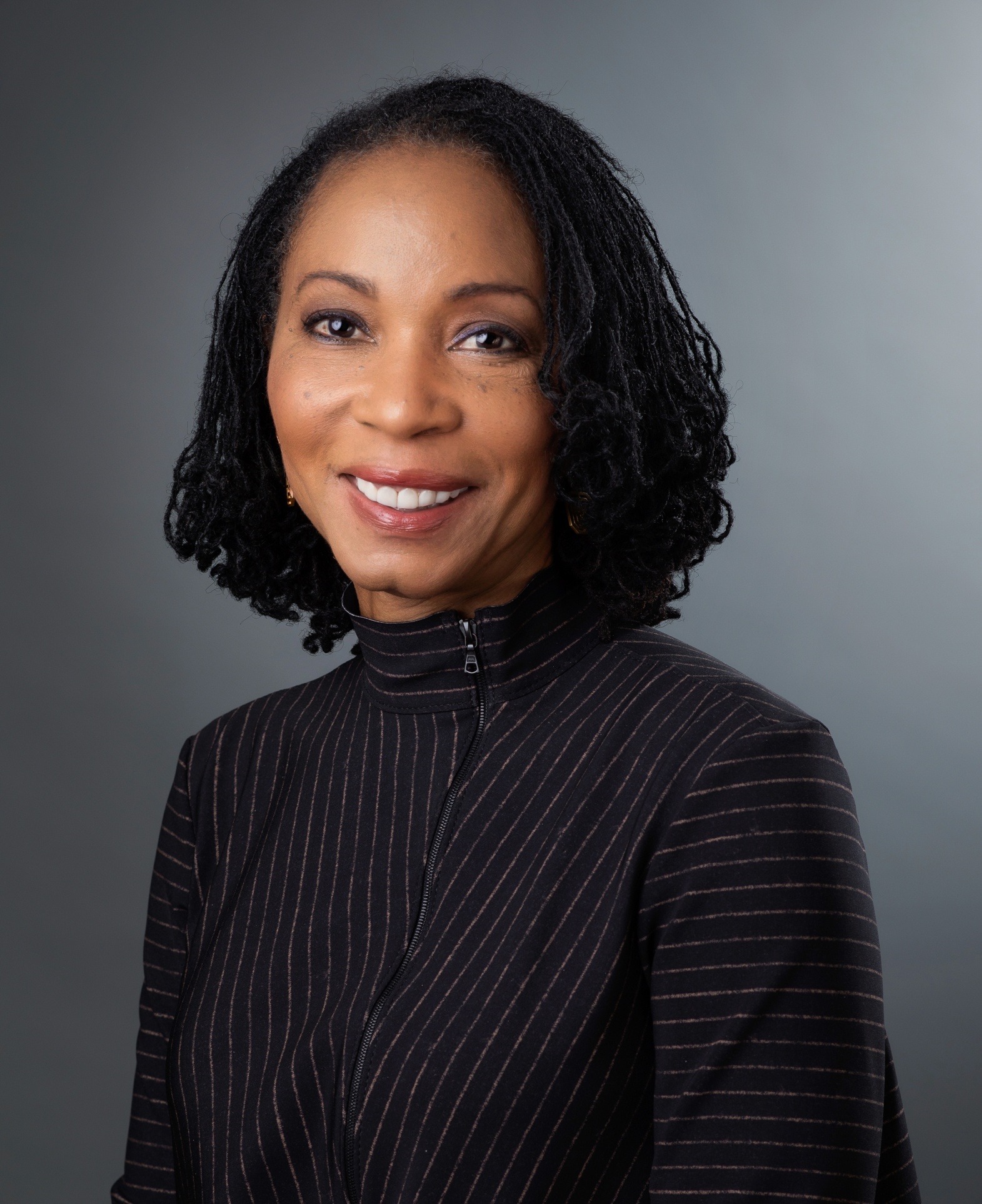
Helene Gayle, who has led the Chicago Community Trust for the past five years, has been tapped to serve as Spelman College’s next president. The transition comes at a time when historically black colleges have drawn the attention of major philanthropic donors including MacKenzie Scott and Michael Bloomberg.
Gayle, a pediatrician, previously served in leadership roles in government, at the Centers for Disease Control; in philanthropy, at the Bill & Melinda Gates Foundation; and at a charity, as president of the international humanitarian organization CARE. She will start her new position in July. Gayle succeeds Mary Schmidt Campbell, who in August announced she would retire as president of the women’s college.
In an interview, Gayle said her top priority at Spelman will be to increase scholarships and financial aid. To accomplish that, she plans to be an active fundraiser.
“Goal number one is to make sure that this incredible experience that is life-changing for many young women of African descent is available to more women,” she said. “So that means money.”
Since taking over in 2017, Gayle has led efforts to amass $4.7 billion in assets at the Chicago Community Trust, which is one of the nation’s oldest and wealthiest community foundations. Last year alone, the trust attracted $1.7 billion in gifts. Gayle said her largest accomplishments were focusing the grant maker on equity issues and, for the first time, getting the trust to take a more forceful stand as an advocate.
As part of a new 10-year strategy led by Gayle to reduce racial and ethnic wealth disparities, the trust promoted the equitable distribution of federal Covid relief funds in Chicago, championed earned-income tax credits to lower the tax burden on low-income Americans, and pushed against predatory lending practices.
“While our grant dollars are important, our ability to influence policy is equally important,” she said.
Untraditional Path
The diversity of Gayle’s background and her fluency in all of the “levers and mechanisms” of large institutions will help her at Spelman, predicted Yolanda Watson Spiva, a Spelman alumna and author of Daring to Educate: the Legacy of the Early Spelman College Presidents.
“While one may view her as a nontraditional candidate, increasingly we’re seeing institutions being helmed by people who do not come through the traditional department chair, provost route,” she said.
Watson Spiva, president of Complete College America, an education advocacy group, said Gayle’s background as a public health leader could position Spelman well in the face of future pandemics or other health crises.
But perhaps most important, Watson Spiva said, is the network of donors that Gayle has made in her work as a philanthropic leader. For college presidents, she said, attracting gifts is a huge part of the job.
“You typically have to have a very outgoing, engaging leader who also is a very strong fundraiser,” she said.
Shifting Roles
The trust’s loss is Spelman’s gain, said Laurie Paarlberg, the Charles Stewart Mott Chair on Community Foundations at Indiana University’s Lilly School of Philanthropy.
“I’m disappointed for the community foundation,” she said. “She’s been an incredible visionary leader in Chicago.”
Paarlberg credited Gayle with leading a “huge shift” at the trust, as it made closing the racial and ethnic wealth gap its top priority. In doing so, she said, Gayle not only led new grant-making strategies but was effective in bringing together donors, nonprofits, business leaders, and other philanthropies in pursuit of a common goal.
Gayle helped pioneer a new type of community foundation leader, Paarlberg says. Rather than simply seeing the foundation as a steward for the philanthropic resources of donors, Gayle has worked alongside city residents to identify how foundation grants and policy changes can improve their lives. And she’s connected residents and nonprofit groups to donors.
The shift was made easier, Gayle said, because donors and trustees were ready for change. A big part of her pitch in developing the strategy, she says, was stressing that equity is not only rooted in justice, but it is also the economically smart thing to do in a city where two-thirds of the residents are people of color.
“You can’t keep back two thirds of your population and expect the rest of the population is going to move forward,” she said.
Giving Boom
Although the iconic Atlanta college is a different kind of institution than a big city community foundation, Gayle says the work she led in Chicago to reduce the racial wealth gap will continue at Spelman. Gayle said HBCUs have played an important role as an “enablers of later wealth.”
Gayle herself is a product of the Ivy League. She earned an undergraduate degree at Barnard College and a medical degree from the University of Pennsylvania. She also earned a master’s degree in public health from the Johns Hopkins University. But her aunt and her cousin both graduated from Spelman, and Gayle says her long time in Atlanta at both CARE, and the CDC helped her forge long-lasting relationships with a network of Spelman graduates.
Since the protests for racial justice following the 2020 murder of George Floyd by Minneapolis police, HBCUs have attracted big donations from sources that had not given before. Chief among them is MacKenzie Scott, who has pledged $560 million to HBCUs in the past two years, including $20 million to Spelman in 2020.
Also in 2020, Michael Bloomberg committed a total of $100 million in scholarship funds to four historically Black medical schools: the Charles Drew University of Medicine and Science; Howard University College of Medicine, Meharry Medical College, and Morehouse School of Medicine.
The extent to which donations to all historically Black colleges and universities have risen isn’t clear, but among a slice of them, donations have skyrocketed. Private giving to 18 HBCUs rose by 322 percent, according to a survey released in February by the Council for Advancement and Support of Education.
Gayle is confident that donors will want to continue to give.
“If I am effective in communicating the value proposition of a Spelman education — how life-changing it can be and how it can contribute to solving the problems of our time — then I think many people will be interested in being donors,” she said. “People like to be associated with success, and I think Spelman is a story of success.”