
High-Powered Effort to Help Resettle Afghan Refugees Awards $8.3 Million in Grants

By NICOLE WALLACE
Features Editor
November 17, 2021 | Read Time: 4 minutes
Cecilia Muñoz and John Bridgeland were brainstorming ways to get more Americans involved in refugee resettlement. It was an unusual conversation in today’s polarized political environment. Muñoz served as director of the White House Domestic Policy Council under President Obama, while Bridgeland filled that role during the Bush administration.
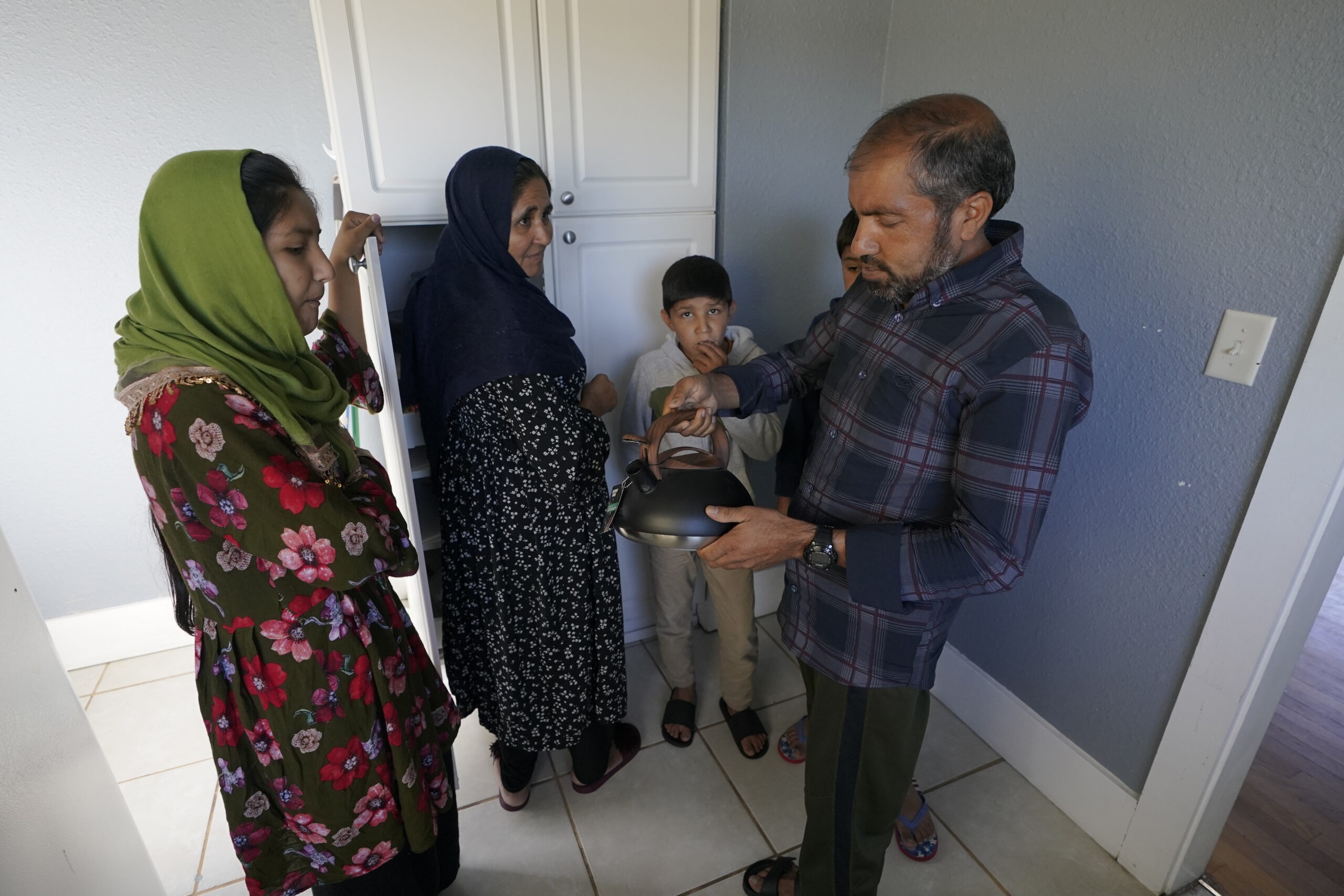
Then the United States military withdrew from Afghanistan, and tens of thousands of Afghans fled to the United States — speeding up the policy veterans’ plans.
“The whole country was focused on this particular group of newcomers,” Muñoz says. “All kinds of new actors, people who might not have really thought about resettlement before, got very interested, very quickly in helping our new Afghan neighbors resettle.”
Things have moved quickly since then. In September, Bridgeland and Muñoz launched Welcome.US, an effort to mobilize everyday Americans, businesses, big donors, foundations, civic and veterans’ groups, and others to help resettle arriving Afghans. It also hopes to support innovation and drive systems changes that build the country’s capacity to welcome refugees. Welcome.US has some high-voltage supporters. President Barack Obama and Michelle Obama, President George. W. Bush and Laura Bush, and President Bill Clinton and Secretary Hillary Clinton serve as honorary co-chairs.
The organization’s fundraising arm, the Welcome Fund, has raised more than $12 million so far, including a $4.6 million donation from former investment manager Ed Shapiro through the Shapiro Foundation.
Stretched Capacity
Today, the Welcome Fund is awarding more than $8.3 million in grants to nonprofits that are helping to relocate and find housing for Afghan refugees. The grants are divided into three areas, including $2.5 million to support the nine core resettlement agencies designated by the U.S. Department of Health & Human Services. The grants will help organizations support short-term and long-term housing for Afghan families.
“At a time when our network is stretched to its capacity, these additional resources to help us cover costs of housing solutions for our Afghan friends will make a significant difference,” Tsehaye Teferra, CEO of the Ethiopian Community Development Corporation, said in a written statement.
The Welcome Fund is also providing $600,000 to 12 local nonprofits that bring special skills, such as housing expertise, language and cultural competencies, or experience helping refugees acclimate, to resettlement efforts. “These are community-based nonprofits who are bringing a particular superpower to this enterprise,” Muñoz says.
The final set of grants, $5.2 million in total, will go to support innovations by nonprofits that take on systemic challenges in resettlement work. The International Rescue Committee’s Center for Economic Opportunity, for example, is setting up a revolving loan fund for housing.
In addition to the $8.3 million grant effort, Welcome.US is partnering with the Schultz Family Foundation, Stand Together Foundation, and the Starbucks Foundation on a refugee resettlement effort called the Mobilizing America for Refugees Fund, which will provide more than $1 million to community-based organizations and engage more than 10,000 volunteers across the country. Grants from the fund will be awarded in coming weeks.
‘Unifying Exercise’
Welcome.US’s goal is to become a hub that makes it easier for people and institutions to plug into resettlement efforts. Visitors to the organization’s website can find organizations in their area that welcome refugees. The organization has set up an exchange on the site that lets resettlement organizations list needed supplies and lets businesses post what they can share with newcomers. It hopes to aggregate job opportunities soon as well.
The public’s response to the influx of new arrivals from Afghanistan has been incredibly heartening, Muñoz says.
“Americans from all walks of life have come forward to say, ‘We understand that these are people who stood with us and that it is time for us to stand with them,’” she says. “This is a unifying exercise. This is something which is bringing together people who might otherwise not be connected — across political lines and across other things which typically divide us.”





