

March 17, 2011 | Read Time: 3 minutes
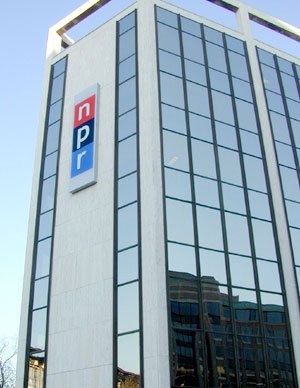
The House today approved a bill to end federal aid to NPR in a vote that highlighted a sharp partisan divide over the role of government in fostering public broadcasting.
Following a debate sprinkled with references to “Prairie Home Companion,” “All Things Considered,” and Big Bird, lawmakers voted 228 to 192 to adopt legislation, H.R. 1076, that would also bar public radio stations from using federal money to pay dues to NPR or to buy radio programs from any source. The vote was mostly along party lines, with all but eight Republicans voting in favor and all Democrats voting against.
“I want NPR to grow on its own,” the bill’s sponsor, Rep. Doug Lamborn, Republican of Colorado, said on the floor. “I’d like it to thrive. Just remove the taxpayers from the equation.”
Many of the bill’s Republican supporters portrayed it as a way to save money at a time when the country is trying to bring down its national debt. However, some also accused the broadcaster of having a liberal bias and cited as evidence recent undercover videos that showed NPR’s former top fund raiser making disparaging remarks about the Republican Party and the Tea Party.
“The image we have seen on the videos tells us something about the internal culture of NPR,” said Rep. Steve King, Republican of Iowa.
Democratic lawmakers assailed the bill, saying Republicans were trying to harm NPR for ideological reasons and that the measure would cripple local radio stations by depriving them of revenue to buy programs that their listeners want. Many also praised NPR’s programs. “Right now millions of Americans tune into NPR stations for one reason,” said Rep. Lois Capps, Democrat of California—because it offers high-quality programming and thoughtful, evenhanded news coverage.
Local Affiliates
NPR relies on federal grants, mostly from the Corporation for Public Broadcasting, for only 2 percent of its revenue. But it would take a bigger hit if its local affiliates could not use federal money to buy its programs or pay their dues.
Of $180.6-million in revenues in 2010, NPR got $2.8-million in dues and $65-million in program fees.
House Republicans said that under current federal law, stations must spend about 26 percent of their federal grants to produce or acquire programs. The bill would allow local stations to use government money for daily operations.
White House Opposes Cuts
The legislation is likely to face a rougher ride in the Democratic-led Senate. In addition, the White House issued a statement today saying is strongly opposed the measure.
“Undercutting funding for [local] radio stations, notably ones in rural areas where such outlets are already scarce, would result in communities losing valuable programming, and some stations could be forced to shut down altogether,” the statement said.
The House voted last month to end all federal spending on the Corporation for Public Broadcasting, which provides grants to public television and radio stations. But that measure, included in a 2011 spending bill, was rejected by the Senate. The new legislation would also pull federal money for public broadcasting from other government agencies, including the Commerce Department, Education Department, and National Endowment for the Arts.
Editor’s Note: Suzanne Perry was communications director for Minnesota Public
Radio from 2002 to 2004.




