

February 29, 2016 | Read Time: 4 minutes
Virtual-reality technology can turn viewers into participants, taking them places they wouldn’t otherwise be able to go. As the expensive technology’s popularity picks up speed, a handful of nonprofits are testing it to win donations and change hearts and minds.
Taking It to the Streets
Amnesty International UK has put virtual reality in the hands of its street fundraisers, with impressive results.
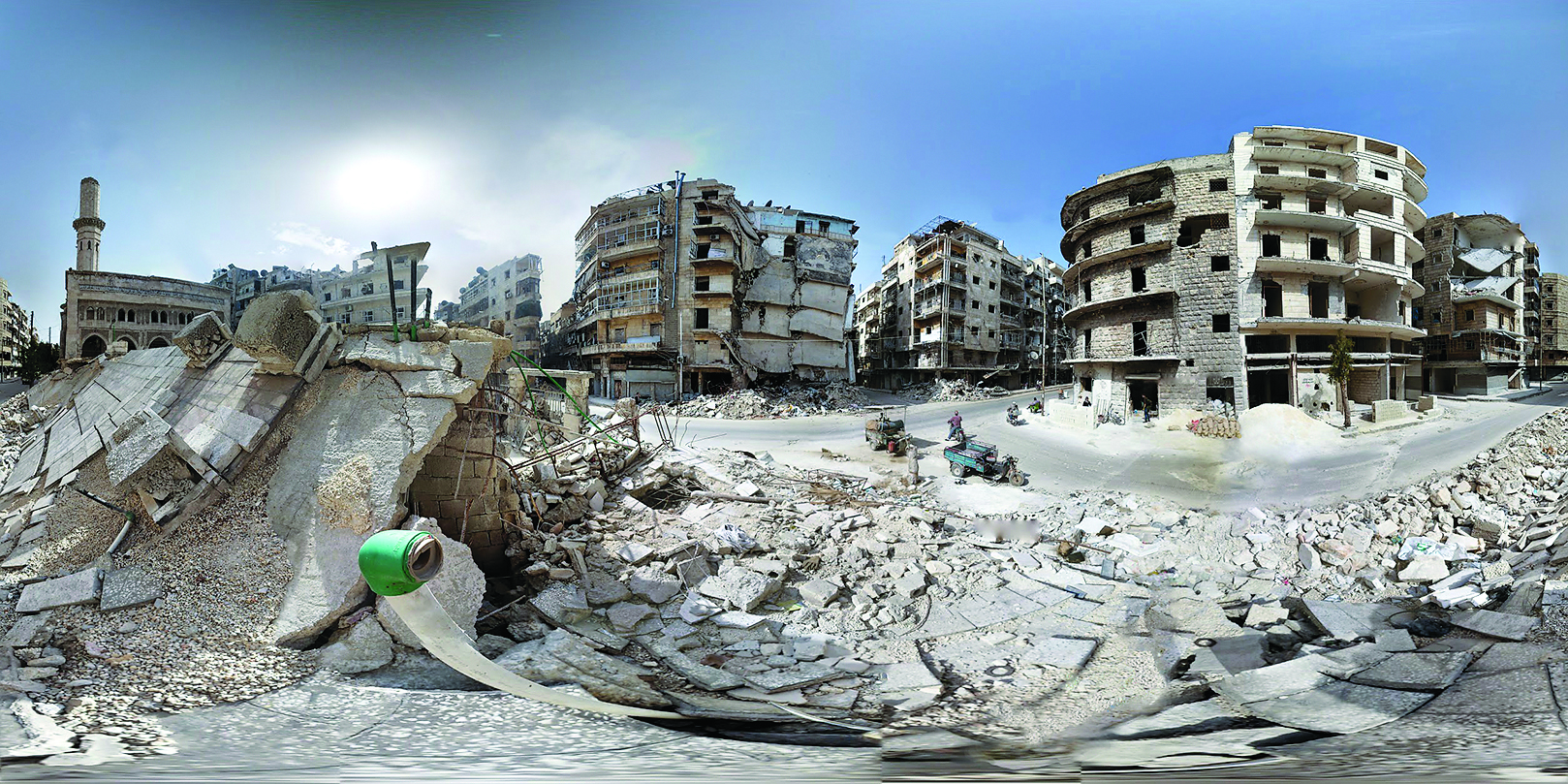
Canvassers for the human-rights group invite passers-by to don low-cost headsets, which show them 3D photographs of the destruction caused by barrel bombing and other attacks in Syria. The startling images were taken by Lamba Media Production, a group of citizen journalists in that country.
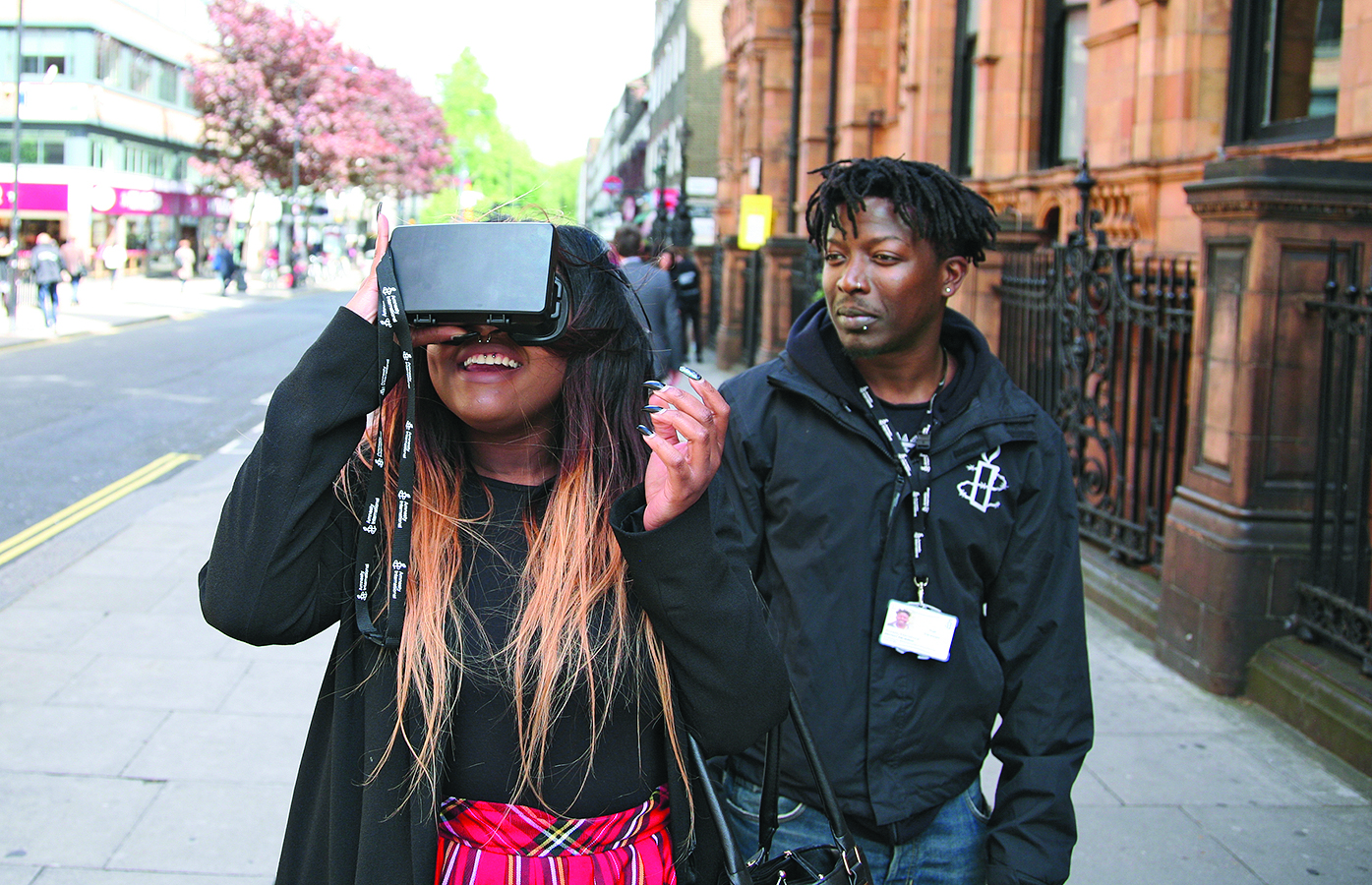
During the initial test in London, fundraisers who used the virtual-reality glasses to make their pitch signed up 16 percent more monthly donors than those who didn’t. More of the nonprofit’s canvassers now use the headsets, and the campaign has expanded to Leeds and Manchester.
Compared to video, higher-resolution 3D photographs appear “pin sharp,” says Reuben Steains, Amnesty International UK’s innovations manager, and people can absorb the information faster.
“Our street fundraisers have to work very quickly,” he says. “They’re dealing with people on their lunch breaks who are very busy. Using a film with headphones that takes five minutes or more to view would just be too immersive, and it just wouldn’t be practical.”
Sending a Message
To fire up voters in municipal elections, an environmental advocacy group in British Columbia used virtual reality not to take viewers to a real place but to show them the potential consequences of an oil-tanker disaster.
The Dogwood Initiative worked with an advertising firm and local game developers, who donated their services, to create a 3D simulation of a spill in Vancouver’s English Bay, complete with oil fires and a dying orca. Then, on a vista overlooking the bay, the group hid a virtual-reality headset showing the video inside an old-fashioned set of sightseeing binoculars and invited unsuspecting onlookers to take a peek.
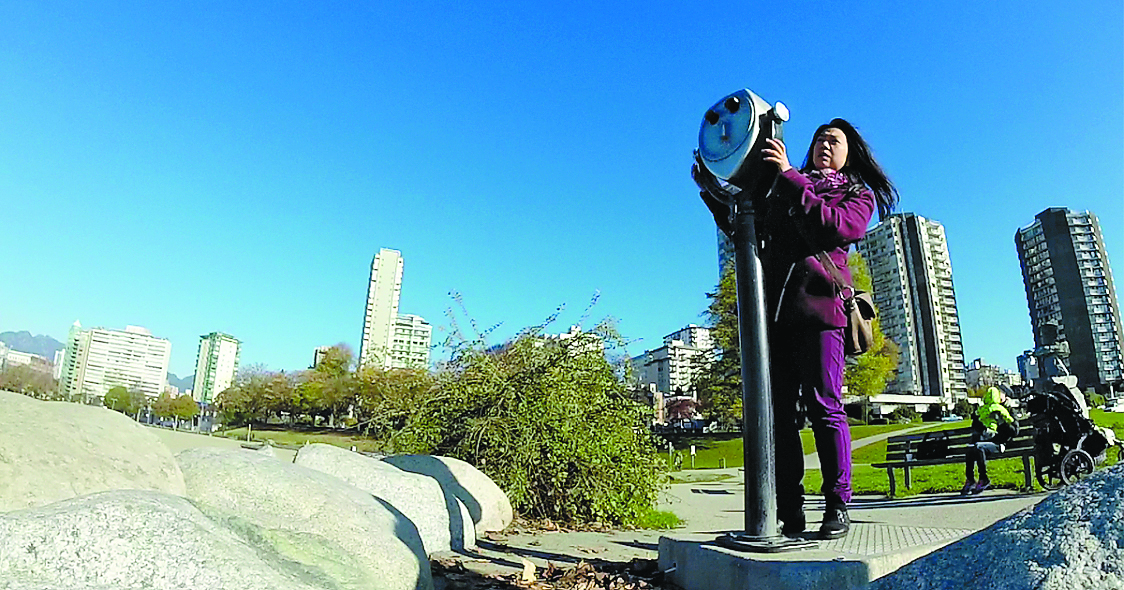
The stunt’s goal was twofold: to show people what was at stake and to generate publicity for the campaign. It worked. Television stations and newspapers across British Columbia and around the world ran stories about the installation, and the mayor of Vancouver tried out the binoculars himself.
Organizers asked viewers to sign a petition urging Canada’s federal government to turn over to local officials the decision on whether to allow new and expanded pipelines from Alberta’s oil sands to the British Columbia coast. The simulation racked up an additional 23,000 views on Facebook. In the end, the petition garnered 18,000 signatures, driven in part by the video.
Setting the Scene
Pencils of Promise, a charity that builds schools in developing countries, combined the tangible with the digital in its first foray into virtual-reality fundraising.
The nonprofit built a 17-foot replica of a Ghanaian classroom for its annual gala in October. Lesson plans covered the chalkboard, and the group invited guests to sit down at the eight desks — the same size and model that students use — and watch a virtual-reality video about its work. The event raised $1.9 million.[video url="https://www.youtube.com/embed/SelvUz8Zr3k” align="center” size="full-width” class="" starttime="" caption="" credits="Pencils of Promise”]
The video was provided pro bono, but the nonprofit has decided the technology is a good investment. It is commissioning another virtual-reality film and is looking for a corporate sponsor to pay for it. The planned film will follow a day in life of a student at a Pencils of Promise school. The charity hopes to release the video for International Literacy Day in September.
Bringing Emotions Home
Central Missouri Honor Flight takes elderly military veterans on sightseeing trips to the memorials in Washington. In the past, it live-streamed trips to give homebound vets a taste of the experience. But it was a messy process, with frequent bandwidth problems. The group’s answer: a virtual-reality film that follows a group of Missouri veterans making the trip.
Even at a distance, it can be an emotional experience. Dayle Garrett, a 96-year-old World War II veteran, got choked up talking about the film. “You feel like you could be walking with those people,” he said. “It’s moving.”





