How 5 CEOs Who Took Pay Cuts or Shunned Increases in the Recession Are Faring Now—and How Their Staffs Are Doing

By Doug Donovan
Contributor
September 22, 2013 | Read Time: 4 minutes

Peter Gelb
General manager, Metropolitan Opera Association
2011 salary: $1.28-million
10% decrease from the $1.42-million he received in 2008
Mr. Gelb took a 10-percent cut in pay in 2009, to $1.28-million, and continued to get that sum through 2011. By the end of fiscal year 2009, donations to the opera had declined by 35 percent from 2008. Donations have recovered considerably; they were up 86 percent, to $193.6-million, in 2011 compared with 2009. The Met’s approximately 4,000 employees have endured some slight pay and pension cuts and salary and hiring freezes during the downturn. But union leaders say Mr. Gelb has been fair. Members of the American Guild of Musical Artists, which represents 160 staff members and some 400 freelancers, have received annual 2-percent raises since 2011, says Alan Gordon, the guild’s executive director. “Peter Gelb’s compensation is tremendous,” Mr. Gordon says. “Given the nature of his job, it’s reasonable. I don’t think he gets paid too much compared to what he does. But compared to the staff, it’s a lot.”
Photo: Amanda Gordon/Bloomberg/Getty Images

Glenn Lowry
Director, Museum of Modern Art
2012 salary: $1.05-million
20% increase from the $871,369 he received in 2009
Mr. Lowry, who gets a free residence attached to the museum worth $300,000 a year, was paid $2.19-million in 2008 thanks mainly to five years worth of accrued bonuses that totaled $1.5-million. The following year his pay dropped 60 percent to $871,369 in 2009. He took pay cuts the following two years but has since returned to normal. Staff members who earned more than $150,000 also faced pay reductions as private donations dropped 35 percent in 2009 compared with 2008. But the museum’s more than 200 union workers won raises of 3 percent per year from 2010 to 2012. The museum’s donations have been on the upswing, growing 44 percent from 2009 through 2012.
Photo: Ryan McCune/patrickmcmullen.com/SIPA

John Seffrin
Chief executive, American Cancer Society
2012 salary: $704,477
4.6% increase from the $672,928 he received in 2009
In 2008, Mr. Seffrin announced that he would not accept a board-recommended salary increase in 2009. That was a tough year for the charity, as private support declined 11 percent from 2008. The charity also froze all salaries. In 2010, as donations remained flat, Mr. Seffrin requested a 6-percent cut to his $600,000 pay from the charity and its advocacy arm. “Modest merit increases resumed across the organization beginning in 2011,” a spokeswoman said. For the year ending Aug. 31, 2012, Mr. Seffrin’s salary jumped to $643,000, and he received a bonus of nearly $61,000, according to the group’s most recent tax filing. Private support to the cancer charity was down 1 percent in at the end of August last year from 2009.
Photo: Mandel Ngana/AFP/Getty Images

Paula Kerger
Chief executive, Public Broadcasting System
2011 salary: $635,499
5% increase from $604,305 she received in 2009)
Ms. Kerger and other managers announced in 2009 they were taking 3.9-percent pay cuts for the first six months of that fiscal year. Since then, the organization has provided raises to managers, but a spokesman would not specify the amounts. Meanwhile, Ms. Kerger’s pay now exceeds her 2009 earnings. Private support to PBS was down 37.5 percent from 2009 through fiscal year 2011. Jim Joyce, a Communications Workers of America union leader, said his 44 members at PBS have seen steady raises, from 1 percent in 2010 to 2.5 percent for the next three years.
Photo: Frederick M. Brown/Getty Images

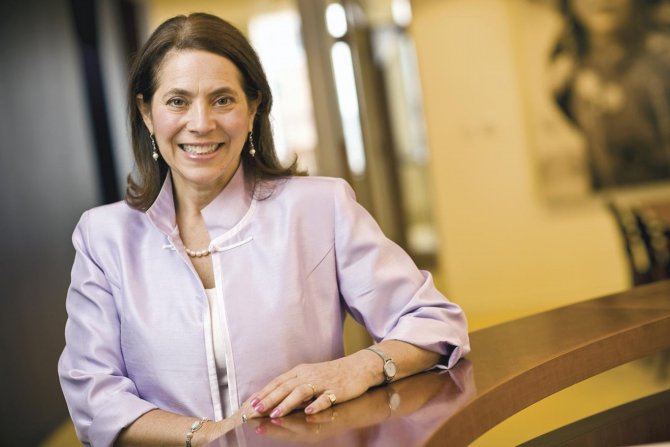
Gail McGovern
Chief executive, American Red Cross
2011 salary: $588,800
8.1 percent increase from the $544,745 she received in 2009
Ms. McGovern has maintained a salary of $500,000 since she joined the American Red Cross in 2008. She asked not to receive a salary increase or a performance bonus for the first three years of her tenure, a time when she eliminated the charity’s $209-million operating deficit and finished the past two fiscal years with modest surpluses, in part, by spurring a 40-percent increase in private support from fiscal 2008 to fiscal 2011. (She did, however, receive a $473,570 reimbursement to cover relocation costs from Boston to Washington in fiscal year 2009.) The organization instituted salary freezes for the fiscal year ending June 30, 2010. But in the following year, it provided a lump-sum payment equal to about 3 percent of annual salary to staff members. In fiscal 2012 and 2013, it reinstated its traditional merit-pay increase plan. Ms. McGovern accepted a $90,000 bonus in fiscal year 2011, but her base pay remained the same.
Photo: ZumaPress/Newscom