How a Notorious Billionaire’s Foundation Is Saving Lives in Rural America
A 16-year effort by Leona Helmsley’s philanthropy to improve rural health care offers lessons for other grant makers.

By Ben Gose
Senior Editor

December 8, 2025 | Read Time: 13 minutes
When Marcy Smith’s oncologist told her she needed radiation treatment for breast cancer, her first response was no. She’d already had a lumpectomy and four rounds of chemotherapy. The radiation would require six weeks of treatment in Billings, Mont. — 220 miles from her Glendive home.
It was too far away to drive there each day, and a six-week relocation wouldn’t work. She was raising two young foster children, working as an aide at an elementary school, and writing sports stories for the local newspaper.
Then the oncologist came back with good news — a cancer center was about to open at the hospital in Miles City, a town of 8,000 an hour away. Smith changed her mind. For six weeks straight, she picked up her foster daughter from kindergarten, drove to get her treatment, and was home in time to make dinner.
A year later, Smith is cancer-free. “Thank the lord,” she says. “Getting the radiation was probably life-saving for me.”
Much of the support for the new cancer center came from an unlikely source — a trust established by a notorious New York billionaire.
Leona Helmsley — the “queen of mean” hotel owner known for saying taxes were for “little people” — has enjoyed a posthumous reputation boost in the Upper Midwest and Rocky Mountain regions. That’s because the Leona M. and Harry B. Helmsley Charitable Trust has spent more than $850 million on rural health care in the regions since 2009 to support innovative work in telemedicine and psychiatric, cardiac, and cancer care. The trust provided $6 million of the $17 million needed to create the new cancer center at Miles City’s Holy Rosary Hospital.
Along the way, Helmsley has gained some powerful insights into rural philanthropy that other national foundations can learn from — including the importance of a local office and the spillover effect rural philanthropy can have on a local economy. It has seen huge gains from investing in relatively inexpensive equipment, and when it does support expensive building projects to bring new services to rural areas, it taps local partners to help ensure sustainability.
Helmsley’s successes in rural health care come at a time when those systems are under intense strain. Nearly 60 percent of rural hospitals are nonprofits. From 2005 to 2023, 81 rural hospitals shut down — and the cuts to Medicaid in this year’s tax bill will cause more financial pain. Congress tried to soften the blow by allocating $50 billion over five years for rural health care, but independent estimates indicate that sum is only a little more than a third of the amount that rural hospitals will lose due to the Medicaid cuts.
“The ability for rural hospitals to adapt is really challenging now, more than at any time in the 30 years that I’ve been doing this,” says Keith Mueller, a professor at the University of Iowa who studies rural health care.
Though philanthropic efforts like those from Helmsley can’t make up for the loss of federal funds, when done well they can make a big difference in whether rural clinics and hospitals continue to limp along or close the gap with their urban counterparts. Helmsley expects to spend $84 million — roughly 20 percent of the trust’s total grant making — on rural health-care in its fiscal year that ends in March.
“Your ZIP code should not determine your health outcomes,” says Walter Panzirer, the Helmsley trustee who started the rural health program, “and yet for so many rural Americans, it does.”
A Visionary With Lived Experience
The Helmsley Foundation’s interest in rural health care did not originate with its famously urban namesake. Instead, it was due to her outdoor-loving grandson, Panzirer, who spent nearly a decade as a South Dakota cop.
Panzirer had always had a good relationship with his grandmother, but he knew that other family members had experienced a falling out after going to work for her. So in the late 1990s, when she pleaded with him to come to New York for a job, he declined.
Instead, he relocated from his home in California to South Dakota after a friend who had grown up in the state encouraged him to check out the outdoor opportunities around the Black Hills.
For nine years, in Sturgis and Mitchell, the heir to the Helmsley fortune worked in law enforcement — initially handing out speeding tickets and responding to domestic disputes and later spending time as a school resource officer and as part of an investigations unit. He witnessed how limited health-care options impact low-income rural residents — especially people struggling with mental health, since psychiatrists and counselors are often unavailable.
When Leona died, she made headlines again for a will that appeared to insist that her charitable trust be spent on caring for dogs. But a probate judge later ruled that the trustees could spend the money as they chose.
Leona had picked Panzirer, two other family members, a business associate, and her lawyer to serve as trustees.
As the trustees debated how to spend the money in 2008, Panzirer pushed for a program in rural health care, since few other national foundations focused on it.
“I understood the challenges, the differences, and sometimes the inequities with rural America not always having state-of-the-art medical equipment or not having access to specialty care,” Panzirer says. “That was kind of a lived experience for me.”
But the work got off to a rough start. In 2009, the foundation hired Rockefeller Philanthropy Advisors to analyze where the greatest gaps were in rural health care. But some calls to try to discuss needs with rural hospitals weren’t even returned. It didn’t help that the main offices for both the Helmsley Trust and Rockefeller, which assisted with early operations, are in New York City.
“Helmsley was unknown,” Panzirer says. “And when you couple that with New York, there’s a natural hesitancy.”
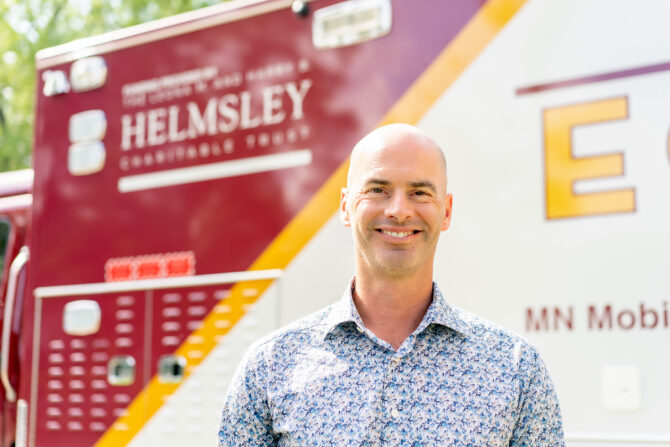
The trust quickly realized it needed to open a local office where it was planning to work. It settled on Sioux Falls, S.D., which already had two major health-care institutions.
Wayne Booze heads up Helmsley’s rural health-care program, which now has four program officers traveling extensively throughout the region. Since the program’s inception, Helmsley has worked to elevate the standard of care in rural areas to be more in line with what’s available in cities.
“It takes some rolling up of sleeves to get the work done in rural America,” Booze says. “But we see an immense return on investment. Maybe not from a pure numbers standpoint, right? But the stories that we get back suggests that the impact of our funding is huge.”
Jim Duncan, who recently stepped down after 30 years leading the foundation for Billings Clinic, Montana’s largest hospital, worked with Panzirer and Helmsley on at least four major projects.
“Walter is a visionary philanthropist who’s willing to take risks,” Duncan says. “He’s not just putting money toward something you’re going to cut a ribbon on. He has a very strategic eye for where the needs and gaps are — and how to creatively pursue ways that philanthropy can be transformational.”
Listening Results in Effective Solutions
With an office in the region, Helmsley staff members travel regularly across the upper Midwest and Rocky Mountain regions to talk to hospital executives, doctors, nurses, and first responders and get a feel for local needs. The trust has delivered needed equipment to rural areas and helped develop systems for remotely connecting urban medical experts to rural people in real time.
The trust has granted $60.4 million for more than 24,000 automated external defibrillators for police officers and other first responders. The devices can help re-establish a regular rhythm following a heart attack, and Booze says there have been more than 600 known cases in which Helmsley-funded devices have helped save lives.
“In rural America, if you have a heart attack, law enforcement will show up,” Panzirer says. “A lot of times they’ll get there quicker than the volunteer ambulance service.”
The trust also provided funding for more than 70 mammogram machines to hospitals throughout the region, with a goal of ensuring patients wouldn’t need to travel more than 60 miles for breast-cancer screening. Helmsley has invested more than $100 million in telemedicine, primarily through Avera Health in Sioux Falls, enabling rural residents to get emergency, pharmacy, and psychiatric care from doctors in distant cities.
In South Dakota, Nevada, and Wyoming, Helmsley has started what it calls “virtual crisis care” — a program that provides police officers with tablets that allow the officers to immediately connect people in crisis with remote mental-health counselors.
Panzirer knows firsthand why the program is important. As a police officer, he remembers late night situations when he had to take suicidal people to prison — before transporting them the next day to the closest available mental-health center.
“A lot of times that person would end up in jail, because you never want to have anyone kill themselves or cause harm to others,” Panzirer says. “From there, the patient would get transferred to a behavioral-health facility in Rapid City if they had space. If not, you did the six-hour drive across the state to Yankton.”
The virtual crisis care program has sharply reduced the number of crisis calls that result in a person being temporarily imprisoned or committed to a hospital, Helmsley says.
While designed for rural areas, the program has also been helpful in cities like Las Vegas. Urban areas, including Las Vegas, often have in-person crisis teams, but when those teams are overwhelmed, officers can turn to virtual care to get a mental-health assessment without delay.
Partnering for Funding and Sustainability
When Helmsley pursues big projects, it is often the lead funder. But it works closely with local leaders to ensure there’s enough financial support to sustain them over the long term.
In recent years, Helmsley has brought comprehensive cancer centers to five rural communities – including some that never dreamed they’d have one. Helmsley reached out to the Central Montana Medical Center, in Lewistown, Mont., before the pandemic, as part of its effort to ensure that rural residents don’t have to travel more than 100 miles for cancer care.
Cody Langbehn, the hospital’s CEO, says a cancer center isn’t something he would have dreamed of without Helmsley’s help. “It just wouldn’t pencil,” he says.
But the Helmsley support kicked off a local fundraising effort that allowed the project to be nearly entirely covered by philanthropy. Helmsley started out with a $6 million commitment and agreed to raise its share to $9 million when construction costs escalated during the pandemic.
Langbehn, who hoped to raise $1 million locally, saw the town of roughly 6,000 come through in a much bigger way. Gifts of various sizes from more than 800 local households and businesses added an additional $4 million to the effort. Then Norman Asbjornson, a billionaire who grew up nearby and founded a publicly traded HVAC company, chipped in an additional $3.3 million. The hospital completed the roughly $19 million project by borrowing $2 million from the USDA at 0 percent interest.
The modest cost of the new center allows the hospital to put aside a surplus each year that will be used to one day to replace the $2.2 million linear accelerator used for radiation treatment.
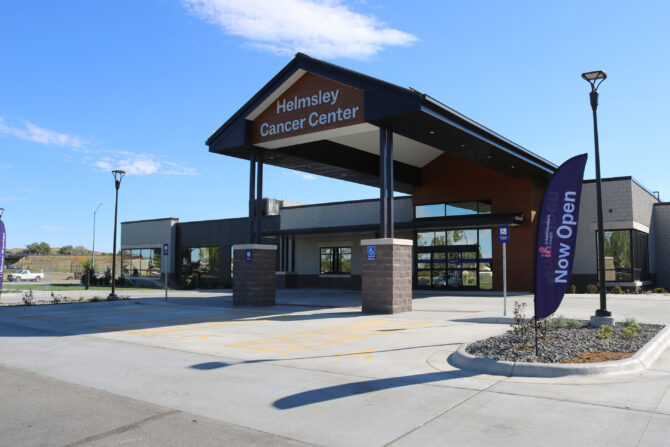
Helmsley has spent $128 million to expand access to chemotherapy and radiation services at 20 health centers and to build the five new ones. Most of the centers provide chemotherapy and radiation treatments on site; oncologists from urban areas meet with patients via telemedicine and travel to meet in person about once a week.
Karen Costello, who had been president of the Miles City hospital before moving to another hospital last year, says Helmsley’s vetting of local plans for sustainability is just as important as the money it brings to the table. “The worst thing you can do is bring a wonderful service to a market and then have it peter out after five or six years,” she says. “That’s worse than never having it at all.”
Investing in the Right Models and People
Helmsley also focuses on small cities in predominantly rural areas, which play an important role in providing specialty care and in training health-care professionals.
At Billings Clinic, Helmsley has been the primary funder behind at least four major projects — the first internal-medicine residency program in either Montana or Wyoming; Montana’s first psychiatric residency program; the state’s first surgical intensive-care unit; and a new transfer center that will support rural hospitals and efficiently handle the transfer to Billings when a higher level of care is needed.
The Billings Clinic has partnerships with 20 rural hospitals, including a new one under construction 250 miles to the south, in Riverton, Wyo., where Helmsley has committed $4 million for new equipment.
Duncan, the former foundation president at Billings Clinic, says the Billings hospital went eight years without a new hire in internal medicine before the inception of the residency program in 2014. Now the Billings program produces 12 internal-medicine graduates a year, with many choosing to practice in nearby rural areas.
One of its first graduates, Sierra Gross, went on a rotation to a hospital in Sheridan, Wyo. (population 18,800) during her residency at the Billings Clinic, and she decided to practice in Sheridan when she finished. She is now the chief medical officer at Sheridan Memorial Hospital.
Sheridan, too, has benefited from Helmsley’s grant making. The trust gave $2.5 million for a more compassionate behavioral-health unit that will offer urgent care, beds, and counseling for people with mental-health needs. The new facility won’t open until fall 2026, but Gross says the hospital is already seeing a nearly 50 percent reduction in the length of hospitalizations for mental health just by moving to the new approach.
“The old method of walking them through the ER, with traumas and noise and stress — we all knew that was not ideal,” Gross says. “We’re already seeing improvement just by investing in the right people and the right model.”
On some projects — like cancer centers, mammography, and virtual crisis care — the need is nearly universal in rural areas. But on other projects, Helmsley doesn’t move forward until it’s received a lot of community input — not only from health-care professionals but also from law enforcement officers, social-service workers, local donors, and politicians.
That’s where Helmsley’s program staff – and the trust’s 16 years of experience in rural health care – come into play.
“We really embed ourselves in our communities,” Panzirer says. “If you want to fix a problem, you have to understand every side, every facet of the problem, before you can find a long-lasting solution.”
Correction: A previous version of this article failed to mention that Leona Helmsley’s lawyer was among those she chose as initial trustees.
Reporting for this article was underwritten by a Lilly Endowment grant to enhance public understanding of philanthropy. The Chronicle is solely responsible for the content. See more about the Chronicle, the grant, how our foundation-supported journalism works, and our gift-acceptance policy.