
How Philanthropy Can Fund a Tech Revolution
Tom Kalil, who is leaving Schmidt Futures to start Renaissance Philanthropy, opines on the need to raise funds for nonprofit STEM research.

By Stephanie Beasley
Senior Writer
May 28, 2024 | Read Time: 4 minutes
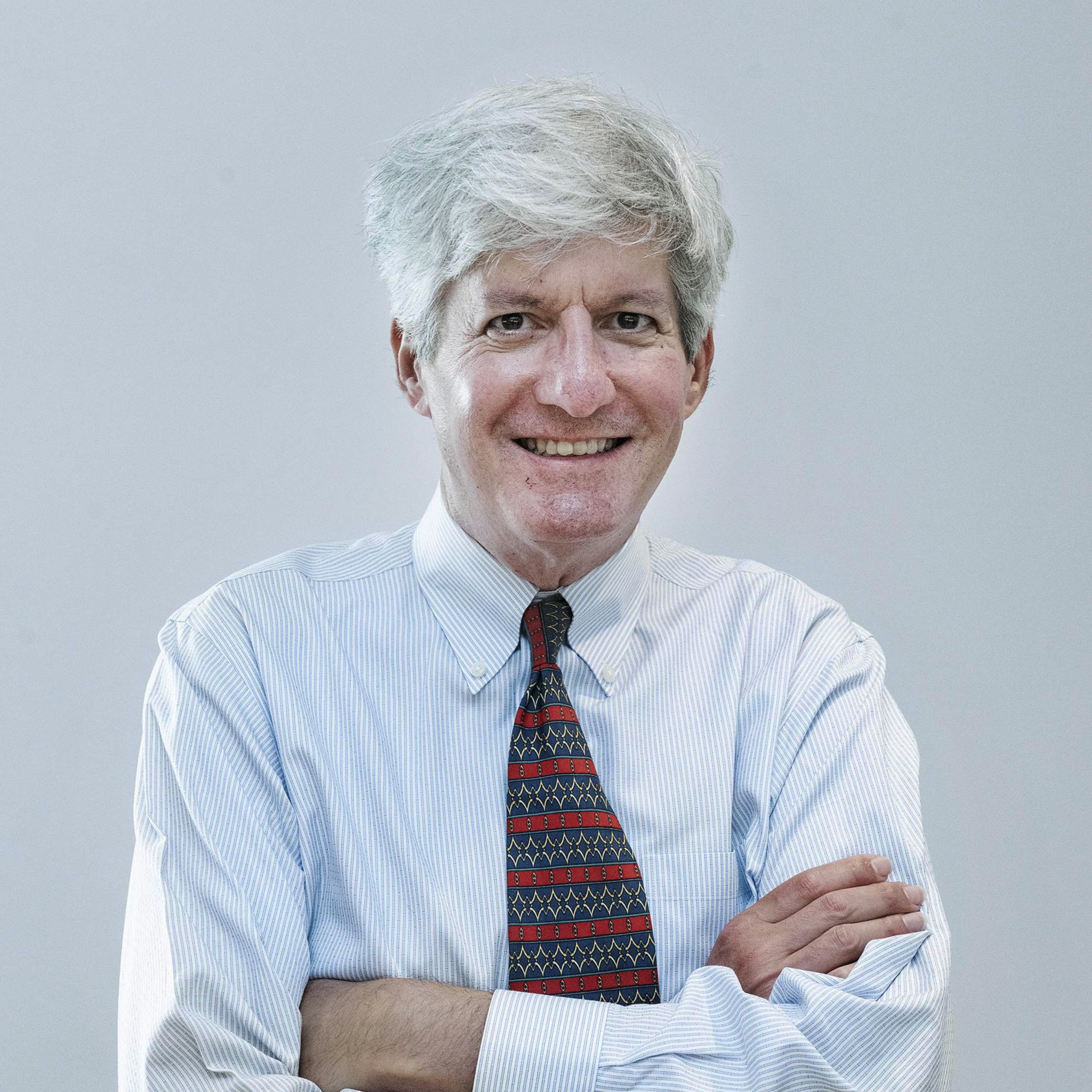
He’s been a trusted adviser to Eric and Wendy Schmidt, Barack Obama, and Bill and Hillary Clinton, among others. Now Tom Kalil is ready to move into the foreground as head of his own nonprofit advisory firm.
Earlier this month, Kalil stepped away as chief innovation officer at Schmidt Futures to start Renaissance Philanthropy. His goal is to increase funding for the kinds of science and technology projects that he says venture capitalists and government agencies are likely to pass over.
In many ways, Renaissance is a natural continuation of Kalil’s previous work, specifically at Schmidt Futures, where starting in 2017 he led prominent public-private partnerships to support STEM research. His departure comes amid a high-profile reshuffling at Schmidt Futures. Former CEO Eric Braverman left last year to create his own charitable venture with the support of ex-Google chief Eric Schmidt and his wife, Wendy.
The Schmidts are also the founding donors to Renaissance Philanthropy, though Kalil would not disclose the amount of their contribution. The science adviser continues to be involved with Schmidt Futures’ initiatives, such as Convergent Research, which supports nonprofit science startups, and Future House, a “moonshot” whose goal is to create an “A.I. Scientist.”
Kalil said with Renaissance he has a specific mission: to unlock many millions of dollars in funding from the country’s wealthiest families to support transformative inventions. America’s wealthiest families and individuals donated just 1.2 percent of their assets to charity, according to a 2018 report from the Bridgespan Group, which he said helped spur his latest move.
“We believe that in the same way that wealthy families supported the Italian Renaissance by backing Michelangelo and Leonardo da Vinci, today’s philanthropists could foster a 21st-century renaissance that is driven by science and technology,” Kalil said.
“If you look at goals — like accelerating the transition to a carbon-neutral economy, improving our response to future pandemics, allowing people to lead longer, healthier lives, creating more opportunities for economic and social mobility, and expanding the frontiers of human knowledge about ourselves in the world around us — science and technologies can play a really important role. And right now, there is a significant gap between what philanthropists are currently doing and what they’re capable of doing,” he added.
Kalil plans to bring the breadth of his experience and connections to his role as CEO of Renaissance Philanthropy. The 60-year-old’s career includes stints at the University of California at Berkeley, the Clinton Global Initiative, and the White House Office of Science and Technology Policy under President Barack Obama. Part of the firm’s mission will be to connect donors with academic institutions and government agencies, providing seed funding for projects that may have high social return but are difficult to monetize, Kalil said.
More on STEM Philanthropy
-
Technology Innovation
Foundations Seek to Advance A.I. for Good — and Also Protect the World From Its Threats
Venture capitalists won’t invest in open data sets that are available to everyone, such as those provided by the U.S. government at data.gov, despite the potential for those resources to have an “incredible impact on accelerating the pace of scientific research,” he said. They’re also not going to invest in innovations that are primarily designed to help low-income communities, either in the United States or abroad, according to Kalil.
Donors can step in and take a risk on the projects that venture capitalists won’t, he said. And by doing so, they can help address some of the world’s biggest problems, Kalil said.
“Currently, for example, it takes 17 to 20 years to develop a new material. And new materials innovations are at the heart of solving many climate problems. And since we want to not only develop new technologies but then scale them up to the point where they’re reducing greenhouse gases by billions of tons, we just don’t have 17 to 20 years,” he said.
Pandemic preparedness is another example of where philanthropy could play a critical role, he said. Additional funding would accelerate the development of new vaccines, new therapies, new diagnostics, new personal protective equipment, and germicidal lights for destroying airborne viruses before the next pandemic emerges.
Donors also could support scientific innovation by funding self-driving labs that are powered by robotic equipment and supervised by researchers. In these labs, A.I. can analyze data and inform how experiments are carried out. And they typically cost a few million dollars, Kalil noted.
By identifying ambitious goals and the often new technology that enables them, Kalil said he hopes Renaissance “will inspire and motivate more philanthropists to be more ambitious and creative.”





