How the United Way Can Remain Relevant, From a Departing CEO
Angela Williams reflects on how a rebranding and deeper engagement in communities is setting the stage for success.

By Ben Gose
Senior Editor
January 8, 2026 | Read Time: 7 minutes
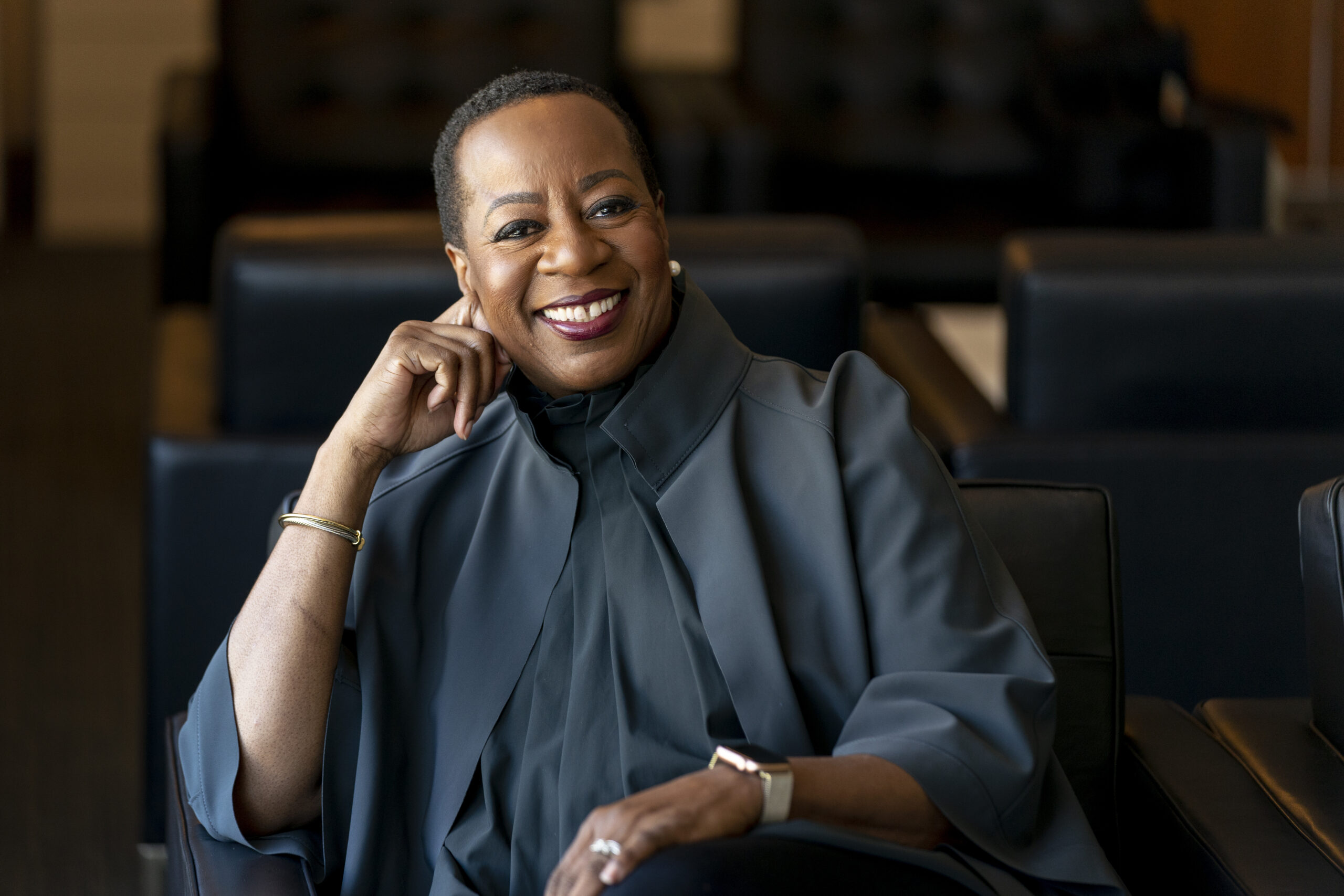
This spring, Angela Williams will step down as CEO of United Way Worldwide to care for her mother. In doing so, she will carry out a promise she made to her father, a civil-rights pioneer, who died this summer.
Williams has led the United Way for four years: She took over in October 2021, when the pandemic was still impacting the charity’s operations and in the wake of a scandal involving accusations of sexism that led to former CEO Brian Gallagher’s resignation.
The United Way remains a fundraising heavyweight — it topped the Chronicle’s list of America’s Favorite Charities last year — but it has far less swagger than it did a generation ago, when its workplace-giving campaigns were in vogue. Even in recent years, fundraising revenues have fallen. In 2018, the group’s affiliates raised $3.15 billion. In 2023, they brought in just $2.36 billion.
Williams engaged in a listening tour in her first months on the job. She came away with a conviction that United Way needed new branding and a more diverse revenue mix to replace the fading collections in the workplace. In late 2024, the charity unveiled its “United Is the Way” campaign, with a renewed commitment to four areas of focus: a healthy community, youth opportunity, financial security, and community resiliency. United Way affiliates operate autonomously, and some continue to do well with the traditional model of raising money and passing it on to other charities, while others, like Salt Lake City, have prospered by moving to a model focused on community outcomes, Williams says.
“Something that our local United Way CEOs articulated clearly was ‘Give us a refreshed brand,’” Williams says. “‘Give us assets that we can use to demonstrate our great work and our relevance in communities, which then leads to telling the story, which then also leads to raising funds.’”
Williams previously served as president of Easterseals, and in her first job after law school, she was an officer in the U.S. Air Force Judge Advocate General’s Corps.
She recently spoke to the Chronicle about the United Way’s future, how it can connect with younger donors, and why nonprofits even in tight times must consider the personal challenges their employees are facing.
This interview was edited for brevity and clarity.
You are the first Black CEO at United Way Worldwide, which was founded nearly 140 years ago. What should the United Way’s role be when it comes to lifting up equity and diversity?
I say it’s about the people and not the politics. The term diversity, or the term equity, or the term inclusion may or may not be used, but it doesn’t change who we are and how we show up.
We are an organization that helps people in community. We are an organization that is inclusive of all of those voices, because the work that we do is about relationships. And people relate to people that resonate with them, that look like them, that understand their circumstances.
I’m the daughter of civil rights activists. My dad was a Baptist pastor in South Carolina. He used to investigate lynchings and send reports to Thurgood Marshall. One of our church members slept in front of our house with a rifle in case the Klan would come to try to attack my family. And my dad and mom preached love your neighbor as yourself. My dad would write letters to the faith community and say, now is the time to be courageous. What are you willing to stand up for?
And in the 1960s, the term DEI didn’t exist. But the sentiment of honoring and respecting people, allowing people a fair chance, giving people the opportunity to make a fair wage and to thrive and to be all that they were created to be — that will not change.
In inflation-adjusted terms, giving to the United Way has been in decline for decades. What’s going on?
Younger people are not giving the same way older generations gave and still give. That’s playing out in the marketplace, in employee-giving campaigns. What the younger generations are saying is, “Why do I have to go through the United Way when I can give directly to an organization that I know about?”
What are the highest-achieving United Ways doing to be successful?
The ones that are really successful have embedded themselves in their local communities and spent the time to build meaningful relationships across sectors, including state and local governments, the faith community, and the corporate community. They’ve also been very successful at listening and then understanding what the needs are in the community.
I think about how United Way of Greater Milwaukee & Waukesha County stewarded on behalf of the mayor, city council, the corporations in Milwaukee, and the sector getting to zero homelessness.
Homelessness and a lack of affordable housing are issues across the country. So now how do we have a team that takes the essence of that and replicates it?
What’s new at the United Way that’s going to appeal to the younger people that you’ve talked about?
Storytelling resonates with them. We have started paying more attention to social media and how we tell stories. You can see that at United Way’s feed or if you look at my Community Pulse newsletter. We need different ways of talking about what’s happening in the lives of everyday people and making it really come to life.
Now do we have work to do? Absolutely. And I think that’s true of a lot of us as legacy organizations.
With all the turmoil in the nonprofit world, there’s renewed interest in mergers. Does consolidation make sense for the United Way?
The organization internally has talked about this — what do we need to do to be stronger? When you look at overhead costs and back-office costs, are there ways we could regionally consolidate — say, sharing IT costs and HR costs and all of those administrative things that you need to do? Those efforts have been happening organically. In some cases, an organization just couldn’t stand, and so another neighboring entity took it over.
Starting this year, corporations can only deduct charitable contributions that exceed 1 percent of their taxable income. Do you expect any impact from that?
I have had meetings with several CEOs of Fortune 500 companies this week, and none of them have talked about walking away from their partnerships and their giving. They are talking about how to activate their employees so that they will want to contribute. But in terms of their corporate foundation giving and partnerships, they’re not walking away from it, and I’m going to tell you why: It’s because their employees are feeling the effects of what’s going on with the economy and what’s happening in communities.
You’ve decided to step away to care for family. Given the many stresses nonprofit workers face, how can charities do a better job of helping employees care for themselves?
There’s a lot of stress and strain when you’re dealing with people and their problems and their issues. And then you have to deal with your own, and so it’s about having the courage to raise your hand to say, Hey, I need help. I need to take a step back.
As a leader, you want people to be able to take care of themselves. You have to give them the space to make the decisions that work best for them.
We have a lot of “lunch and learns,” and we try to create a space for people to talk. Earlier this year we had a session on caregiving. We’ve had sessions on wellness and mental health.
I was in the military, and I was a criminal federal prosecutor, so I am hard core. And my mantra is you don’t ever cry in front of people.
And yet my employees have seen me break down when my dad was in the hospital. We bring our whole selves to the office. You have to recognize that, honor that, and be the kind of place where we keep supporting each other.
Despite the fundraising challenges, you did remain on top of America’s Favorite Charities. What does that say about the United Way?
We can’t slow down. We have to keep the pedal to the metal, because this world is changing so rapidly. And we have to not only address the now, but we need to be in the future, and think about delivery systems and the needs of people in the future, and prepare for that.