

January 9, 2011 | Read Time: 3 minutes
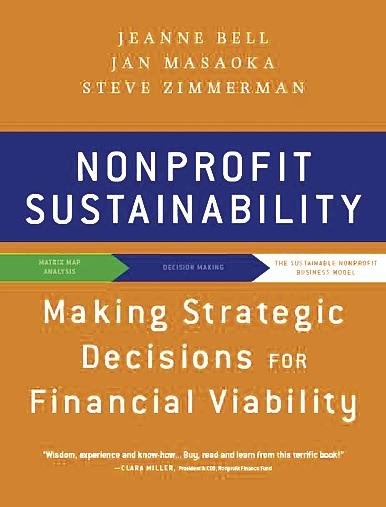
Too many nonprofit organizations do not take both results and finances under consideration when crafting strategic plans, leading to programs that are neither effective nor profitable and allowing charities to sink scarce resources into projects that do not work, write the authors of Nonprofit Sustainability, Jeanne Bell, chief executive of CompassPoint Nonprofit Services; Jan Masaoka, editor-in-chief of Blue Avocado, an online magazine for charities; and Steve Zimmerman, principal of Spectrum Nonprofit Services.
In an interview, Ms. Bell discussed the origins of the book and its key points:
What compelled you to write this book?
Strategy has both an impact component and a financial component, so helping people to redefine sustainability as encompassing both impact and financial return and then trying to figure out a way to support people in a pretty accessible tool.
What’s the best course of action when nonprofits find formerly reliable programs are no longer working?
There’s a habit of focusing on what’s not working and so we stop reinvesting in stars [programs with good results] in ways that don’t necessarily mean that they’re not profitable anymore but that they may lose impact.
What happens is, through a combination of forces and turning our attention to things that are “on fire,” we suddenly realize that things that were stars are not as high impact anymore, that other players have come into the market, that we haven’t invested in professional development, etc.
Resources don’t keep up with cost, and our management attention and enthusiasm naturally turn to other initiatives and things slide out of that star box.
We have to be students of these business lines at all times through both lenses. Are we best in class and are we resourcing this as well as we possibly can? Any inattention on either front ultimately leads to underperforming.
What makes this book different from other books on this topic?
It really is the nexus of driving impact and driving profitability. Those two questions are usually in different offices, different meetings, different plans—the fund-raising plan or the business plan, and then there’s the strategic plan and there’s the annual plan. We’re saying enough. There are no decisions that aren’t one and the same and so how do you support the management team—not just the finance person. This book isn’t just about finance and it isn’t just about program; it’s about both.
How important are boards in making these decisions?
A lot of times what’s happening is that management is sort of running the organization and boards are holding onto a different understanding of what actually the business drivers are and what the relationship is between impact and resourcing. What we would hope is that this kind of a frame works at the management-team level and the board level.
How can this book help nonprofits in the recession?
One of the big things is stop subsidizing things that aren’t impactful. We still struggle to close programs in this sector, we’re scared to lay off people, we’re scared to admit to funders that we “failed.” We’re just scared to acknowledge the life cycle of activities. Part of sustainability is recognizing when something has run its course, so what this book is arguing is to recognize when something has run its course because the opportunity costs of sustaining it are so high.




