

October 3, 2010 | Read Time: 7 minutes
The Greater Cincinnati Foundation used to send several staff members to major conferences “without even knowing what the topics were,” says Scott McReynolds, the fund’s vice president for finance and administration. But these days, he says, the organization is more choosy: “Now we study the agendas, look for programs that are specific to our needs, then send just the right staff.”
He attends two major conferences a year, down from three back when the economy was flush. He tries to make the most of his trips: Last month, he went to a Council on Foundations conference in Charlotte, N.C., to attend an investment session focusing on the successful traits of the nation’s 10 top-performing community foundations. “It was worth it,” he says.
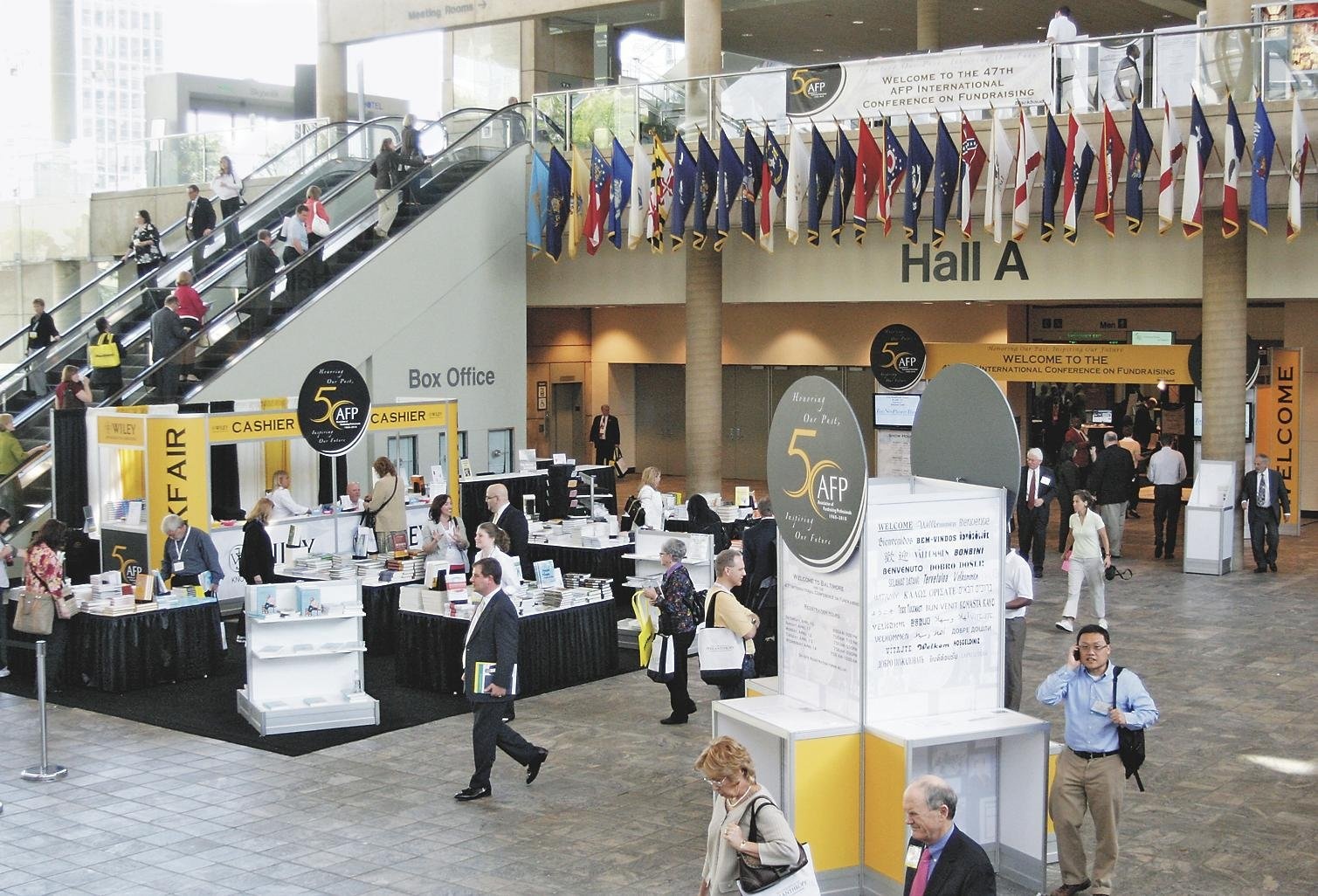
In times of tight budgets, nonprofit conferencegoers are working to get more out of each “must-attend” meeting. And conference organizers are working harder to attract participants by offering more creative and timely sessions and making them more interactive, with shorter static presentations, longer audience forums, and live blogging.
As the fall conference season hits its peak, veteran conferencegoers offer some advice on getting the most from a professional meeting.
Pick the right event. Cynthia Renea Oda, a grant-writing consultant from Indianapolis, attends about five nonprofit conferences a year to keep up with the trends and to meet grant makers face to face.
“If you don’t go to these conferences, your world gets very small,” she says. “But you still need to do a cost analysis.”
Look beyond the keynote speakers, suggests Gail Vertz, chief executive officer of the Grant Professionals Association, in Kansas City, Kan. Most conference time will be spent in the break-out sessions, so check out who is on those panels, and see whether the subjects and the experts are offering something relevant to your organization’s current needs. “And don’t select based on a cool location or because a friend lives in that city,” she advises.
Audrey Tayse Haynes, a senior vice president in the YMCA of the USA’s Washington office, looks for programs that will challenge her to see old issues in new ways.
“The new expectation is that you have to bring back to your office several new ideas to make it worth the cost,” says Ms. Haynes, who is attending the Independent Sector conference in Atlanta later this month.
Match the right staff members to the appropriate event. Maya Enista, chief executive of Mobilize.org, a Washington group that promotes civic participation among young people, says her staff discusses forthcoming conferences at its bimonthly meeting, weighing each for opportunities to learn and build professional networks. Once the group decides to participate, it considers carefully who should go.
“Some organizations have in their culture that the chief executive should always be out there representing the organization,” says Ms. Enista, who attends one or two conferences a month around the country. “Sometimes I find myself invited to a conference for the 10th time, but for one of my staff members that same conference is such a huge leadership-development opportunity, and they are excited to go.”
But if she determines in advance that professional contacts she is eager to meet will be in attendance and available to talk, she is more likely to go. She expects to return with, she says, “an epic to-do list and ideas for partnerships.”
Look for bargains. Ms. Oda says she recently saved money by going to no-frills conferences that zeroed in on individual subjects of interest. She appreciates the discounts and more generous meal programs added by some organizers of large conferences, she says, but travel and hotel costs are still major concerns. She uses conference room-sharing boards to cut hotel costs.
If a conference seems unaffordable, ask if there is a better rate available, Ms. Enista says. She suggests calling a contact at the host organization and asking that person to pull strings. For example, she notes, conference organizers might want to attract young attendees, which could be an argument for providing a deep scholarship for some groups with young staff members.
Once in attendance, look for ways to get more value from the experience. Some resources at a conference are underappreciated, such as the exhibit hall, says Ms. Haynes. She spends time strolling among the vendor displays to investigate products that might help her organization.
Three years ago, Ms. Haynes and several co-workers attending an Independent Sector conference examined software for improving grass-roots government relations. “Making sure we had the right one to fit us started at that conference,” she says.
Connect on social networks. The use of social media during conferences has exploded, say veteran charity conferencegoers, making it easier to bring home good ideas. Bloggers and tweeters are covering events live, creating a vital new layer of participation and learning.
Nick Ward, manager of information-technology applications for the Children’s Miracle Network, in Salt Lake City, immediately looks for a conference’s Twitter hashtag (its Twitter identifier). For Innogive, a mobile giving conference he attended in late September at Pepperdine University, in Malibu, Calif., he searched for #innogive.
It helps you get a sense of what is happening at a hectic conference and how people are reacting to it, he says. You can get connected with the other attendees and pose questions live to the presenters.
Colleagues back at the office monitoring those same tags can learn almost as much as if they were there, Mr. Ward says.
Of course, monitoring those tags can also help you learn from a conference your organization can’t afford to attend at all.
Mr. Ward says that doing one’s homework online is key before showing up at a meeting like that.
“I almost stalk the panelists,” he jokes, referring to the careful Internet research he does on the experts before the meetings. He prepares a list of questions for the presenters before he arrives, adding to the lists during the events.
“From Facebook and the other sites, you can get a good feel for which speakers will be most valuable to you,” he says. “And I show up early and get a good seat.”
Make contacts that will last. Conferences are all about schmoozing, but it’s helpful to have a strategy for meeting people and staying in touch. For instance, “if you are going with several people from your organization, split up,” says Michael Watson, senior vice president for human resources and diversity, at Girl Scouts of the USA, in New York. Split up even at the dinner tables, he says, to meet more people.
When you do exchange business cards, conference veterans say, don’t rely on your memory. Jot a note on the back about what you talked about with that person or how you plan to follow up when you get back to the office.
Mr. Ward suggests that social media offer another way to follow up. He links to their pages and follows their activities and ideas, keeping the ideas, and sometimes the conversations, rolling year-around.
A mailed follow-up note is even more powerful in an e-mail world. Ms. Enista writes about 20 or 25 notes after each conference. She says things like “I really valued your comments on the panel” or “Thank you for spending time with me.”
Her staff members, she says, warn her that she doesn’t have time for such niceties. But she says it is worth it: “To me, the strength of my network is in taking that time to do that individual follow-up.” It has paid off in major ways to help her organization, she says, including financially.
Be in the moment. It may seem obvious, but if you’ve taken the time, trouble, and expense to attend a conference, pay attention, Mr. Watson advises.
At some events, he says, “you see people on conference calls with people back at work, or taking calls all day long.” He sees that as a wasted opportunity and expense. Check e-mail messages in moderation, he advises, but don’t work right through the sessions. If it’s the busiest time of year for your charity, maybe you shouldn’t go, he suggests.
Take time to follow your curiosity, he adds: “Go to a session on a topic you know nothing about.” For instance, though Mr. Watson’s specialty is human resources, at a recent conference he sat in on a session about fund development and says he learned a lot.
He also recommends that nonprofit staff members volunteer to serve on conference panels when they have experiences to share. “It’s a great leadership opportunity, especially for younger staff members.”
Mr. Watson challenges the conventional wisdom that everyone should cut back on conferences during these tough times; he believes this is exactly the time they’re most needed.
“The worst thing you can do when times are tight,” he says, “is just to sit around and talk ideas with the same people.”





