Impact Investing Grows More Common as a Tool for Grant Makers to Do Good

By NICOLE WALLACE
Features Editor
November 11, 2012 | Read Time: 6 minutes
The number of foundations making investments that seek both financial and social returns is growing significantly as grant makers look for ways to do more good with fewer resources.
Still smarting from hits to their endowments, some grant makers are attracted to the prospect of making low-interest loans to nonprofits. Not only do they earn a little money with each loan, but they get the money back to give to another nonprofit cause. Other foundations see mission-related investments as a tool that lets them do things they can’t do with grants, like invest in businesses that promote a social mission.
“When the market tanked, our assets became smaller, so there was less to work with,” says Tina Castro, director of impact investing at the California Endowment. “But rather than pulling back at that point, it was all the more important to think how we could use more of our resources to impact our mission.”
Discussion about impact investing has moved from moral concerns about the investments foundations hold to its value as a tool for furthering their charitable missions, says John Goldstein, managing director of Imprint Capital Advisors, which specializes in social investing.
“It’s not about investing in a way that lets them sleep better at night,” he says. “It’s actually about improving their core business of philanthropy.”
High Returns
In the last four years, the California Endowment has moved $150-million—roughly 5 percent of its $3-billion in assets—into investments that seek to make a difference and deliver a financial return. A big selling point for the grant maker is the opportunity to attract money from other sources to support the causes it cares about.
Last year the foundation created the California FreshWorks Fund to increase access to healthy, low-cost food in poor neighborhoods by providing financing for new grocery stores and farmers’ markets. The loan fund has so far raised $272-million, including a $3-million grant and $30-million loan from the foundation.
The loan fund is divided into three blocks of money. The first layer, made up of grant dollars from the endowment and from the JPMorgan Chase Foundation and NCB Capital Impact, will be the first to absorb losses if any of the loans from the fund fail. The second layer, which includes the California Endowment’s $30-million investment, would be the next to absorb losses. By creating that financial cushion, the endowment was able to attract capital from financial institutions, such as Bank of America and Morgan Stanley, to the third, most secure layer of the deal.
Says Ms. Castro: “By taking on a little bit more risk and therefore requiring a little bit of extra return, we made the whole puzzle work.”
Two Bottom Lines
Whether impact investments can deliver the same financial returns as traditional portfolios is still up for debate.
The W.K. Kellogg Foundation looks for investments that are closely related to its mission of helping vulnerable kids and families—and that have the potential to provide market-rate financial returns, based on asset class and risk. Over the last two years, its $78-million in impact investments in the United States had a 4.2-percent rate of return, hitting the 4- to 6-percent goal the foundation had set.
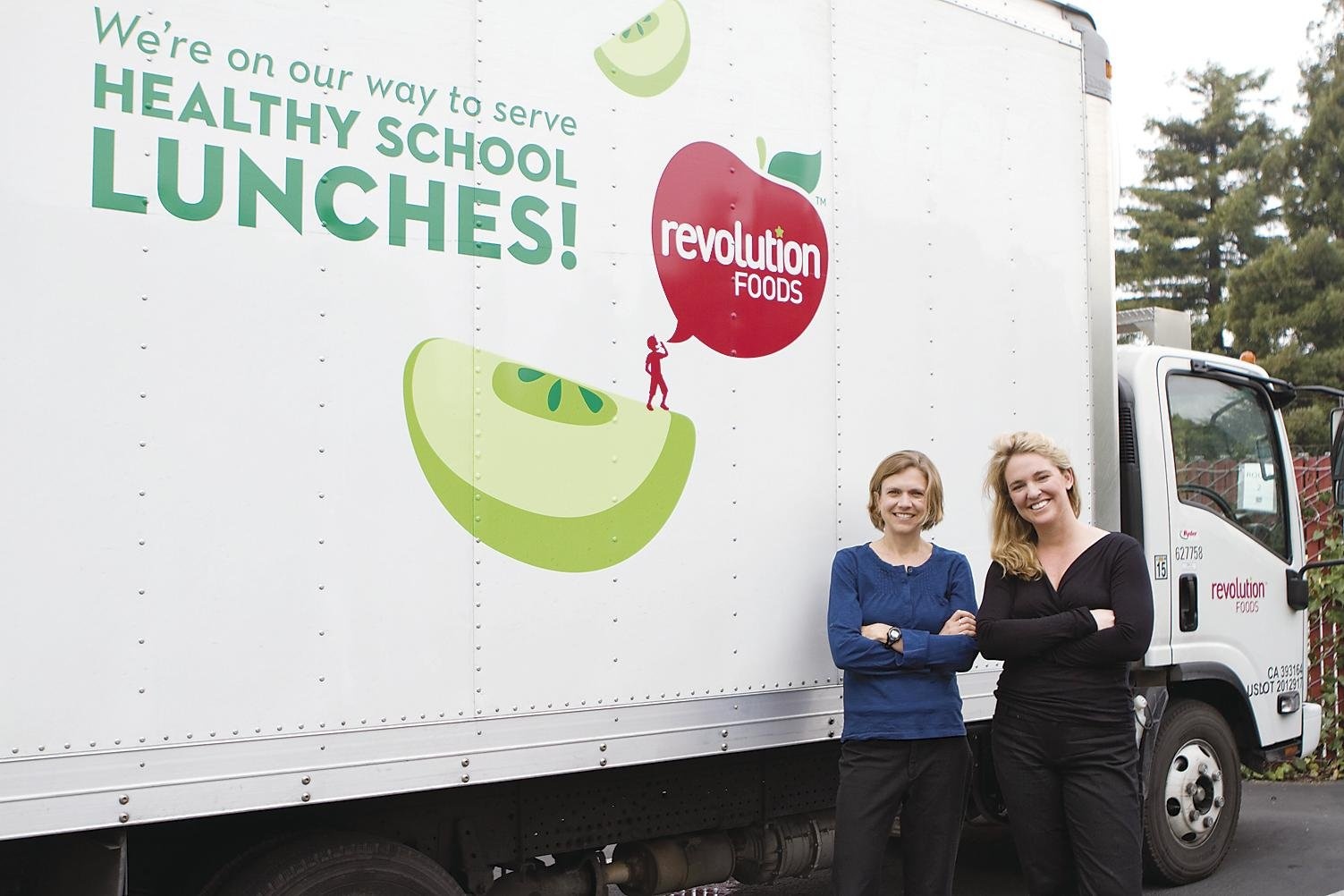
When the foundation first looked for potential investments, it found very few funds or fund managers focused on investments that aid vulnerable kids. So Kellogg did something fellow grant makers had said was too risky: It made direct investments in companies. The foundation has made five such investments to date, including $5.8-million in Revolution Foods, which sells healthy school lunches to school districts in poverty-ridden regions, and $4.6-million in HappyFamily, a business that makes organic baby food.
“If you’re driven by two bottom lines and a strong sense of mission, I don’t know how you cannot do direct investing,” says Tony Berkley, the foundation’s director of mission-driven investing. “What we’ve seen in our portfolio is that the directs have performed well,” he says. “And they certainly have a bigger social impact.”
Investing directly in companies has also garnered an unexpected “learning return,” says Mr. Berkley. Building relationships with entrepreneurs whose companies work in the schools or the food industry has helped Kellogg better understand those systems and how to influence them. He says the knowledge coming out of the fund’s impact investing is starting to shape its grant making and policy work but that Kellogg is still struggling to make full use of it.
“Those of us who do the work most intensely on a daily basis get the most learning return,” says Mr. Berkley. “What we haven’t figured out how to do is quantify it and share it effectively.”
Recycling Money
For the Greater Cincinnati Foundation, impact investing is another way to get money into the community for important projects while preserving its endowment.
“When you make a grant, it’s guaranteed that you’ll never get a return on investment,” says Kathy Merchant, the foundation’s chief executive. “The money leaves, and it does what it’s supposed to do for a social return, but there’s no opportunity to recycle money.“
Since 2008, the foundation has made 10 impact investments, most of them low-interest loans to nonprofit organizations. For example, the foundation loaned $500,000 to the Greater Cincinnati Energy Alliance, which the organization used to make affordable loans to consumers to make their homes more energy-efficient.
A little more than a year ago, the Greater Cincinnati Foundation gave people who hold donor-advised funds at the organization the opportunity to invest a portion of the money in the impact investments. So far, most of the 15 donors who have done so have been longtime supporters of the community foundation, some of them elderly, but it hopes that, over time, the new option will help attract younger donors. Ms. Merchant says it’s already become an important part of the conversations she has with potential supporters ages 35 to 60.
Fueling Pilots
Some foundations turn to impact investing to advance specific parts of their mission. The California HealthCare Foundation turned to investing after making grants to support new ideas to improve health care for people who are poor or uninsured or who live in rural areas.
“We had been doing a lot of interesting pilots,” says Margaret Laws, director of the foundation’s Innovations for the Underserved program. “But we realized that they were not going to naturally go to scale; that they would be terrific pilots, but that as soon as the grant money was gone, many of them would disappear.”
So in 2010 the foundation started a $10-million fund to invest in companies that help people who have a hard time gaining access to health care. Among the foundation’s first investments: $249,500 in Asthmapolis, which developed a device that records when and where people with asthma use their emergency inhalers, and $240,000 in Direct Dermatology, a company that provides remote dermatology consultations.
Over time, impact investing will become a standard part of foundation operations, predicts Cynthia Muller, director of impact investing at Arabella Advisors, a firm that guides philanthropists.
“I’m not saying program officers are all going to become financial wizards,” she says. “But when they look at a project, they will say, ‘What will best serve this project? Would it be a grant or would it be a loan or some other type of investment?’”