

October 2, 2011 | Read Time: 8 minutes
The bad economy has worn out many of the trustees who sit on charity boards across the nation, say nonprofit executives and consultants who advise boards.
Nonprofits have been putting greater demands on their trustees for the past four years just as many board members have been facing financial pressures of their own.
BoardSource, a Washington group that advises nonprofit boards nationwide, says the economic crunch has caused a spike in the number of charity leaders seeking its help to get trustees to do more. And with severe shortfalls among state and local governments that provide a sizable chunk of many charities’ budgets, the demands on nonprofit board members are likely to increase.
“I am on two boards myself right now, and just asking friends to support things has become harder,” says Carol Weisman, a St. Louis consultant who works with nonprofit boards. “They have a grown child out of work or they’re helping their daughter keep her house from foreclosure. I cannot tell you the number of times I’ve heard that ‘charity begins at home’ as the explanation for why someone can’t give now. It does not seem to be getting any better.”
In New York, “we are seeing burnout, and we are finding it more difficult to find people to serve on boards,” says David M. LaGreca, head of Governance Matters, a nonprofit that provides board recruiting and consulting services to charities in the metropolitan area.
Worn Down by Success
To be sure, the economy isn’t the only reason trustees are challenged now, says Jan Masaoka, a veteran nonprofit management consultant who now edits Blue Avocado, an online publication for nonprofit leaders.
Trustee fatigue, she says, also occurs when an organization doesn’t achieve the goals set out by the board or when colleagues on the board don’t do their fair share. Dealing with a problematic executive director can also frustrate board members.
Even success can lead to trustee burnout, especially if an organization evolves beyond its board members’ skills and capabilities.
Pace Center for Girls, a Jacksonville, Fla., charity that provides academic aid and other services to troubled middle- and high-school students, faced that situation two years ago after it expanded to 17 centers. The organization realized it needed to revamp its board, whose members were all representatives from the local centers.
“That structure was no longer effective,” says Mary Marx, the organization’s chief executive.
The trustees were focused on their local communities rather than having the statewide perspective needed for the growing organization, she explains.
After the Pace board took a hard look at itself, defined the types of skills its trustees needed, and made changes to its bylaws, several trustees decided to leave. The center has recruited 10 new board members in the past year.
“We were experiencing board fatigue before the change,” Ms. Marx says.
Now, she says, trustees show more energy and enthusiasm and are completing a four-year plan to expand the number of girls Pace serves.
Reinventing Themselves
Since the recession started, however, boards are far less likely to be challenged by expansion than by sharply constrained resources.
Yet some boards, working closely with their chief executives, have managed to use the financial crisis to reinvent themselves and their organizations, says Fred Miller, a Boston consultant.
“Some people would say this is a terrible time, but it forces innovation. This is a transformative moment we’re in.”
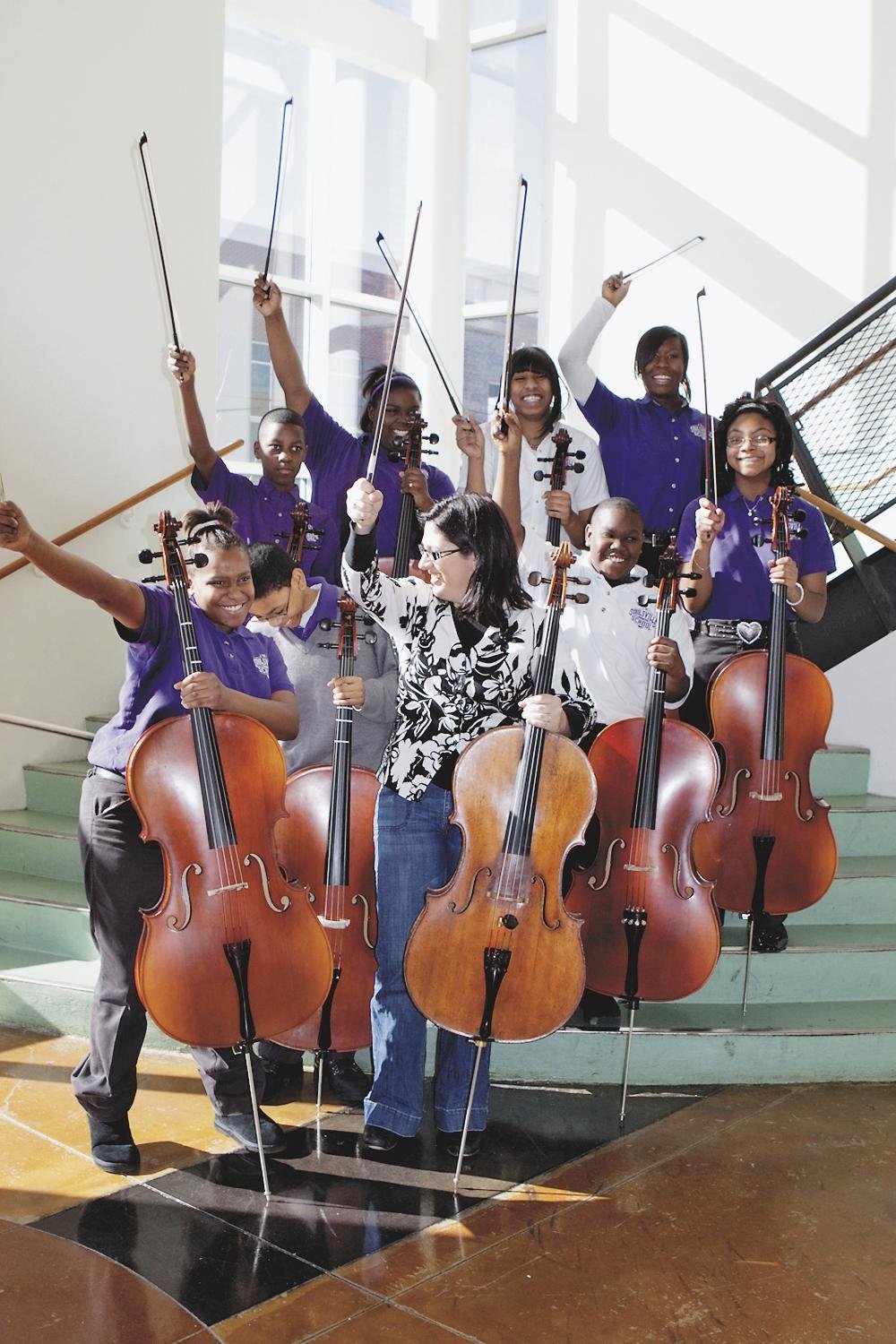
At the Memphis Symphony Orchestra, for example, when economic hardship created a $1-million deficit in 2008 and 2009, “our board was disengaged and fatigued,” says Ryan Fleur, the organization’s chief executive. “It came down to the hat going around.”
At the same time, he says, “we were seeing tremendous declines in our audience.”
Then, Mr. Fleur recalls, “one trustee asked, If the symphony went away, would Memphis even notice? We didn’t like the answer.”
But the question led the symphony’s board and staff members to review and change its mission: Instead of focusing on its musicians and creating the best possible music, which was an “introspective mission,” Mr. Fleur says, “we decided that we exist to create meaningful experiences for the community through music. Music is a means, not an end.”
That simple shift in thinking has led to some big changes.
Among them is a series of new performances held throughout the city so the symphony can collaborate with local artists such as a rapper or an indie rock band.
“These artists make up the fabric of the Memphis popular-music community, but we were completely disconnected” from them, says Mr. Fleur.
The performances, he adds, are drawing more people in their 30s and 40s than those 60 and older, its traditional audience.
And the symphony has created a new offering with Federal Express: a leadership-training program called Leading From Every Chair, in which corporate executives work with symphony musicians to create and perform music.
The program is designed to help executives learn to innovate and collaborate. Companies pay fees ranging from $6,000 to $20,000, depending on how many of their employees participate.
The symphony has also revamped its board, cutting it from 40 to 23 trustees. The smaller, more manageable board, Mr. Fleur says, was the result of limiting board members to no more than three consecutive three-year terms.
At the same time, the symphony adopted stricter requirements for trustee donations and attendance at board meetings. And it recruited several trustees who are not classical-music lovers but are community or business leaders whose primary goal is making Memphis a desirable place to live.
One of those board members is Michael Uiberall of Watkins Uiberall, a Memphis accounting firm. “We started bringing people on board who have a passion for the city first, and through those efforts, fund raising started improving,” says Mr. Uiberall. “You need board members who have the contacts to go out and solicit people.”
Since joining the symphony board, Mr. Uiberall has participated in several solicitation visits, most of them involving musicians. “When we go out fund raising for the larger dollars, we try to always bring a musician,” he says. “One of the first people I recruited was the CEO of First Tennessee Bank. What excited him and his wife was being able to speak to musicians and hear their love of music and what they do in the community.” The banker now serves on the board and recruits other supporters.
Such accomplishments have begun to make a dent in the symphony’s $1-million deficit, which declined to about $470,000 last year and is expected to drop to $250,000 by next year, Mr. Fleur says. Meanwhile, ticket revenue rose by 23 percent, with a 45-percent increase in the number of people who buy single tickets rather than subscribe to a series.
Donors’ Fury Prompts Changes
A charity that came close to shutting down because of the recession but instead reinvigorated itself and its board is the Louis August Jonas Foundation, which operates a seven-week international leadership camp for 120 teenagers every year in upstate New York. Donors rebelled in 2009 after trustees decided to suspend Camp Rising Sun, as the leadership program is called.
The charity had plenty of reasons to take the action: Its endowment had dropped by 45 percent and its executive director had left. But the camp’s closure infuriated many donors, most of whom had gone there as youths. They withheld their annual gifts in protest.
“The board realized they better get their act together,” recalls Ruthellen Rubin, the foundation’s director of development. “They were suddenly looking at their own extinction.”
In response, Robert B. Mellins, the board president and a Columbia University professor of pediatric pulmonary medicine, led the organization in a sweeping effort to regain donors’ confidence and improve the board.
The organization hired a new executive director, Judith Fox, who accompanied Dr. Mellins to four weekend retreats, each with 15 former campers and donors, to find out what they liked and disliked about the organization and to get their ideas for ensuring the camp’s long-term survival. The group then quickly adopted the best ideas, including several changes to the board.
Now, for example, former campers and others who are not trustees can serve on board committees. That not only helps the board get its work done but also provides new perspectives and a pool of candidates who may become trustees later.
Other changes included creating a new trustee committee that looks for ways to improve the board. It has adopted regular self-evaluations, created an orientation for new board members, and brought more women and younger people onto the board.
In another step to avoid burnout, the board created a succession plan for trustees. It now appoints a president-elect, and it has carved out a formal position for the board’s immediate past president.
Altogether, the changes have strengthened the 81-year-old organization. Annual gifts will surpass $700,000 this year, after declining to $128,000 in 2009 during the worst of the crisis. And the board and its committees now have waiting lists of people eager to join.
Because of those achievements, the Louis August Jonas Foundation captured an award this year for outstanding board leadership. Says Mr. LaGreca, of Governance Matters, which bestowed the award: “This is a story of a board who had a leader rejuvenate the organization with shock paddles and jump start the board. This highlights the flip side of burnout.”




