Journalism as Charity? How For-Profit Media May Undercut Nonprofits

By Drew Lindsay
Senior Editor, Special Projects
January 30, 2018 | Read Time: 8 minutes
Seattle residents opened their email in-boxes last year to find an earnest plea for financial support. It began: “We can’t do our job without you.” An earlier note spoke of the “public-service mission we take so seriously.”
Charity appeals, right? Wrong. The curious who clicked on the provided link were taken to a web page loaded with subscription offers for The Seattle Times. The Times has the backing of a privately held company, yet it was courting readers with a pitch akin to a charity wielding the proverbial tin cup.
The Times is not alone. Faced with declining advertising revenue, many commercial online and print news publications are borrowing, if not co-opting, the language and approach of the nonprofit fundraiser as they seek readers. Once sold as a commodity, journalism is now being promoted as a cause.
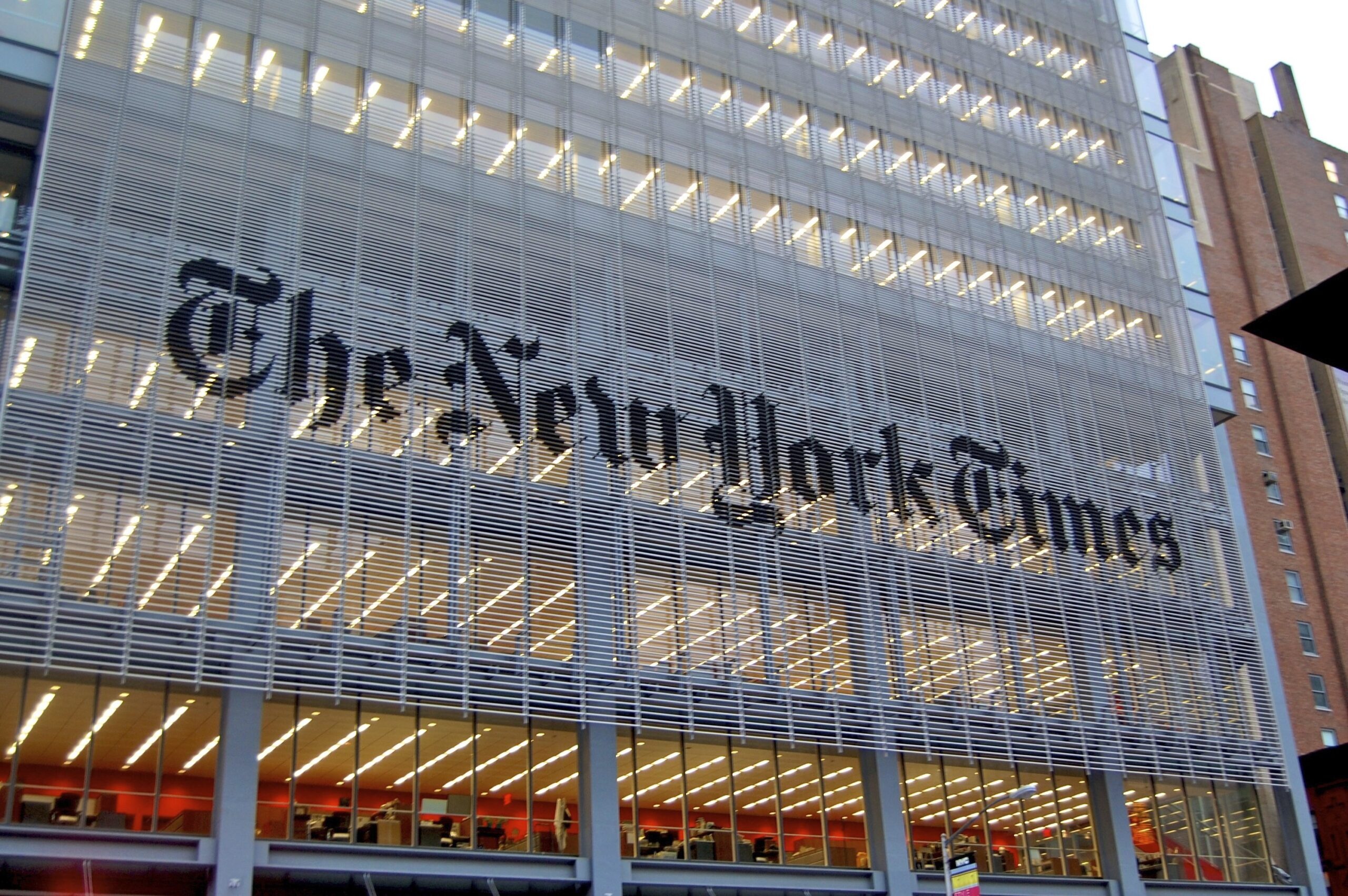
“Support the mission of the Times,” beckons The New York Times website. “Support quality journalism,” encourages The Baltimore Sun. The online magazine Slate opts for the more direct “Help support Slate.” Others sounding “support” themes include venerable publications like The New Yorker and The Atlantic and new ventures such as GeekWire.
The forays into the philanthropic marketplace don’t stop there. Some media outlets are seeking — and getting — big dollars from private foundations. Most notably, The New York Times, which occasionally receives foundation backing for special projects, hopes to make such dollars a regular revenue source.
The advance of commercial media into philanthropy is creating tension with a burgeoning group of nonprofit news organizations. “I do not begrudge any news operation that uses every tool possible to keep the lights on and journalists at work,” says Greg Hanscom, executive editor of Crosscut, a nonprofit news site in Seattle. “But it does chafe me a bit to see for-profit news organizations that exist to make money for shareholders making a grab for some of those philanthropic dollars.”
“If you’re going to talk like a nonprofit and you’re going to ask for money like a nonprofit, you better act like a nonprofit,” he adds. “And by that, I mean you need to be mission-driven; you need to be service-driven. And you need to exist for the good of the community and not just for shareholders.”
The blurring of the lines between nonprofit and for-profit in journalism is not too different from what’s happening in charitable giving broadly. Silicon Valley philanthropists, for instance, are backing tech companies that promise to close the achievement gap in education. Private foundations are investing in renewable-energy businesses they believe can address climate change.
“There’s an increasing recognition that it’s not necessary to be nonprofit to be morally righteous,” says Antony Bugg-Levine, head of the Nonprofit Finance Fund. “There’s a recognition that sometimes, a for-profit company can produce social good.”
In short, businesses are getting grant dollars and occasionally small donations once reserved for nonprofits. There’s no evidence that’s leading to a cannibalization of philanthropy dollars, Mr. Bugg-Levine says, but the threat increases the need for nonprofits to demonstrate that their social good has impact that can only be achieved through donations and charities. “It certainly calls on all of us in the nonprofit sector to sharpen how we communicate the value of what we do.”
From Commodity to Cause
Until recently, newspapers and other media typically courted their readers as customers, not supporters. Rick Edmonds, a media business analyst with the Poynter Institute, says they pitched their work as a valuable resource to enhance readers’ lives and help them understand their community and the world.
One newspaper in Florida marketed itself with the slogan “In the know,” he notes. The Washington Post for years aired commercials warning, “If you don’t get it, you don’t get it.”
Recent years, however, have seen the collapse of the industry’s business model and with it a change in marketing. Advertising revenue is drying up, leaving subscription dollars as the ballast of many budgets. As readers have become more important to their bottom line, companies say, “We need your support,” because that, in fact, is increasingly true.
“The bulk of our revenue now comes directly from subscribers,” says Eileen Murphy, senior vice president for corporate communications for The New York Times. “So we’re changing the way we talk about business, and we’re looking to connect more deeply with our readers.”
If such rhetoric sounds like the manifesto of a public-broadcasting pledge drive, that’s no coincidence. For decades, listeners and viewers have supplied the bulk of public broadcasters’ revenue, even as sponsorships have grown. With their lifeline money at stake, stations learned how to cultivate a personal relationship with their audiences — a relationship that in some cases has evolved into a deep commitment, says Ellen Weiss, a former NPR news executive.
“It became part of someone’s identity: ‘I am a public-radio listener,’ ” says Ms. Weiss, now a vice president with the Scripps Howard News Service. “I think newspapers are beginning to understand that. They’re realizing that we have to build this idea that you and I are in a relationship together.”
The Trump Effect
Though the marketing of journalism as a cause started before the 2016 election, it accelerated as candidate and then President Donald Trump condemned mainstream news outlets as “fake news. “His hostility to the press ups the ante and makes quality journalism endangered, in a way,” Mr. Edmonds says.
After Mr. Trump’s victory, some news consumers certainly saw journalism as under assault and rallied to its side. The New York Times received more than 100 checks intended as donations to support the paper’s work. Such unsolicited gifts surprised officials. “We’re a for-profit company; for obvious reasons, we can’t just accept people’s donations,” Ms. Murphy says. But they inspired the newspaper’s new marketing approach.
First it adopted the slogan “Support the Mission of the Times” for its program to provide free subscriptions to students. (It also used those initial checks to pay for those subscriptions.) The online presence for that program resembles a charity’s donation page, with suggested dollar amounts for “contributions” (though the papers makes clear these are not tax-deductible). The Times even offers a match for every sponsored subscription.
Ms. Murphy describes the effort as “hugely successful.” The program now has more than 26,000 “supporters,” in the Times vernacular, and has paid for more than 2 million student subscriptions in 3,000 schools.
The Times has since introduced similar themes in its broader marketing, Ms. Murphy says. Last fall, for instance, it sent readers an email from Nicholas Kristof in which the longtime columnist wrote, “I couldn’t do my work without you.” He noted the newspaper’s role as a watchdog, adding, “We have your back, because you have ours.”
The note didn’t include a pitch to subscribe but concluded, “I hope you’ll continue to support me and my colleagues.”
The Times also recently created a newsroom position dedicated to seeking “philanthropic funding for ambitious journalism.” In a note to readers, top editors Dean Baquet and Joseph Kahn did not mention the company’s financial issues but described the move as a response to overtures from “a host of philanthropies and universities” that “say we are one of the few institutions with the independence and ambition to take on the largest subjects here and abroad.”
War on the Media
Slate, too, changed its marketing following Mr. Trump’s victory. It offers most of its content for free but the day after the election saw a flood of readers sign up for its membership program, which offers exclusive content and other benefits for $5 a month or $49 a year.
“The president and his chief advisers were talking openly about a war on the media,” says Gabriel Roth, editorial director of Slate Plus. “There was this sense that this already precarious business was going to face another threat, perhaps an even greater threat.”
Slate soon after rewrote its promotions for Slate Plus to attract other galvanized readers. “We need quality journalism more than ever,” reads the Slate Plus subscription page. “Help us hold Donald Trump … accountable.”
Such rhetoric is in tune with how readers viewed Slate long before Mr. Trump’s ascendancy, Mr. Roth says. A few years ago, readers were asked in a multiple-choice survey why they joined. The No. 1 answer, even though it wasn’t offered: to support Slate.
“That was a surprise,” Mr. Roth says. “But it has become a more and more important way we think about the program and pitch the program to readers.”
Shareholders to Please
Commercial media dismiss the idea that they have appropriated the guise of a nonprofit when, as companies with shareholders to please, their chief objective must be to generate a profit.
“We don’t hide the fact that we’re a for-profit business, says Ms. Murphy of The New York Times. “Having said that, we have a 166-year commitment to the truth and providing news and information.”
The Times frequently runs stories of critical public interest that hurt the company financially, she adds. One example: In 2013, the paper published an investigation into the finances of the Chinese premier’s family, knowing the government would retaliate by blocking access within the country to the paper’s newly launched Chinese-language website.
Even before they adopted fundraising parlance, many for-profit media acted like quasi-nonprofits. Increasingly, news organizations like the Times are seeking help from grant makers.
Regardless, commercial media that reach for philanthropic dollars are entering an increasingly crowded space. The nonprofit news industry is growing fast, with many small, local organizations coming alongside veterans such as the Texas Tribune and ProPublica.
The philanthropic plays of for-profit media won’t hurt these outfits, says Tom Glaisyer of the Democracy Fund, which was launched by eBay founder Pierre Omidyar to strengthen key components of democracy, including media. “My expectation is that nonprofit media will continue to grow,” he says.
But, he says, the future of both nonprofit and for-profit news media may well rest on whether they can earn the trust — and support — of readers: “That relationship is the key to sustainability.”