
Keeping Up the Pace
Charities that stage athletic events say their biggest challenge this year is getting donations

By Debra E. Blum
Contributor
May 7, 2009 | Read Time: 9 minutes
Sean Wetstine is training hard for a 70.3-mile triathlon this summer, running, biking, or swimming for a couple of hours each day. But it is not the exercise that is making him sweat the most, he says: It’s raising money for the charity he hopes to support by racing. “I feel like I’m pulling teeth to get donations,” says Mr. Wetstine, a clothing-store manager in suburban Denver, who pledged to raise $2,700 for the Leukemia & Lymphoma Society. “It’s rough and embarrassing.”
Mr. Wetstine is not alone. Many people who participate in walkathons, marathons, bike rides, and other athletic events to benefit charities are feeling the effects of the recession. As a result, many of the organizations that run their own events or recruit athletes to compete on their behalf at other events expect revenues to be flat or down from last year, in some cases by as much as 20 percent.
A Sluggish Start
Since the spring race season is just getting under way, though, and plenty of events are scheduled for the fall, 2009’s outlook is still uncertain.
Among the reports so far:
-
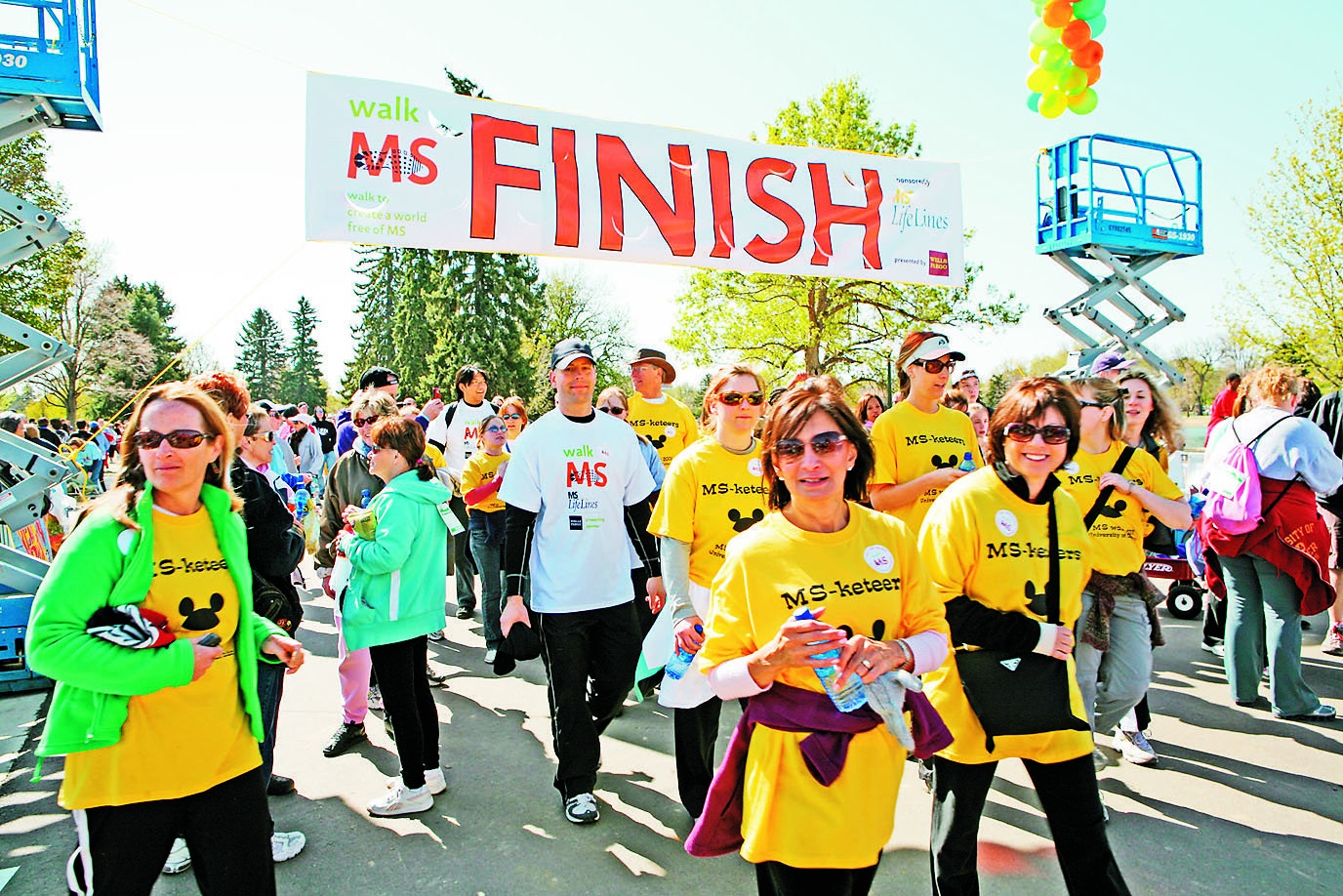
The average participant in the American Heart Association’s Start! Heart Walk — 450 walkathons around the country — had raised $162 dollars through the end of March, down from $193 at the same time last year.
-
While many more marathon, triathlon, and bike-race competitors are raising money this year on behalf of the Children’s Tumor Foundation as part of the charity’s Endurance Team, the average size of gifts participants have collected so far this year is $20 less than it was last year.
-
At the Pan-Mass Challenge, which raises money for cancer research by asking each bike rider to raise $1,000 to $4,200 each, depending on the length of their route, the number of people signed up so far is 10 percent lower than at the same time last year.
“We think we’ll catch up as the weather gets better and the hundreds of people who have been turned away before because we sell out so quickly see that it’s their chance to ride,” says Pan-Mass’s founder, Billy Starr. “But as for the money, we don’t know how that will turn out. No one is immune from the problems with the economy.”
Athletic fund-raising events vary, but are generally based on a similar approach.
Walkathons are usually casual, noncompetitive races as short as one kilometer, where participants either pay a small registration fee or are encouraged to gather pledges or make a small personal donation. Bike races, which, like walkathons, are usually organized by the charity that benefits from the gifts, are more expensive to stage, and thus typically require participants to pledge to raise at least a few hundred dollars.
Over the last couple of decades, so-called endurance programs have become a fast-growing segment of athletic-event fund raising. Charities organize teams of athletes to compete in noncharity events, such as marathons and triathlons. In exchange for a specified contribution — typically between $1,000 and $6,000 — which the participants collect as gifts, the charity trains athletes and pays their way to races, such as the long-course triathlon in Boulder, Colo., in which Mr. Wetstine will compete.
Exercising Creativity
The different kinds of fund-raising approaches face different challenges this year. Charities that organize walkathons, for example, generally say that the number of participants has held steady or has grown this year, though each walker is raising less. Some endurance programs, by contrast, say people are slower to sign up this year, due at least in part, organizers say, to skittishness about the financial commitment. In most programs, participants must secure their minimum pledge amount with a credit card in case they don’t collect enough gifts.
In response, some charities are promoting lower-cost options, like shorter races or local races that require lower pledge amounts because the organization does not have to pay for competitors’ travel expenses.
The Leukemia & Lymphoma Society, which runs Team in Training, one of the nation’s biggest programs for athletes who want to compete and raise money, is making sure its chapters offer a mix of events.
Nancy Klein, the charity’s chief marketing and revenue officer, says more participants this year are at least exploring the lower-cost options.
“The local events always attract a lot of people,” she says, “but the steep fund-raising challenges created by the economy could be driving more interest.”
The Pan-Mass Challenge’s shortest one-day ride is filling up this year more quickly than it did last year, and more quickly than the signature two-day event.
The organization fueled interest in the short route by promoting an approach that encourages families to ride together. Pan Mass is also about to unveil new fund-raising tools on its Web site for its August ride, including what it is calling a virtual-rider feature that will allow nonbicyclists to raise money.
Other charities are trying new ways to attract participants and combat fund-raising challenges. Some organizations, for example, are offering one-on-one coaching for fund raising or are encouraging participants to think creatively about how to attract gifts.
A Humorous Appeal
Mike Rizzo, who is riding in the AIDS/LifeCycle, a six-day bike ride that raises money for two California AIDS groups, came up with an adopt-a-rider program, asking would-be donors in a humorous solicitation letter to adopt him. He reminds donors that he is toilet-trained and that they would have bragging rights because their “kid” biked 545 miles. He goes on to ask donors to have a baby shower of sorts by reaching out to their own family and friends to support their newly adopted son.
“When I was having a harder time raising money this year, they suggested I get creative,” says Mr. Rizzo, who collected $4,100 for last year’s bike ride, but is struggling now toward his $3,000 minimum. “People are really budget conscious, but their heart is in the right place, so you just have to find ways to inspire them.”
To inspire gifts to participants of the Walk MS and Bike MS programs, events staged by the National Multiple Sclerosis Society, the organization has been asking corporate sponsors to provide as many matching-gift opportunities as possible.
“People want a good value, especially these days,” says Graham McReynolds, executive vice president of marketing and development at the MS Society, “and a matching gift is like having a two-for-one coupon.”
The Breast Cancer 3-Day, 60-mile walks held in 15 cities around the country to raise money for research, is offering deals, too. To encourage people to sign up, it has discounted its $90 registration fee during special promotion periods. During two weeks in March when the fee was $55, registrations shot up by 240 percent over the same time period last year. All walkers still had to commit to raise $2,300.
“People want to do this,” says Patricia Renzulli, vice president of the National Philanthropic Trust, which runs the Breast Cancer 3-Day. “They might just need an excuse to do it this year when money is tight, so we are offering one.”
Some charities are seeking to squeeze more out of their events. The Susan G. Komen Race for the Cure, which raises money for breast cancer, wants to tap its participants to bring in more money. The 122 races around the country — which each year attract more than 1.5 million people — require participants to pay up to $45 per person, but do not require them to raise money beyond that.
To encourage people to collect additional gifts, the organization offers fund-raising tools, such as the ability to create personalized pages on the Internet to collect pledges on their behalf. But no more than 12 to 18 percent of the runners or walkers seek additional contributions, estimates Stefan Strickland, director of affiliate relations at Susan G. Komen.
“We’re working on a culture shift, a different model of fund raising to where 60 or 70 percent participate in the pledge program,” Ms. Strickland says. “The need for that has really come clear this year.”
Aggressive Recruiting
Many of the charities that hold their own walkathons and other events are trying to recruit more people to their cause, too, hoping to make up for the anticipated drop in per-participant fund raising.
The American Heart Association has already signed up about 1,800 more companies than it had last year at this time to recruit employees to participate in the Start! Heart Walks in the fall. The association has expanded its efforts to set up walking trails on corporate campuses, and it heavily promoted the second year of its National Start Walking Day last month, which helped to encourage sign-ups for the fall walks.
To ensure that its Run for Research program would be fully subscribed this year, the American Liver Foundation started recruiting athletes earlier than ever.
The organization, which has been fielding about 250 runners in the Boston Marathon every year for 20 years, also held its first-ever kickoff party in October.
“We wanted to get started early and we wanted to build as much enthusiasm and support for fund raising as early as we could because we knew things would be tough,” says Kelly Beckett, vice president of the Northeast division of the American Liver Foundation.
Each Run for Research participant must raise at least $3,000, a task that Ms. Beckett acknowledges was “somewhat daunting” for athletes this year, though spots sold out quickly, and everyone reached their fund-raising goal.
Tracy Dart, in West Seattle, who is walking in her city’s Breast Cancer 3-Day for the third time this year, hopes the event’s $2,300 pledge minimum doesn’t scare anyone off. She admits that she is hustling for donations more than in the past, but she is confident that she and her fellow walkers will reach the required pledge amount, and maybe even go beyond it.
“I know people will come through, so I wouldn’t want anyone not to sign up because they are worried about the money,” says Ms. Dart, who last year was diagnosed with breast cancer. “If we spread the word enough, get the message out, share our passion, I know there is enough support to go around.”
Mr. Wetstine in Colorado is working hard to capture some of that support. When he ran half and full marathons with Team in Training over the last few years, he says, the donations flowed in after he sent out solicitation letters and e-mail messages to friends, family members, and business associates.
This year, after his solicitation letter drew a more dismal response, he is scrambling to organize fund-raising events, like a band night at a friend’s bar. The night last month that he held a fund-raising event at a local hamburger joint, which promised him 10 percent of the evening’s proceeds, only his in-laws and brother-in-law showed up.
“My friends didn’t even want to eat out,” Mr. Wetstine says. “Everybody is feeling the pinch.”




