November 3, 2013 | Read Time: 4 minutes
La June Montgomery Tabron grew up in inner-city Detroit, one of 10 children of working-class parents. After earning an MBA in her early 20s, she envisioned a path to a more affluent life: She would join a large accounting firm and work hard to become a partner.
That plan abruptly changed course at age 25, when she was recruited to join the W.K. Kellogg Foundation, in Battle Creek, Mich., as its financial controller. Ms. Tabron says she had never considered working at a foundation but quickly warmed to the idea.
“It was a conscious decision to shift my whole career and thinking,” Ms. Tabron says. “It turned out to be the best decision I’ve ever made.”
Last month, after 26 years at Kellogg, Ms. Tabron was named the foundation’s ninth president. She is the first African-American and the first woman to head the $7.3-billion foundation since its inception in 1930.
Her appointment marks the second time this year that one of the nation’s 10 largest foundations has appointed as its chief executive an African-American raised in modest circumstances. In June, the Ford Foundation named Darren Walker, an African-American who grew up in Goose Creek, Tex., as its next president.
The hires may also reflect a greater willingness by foundation boards to tap internal candidates for the top job. Both Ms. Tabron and Mr. Walker are longtime foundation employees. Until recently, big grant makers typically turned to outsiders, such as for-profit executives, when filling their CEO positions.
“Maybe between Ford and Kellogg, we’re starting a new trend,” says Sterling Speirn, Kellogg’s current leader, who is stepping down at year’s end.
New Strategy
Mr. Speirn enacted a major overhaul of the foundation in 2008, choosing to concentrate grants in certain cities and states and to sharpen its mission of helping needy children and families.
Mr. Speirn and others say Ms. Tabron is an excellent choice to lead the foundation because she has the operational skills to put the new strategy into effect. Even though Kellogg announced its new strategy more than five years ago—and its decision to award most of its grants in Michigan, Mississippi, New Mexico, and New Orleans—it has opened regional offices in those areas only in the past year.
Kellogg has four grant-making priorities, all of which relate to its goal of improving the lives of vulnerable children: education, food, health, and family economic security. As it starts local programs, the foundation wants to be viewed as a respected partner rather than a rich but meddling outsider.
“We think we’re on to a new business model, and it’s taken us several years to figure out how to implement it,” Mr. Speirn says. “Now it’s really about delivering on the strategy.”
Ms. Tabron is best known for her work on the financial and operations side of Kellogg, although she recently took on more responsibility for programs.
Tonya Allen, who became chief executive of the $500-million Skillman Foundation in July, says she became friends with Ms. Tabron a few years ago when both women were in a leadership-training program sponsored by the Council on Foundations.
While Ms. Tabron was serving in her current position, as treasurer and executive vice president of operations, she once turned herself into a “human grant,” according to Ms. Allen. She physically walked to different places in the Kellogg office space over the days and weeks it took to receive, review, approve, and deliver a grant. Ms. Tabron was looking for ways to speed up the process.
Ms. Tabron also brought in executives from Zingerman’s, an acclaimed food purveyor in Ann Arbor, Mich., to help Kellogg think about how it handles customer service.
“I’ve always been impressed by her thinking around becoming more efficient,” Ms. Allen says. “It’s not super sexy, but it’s the kind of work that foundations have to do to become better.”
Longtime Commitment
Two years ago, Ms. Tabron took on her first leadership role on the grant-making side: overseeing the Kellogg foundation’s work in Mississippi and New Orleans. She’s now pushing a local effort to improve educational outcomes for African-American and Latino boys.
Oleta Garrett Fitzgerald, southern regional director at the Children’s Defense Fund, a child-advocacy organization, says the foundation’s approach in Mississippi has financially helped some Mississippi charities and hurt others, but she says Ms. Tabron is widely considered a fair and thoughtful leader.
“She brings passion,” Ms. Fitzgerald says, “but she also brings structure and order and organization.”
Mr. Tabron says that in her first few months as president she will work to reassure staff members and local leaders that Kellogg remains committed to its strategy of working in specific regions.
“We’ve told these places that we’ll be there for a generation,” Ms. Tabron says. “We have to stay focused, and that’s what we’re going to do.”
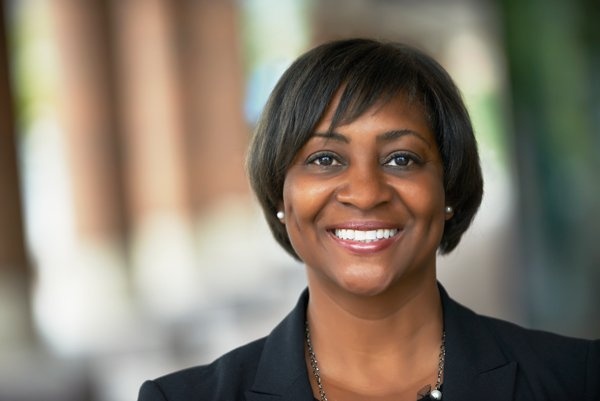
La June Montgomery Tabron, president, W.K. Kellogg Foundation
Education: Bachelor of business administration, University of Michigan at Ann Arbor; MBA, Kellogg Graduate School of Management at Northwestern University
Career highlights: Executive vice president and treasurer, Kellogg foundation, and leader of its programs in Mississippi and New Orleans; auditor at Plante & Moran, an accounting firm
Salary: She declined to disclose it.
What she’s reading: Ignite: Inspiring Courageous Leaders, by Jo Ann Morris