
Kellogg Renews Commitment to Train Social-Justice Leaders

By Alex Daniels
Contributor
February 4, 2019 | Read Time: 4 minutes
Linda Samarah calls the Kellogg Foundation’s fellowship for social-justice leaders a “full-circle” opportunity.
Samarah is the daughter of Jordanian immigrants, and when she was growing in Michigan, mentors at the Arab American Heritage Council of Flint helped her “find her voice” as an Arab American committed to social justice.
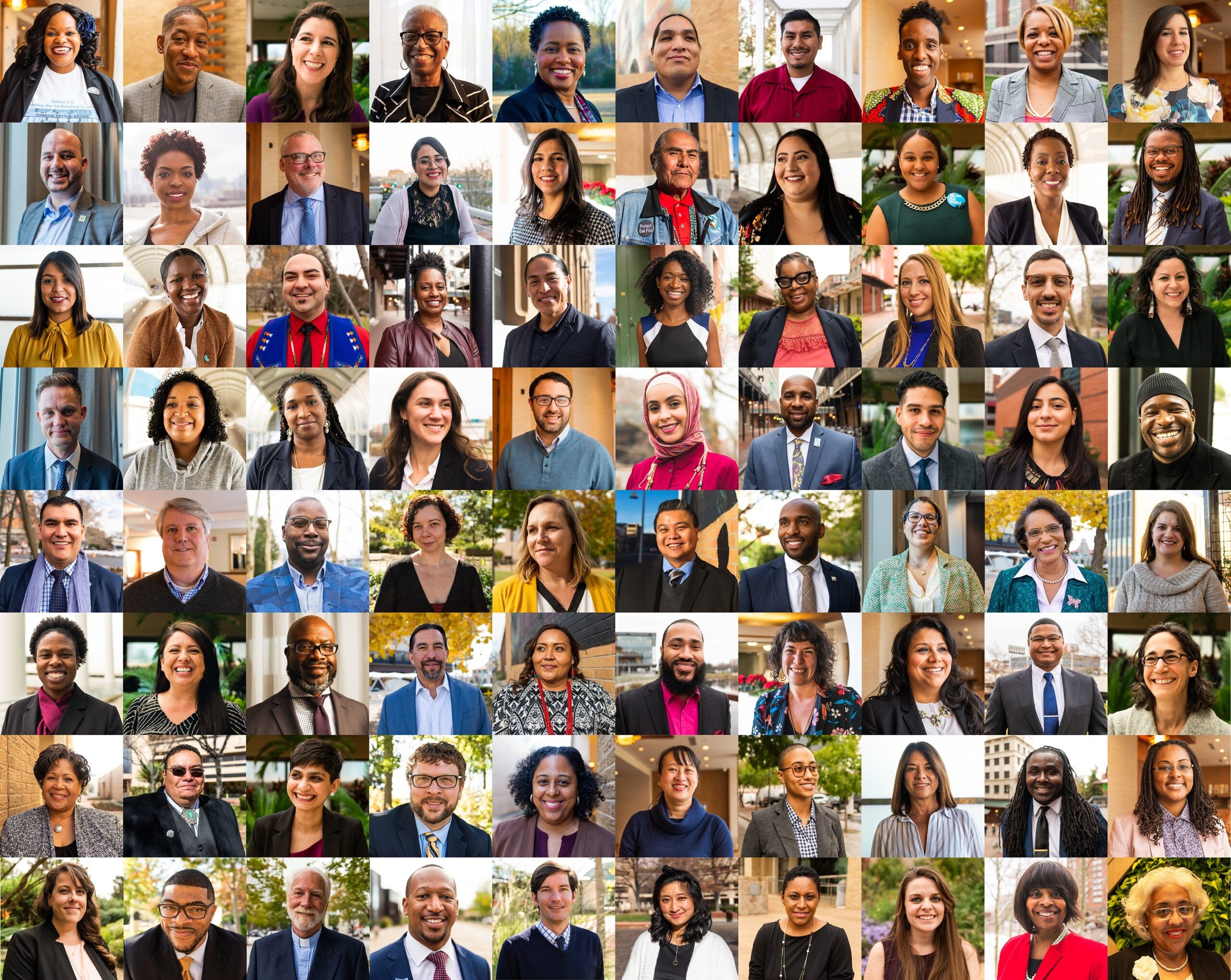
Now she’s getting a chance to give back. As one of 80 fellows in Kellogg’s Community Leadership Network, she’ll explore ways to use the arts to make sure children of color get as much support as she did.
“My community in Flint helped me to believe in myself and put those passions into practice so I can be a changemaker in the world,” said Samarah, who works as a communications specialist at the Arab Community Center for Economic and Social Services in Dearborn, Mich. “All I can ever hope to do with that blessing is to share it with as many people as I can.”
Training leaders has been a part of the foundation’s work for decades. One early effort, the Kellogg National Leadership Program, includes former Secretary of State Colin Powell as an alumnus.
The current phase of Kellogg’s leadership training debuted in 2013. The foundation has committed $8.7 million to a series of educational programs for the participants that it designed with the Center for Creative Leadership.
Each fellow will receive a $25,000 stipend. Over the next 18 months, the fellows will meet five times as one group and several more times in smaller groups organized in places where Kellogg has a presence: Michigan, Mississippi, New Mexico and New Orleans. Fellows will also receive one-on-one coaching from leadership experts and advice from leaders in their community.
Racial Equity
The network, now with its second class of fellows, is part of Kellogg’s broader work to promote racial equity and get people involved in the communities where they live.
Some of the current fellows, like Samarah, are at the beginning of their careers. Other nonprofit leaders, like Reena Evers-Everette, executive director of the Medgar & Myrlie Evers Institute, are civil-rights veterans. Some fellows, like Joshua Cox, are not from the nonprofit world. Cox is a senior adviser to New Orleans Mayor LaToya Cantrell.
The fellowship class includes tribal leaders, businesspeople, conservationists, and a dentist.
Choosing people with a broad set of experiences will help fellows more fully understand the challenges that need to be addressed in their communities, said La June Montgomery Tabron, Kellogg’s president. During and after the fellowship, Tabron expects the class of fellows to keep in touch and work together in their communities.
“Leaders need alliances,” she said. “You need all that wisdom and those diverse perspectives at the table if you’re going to create sustainable change.”
Painful Discussions
The fellows will undergo training based on Kellogg’s “Truth, Racial Healing, and Transformation” program, for which the foundation provided $24 million to 14 localities to curb racism. The process is credited with helping city leaders in New Orleans decide to take down Confederate Civil War monuments. One aspect of the approach is to form “healing circles” that allow community members to talk about racism in structured dialogues, during which they practice listening, with empathy, to their neighbors’ pain and anguish.
The structured talks are necessary, Tabron says, because many people don’t have the capacity, or are too scared, to talk about race.
“Many people in the community want to talk about the issue of racism and racial healing in their community, but they don’t know how,” she says.
Leadership Coaching
To help develop that ability as leaders, the fellows will work with an assigned coach from the Center for Creative Leadership. The coaches will help the fellows develop a clear idea of what they’d like to accomplish during the fellowship and in the months after in their communities.
The coaches will ask the fellows to assess themselves according to various leadership criteria, including their courage, the ways they seek to influence others, how they build collaborative relationships, how they learn, and what sort of strategic perspective they bring to a challenge. Then, according to Shera Clark, program director at the Center for Creative Leadership, members of the community will be asked to assess the fellows according to the same set of criteria.
Using the assessments, the coaches will help fellows define their weaknesses so they can begin to improve as leaders.
Already, Samarah has identified an area for growth. She sees the fellowship as a way to gain inspiration when she feels burned out. That’s exactly how her mentors, including Rana Abbas Taylor at the Arab American community center, help her when she needs encouragement.
“I want to push myself in those moments when I’m feeling a little down and still need to find a way to empower myself and others. Those are true defining moments for leaders, she said. “I hope I can grow into a resource for my community that can continue to give back.”







