Kresge Foundation Returns to Detroit After Decades in the Suburbs
After the 1967 riots, the Kmart-funded philanthropy moved its headquarters to Troy, Mich. The move back to Detroit will be accompanied by $180 million in funding for the northwest section of the city.

By Alex Daniels
Senior Editor, Foundations
September 12, 2025 | Read Time: 4 minutes
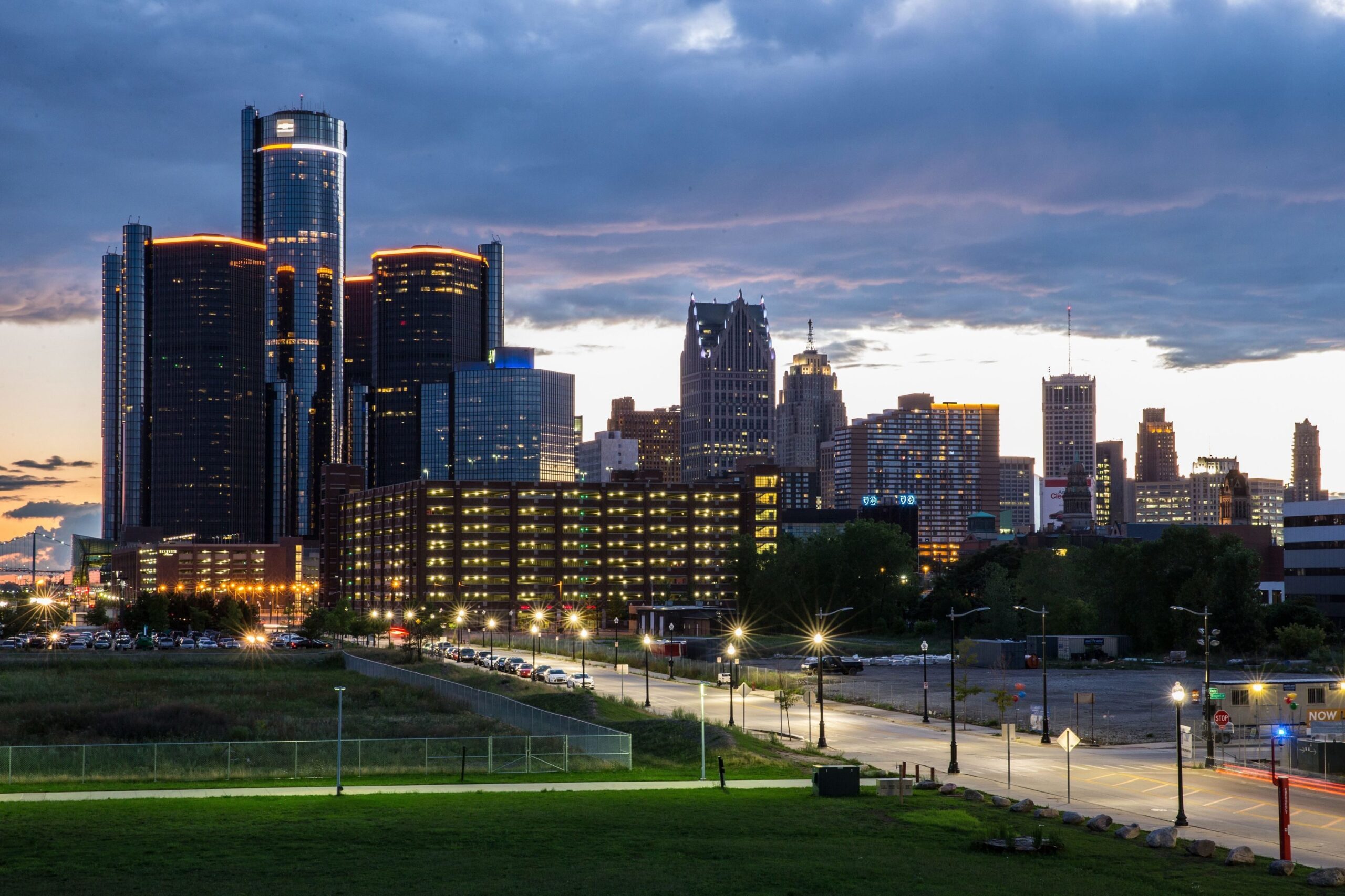
After working out of suburban Troy, Mich., offices for more than five decades, the Kresge Foundation plans to move its headquarters back to Detroit, where Sebastian Spering Kresge built his department store empire a century ago. The move will be accompanied by $180 million in funding directed to projects in the northwest section of the city over five years.
The foundation, which manages $4 billion in assets, moved to Troy in 1970, three years after the Kresge company offices and many of its stores were damaged in the Detroit Rebellion, a nearly weeklong period of riots. Later it moved to new offices, also in Troy, where it integrated the remnants of a 300-acre farm, updated with the latest green technology, near the former Kmart headquarters. In 1977, the Kresge company changed its name to Kmart.
The decision to move the foundation’s headquarters back to Detroit provides Kresge with an opportunity to work more closely with residents of Livernois-McNichols, an area of the city where it has invested about $200 million over the past decade, said Rip Rapson, Kresge’s president.
Rapson called the move more than just an office relocation. While he characterized Livernois-McNichols as one of the most stable, predominately Black middle-class areas of Detroit, he said many of its neighborhoods are “on the edge.”
With the headquarters move, the foundation plans to invest in beautifying vacant lots, developing commercial corridors, and providing rental and homebuyer down payment assistance as well as property tax relief.
“It’s an opportunity to work with neighbors, work with resident businesses, work with local institutions to figure out how our presence can enhance the neighborhood, help stabilize it, help make it more healthful, and help make it more vibrant over the long term,” Rapson said.
Bet on Urban Success
As Kresge returns to Detroit, the White House has targeted cities with Democratic mayors, including Washington and Chicago, by either sending in federal troops to fight crime or threatening to do so. Detroit’s mayor, Mike Duggan, is a lifelong Democrat who is in the Michigan gubernatorial race as an independent.
Rapson, a former deputy mayor of Minneapolis, said the new headquarters — on the former campus of Marygrove College, which Kresge helped transform into an educational facility for pre-k through college students — is a bet on urban success.
“Cities are the future of America, full stop,” he said. “If this administration doesn’t believe that to be so, I’m sorry but they’re wrong. Our move into Detroit is an attempt to reinforce the message that philanthropy can help in a time when resources are scarce.”
Kresge is the latest foundation to re-imagine its headquarters.
The Cleveland Foundation moved into the Hough neighborhood in 2023, with a goal of spurring development in an area long neglected by investors. During the same year, the Geraldine R. Dodge Foundation moved from Morristown, N.J., a city where the median income exceeds $100,000, to Newark, where residents are significantly less well off. And in attempt to connect more directly with Angelenos, the California Endowment plans as early as next year to break ground on a multi-use office, community, residential, and healing center a few blocks from its downtown Los Angeles office.
More on Place-based Philanthropy
-
Rural Philanthropy
Rural America Is Struggling. Where’s Philanthropy?
Foundations that have relocated to city neighborhoods give their staff a chance to be closer to people who are “proximate to the issues,” such as poverty, health care, and economic opportunity, said Elizabeth Dale, a professor at the Dorothy A. Johnson Center for Philanthropy at Grand Valley State University.
Situating itself in Livenois-McNichols makes it unnecessary for grantees and local experts to make a trek out to the suburbs for meetings.
“Now they’ll just go down the street or around the corner,” Dale said. “It removes one more barrier between the funder and grantee.”
The move to Detroit reflects Kresge’s commitment to the city, which was strengthened in the 2014 Grand Bargain, when Rapson and the leaders of the Ford, Knight, and other foundations collaborated to help the city, which was $18 billion in debt, emerge from bankruptcy. The foundation currently devotes about one-third of its grant making to Detroit-based projects.
Previously, much of the emphasis at Kresge was on supporting capital projects nationwide: aquariums, college campus projects, and art centers.
“We were a little bit agnostic about the extent to which that work landed in Detroit,” Rapson said. “It wasn’t particularly important for the foundation to have deep roots in Detroit, even though it considered Detroit its home.”