Lack of Money and Coordination Hobble Charities That Serve Veterans

By Suzanne Sataline
Contributor
June 24, 2012 | Read Time: 8 minutes
Weary after a decade of wars, a fresh generation of veterans is streaming home to fight new battles: ones financial, emotional, and cultural.
Nonprofit groups that work with them say that many former soldiers need money for housing or college, help finding jobs amid the worst labor market in generations, and treatment for psychiatric disorders that are contributing to a nearly one-a-day rate of suicides.
As the needs grow, so does the number of charities that serve their needs. But what’s lacking, say some experts, is money to finance most of those groups.
“A lot of nonprofits are starving,” says Paul Rieckhoff, executive director of Iraq and Afghanistan Veterans of America and a veteran of the Iraq war. Financing comes in “$10,000 grants, $15,000 checks. There are no multiyear, six-, seven-year commitments. It makes it hard. Most of us are living hand to mouth.”
Aside from lack of money, Mr. Rieckhoff and other leaders say they see too little coordination of charity efforts to meet the needs of the flood of men and women returning home, especially those coming back to small towns and rural areas that don’t have a local Department of Veterans Affairs office or hospital. Those vets depend on finding help online, but small nonprofits don’t always have the means to advertise their work and too often lurch between projects as they get money, unable to find consistent backing from foundations or corporate philanthropy.
“There’s no serious commitment from philanthropy to commit to this issue. It’s like AIDS 25 years ago,” Mr. Rieckhoff says. “Most of the big foundations don’t have a line item for veterans.”
The Robert R. McCormick Foundation is one of the few large funds to make grants specifically for veterans’ causes.
Eli Williamson, a former soldier who oversees the grants, started his job this spring, departing from the charity he created, Leave No Veteran Behind.
Now that he has been both a grant seeker and grant maker, he says he sees the difficulties in getting foundations involved in helping former service members.
Foundations, he says, care about helping veterans. But they often get thrown by the array of needs. For instance, a foundation that makes a grant for a housing program might find that it also needs to pay for mental-health care treatment to succeed, yet health care may not be part of the fund’s mission.
Also, he says, society hasn’t “created the proper way for veterans to reintegrate.”
He adds that “because it’s new, a lot of [foundations] are trying to figure out how to wrap their heads around how to help.”
Reaching Veterans
Some existing groups, such as the Intrepid Fallen Heroes Fund, have geared up their efforts to draw support.
This month the charity announced a $100-million fundraising campaign to build treatment centers for brain injuries and psychological disorders at nine U.S. military bases. It has started construction on two centers, using part of the $24-million it has raised so far.
But for many charities that serve veterans, the last big infusion of cash came from the Iraq Afghanistan Deployment Impact Fund, a donor-advised fund at the California Community Foundation.
Created in 2006 by David Gelbaum, an entrepreneur and philanthropist, the fund distributed all of its $246-million to nonprofits nationwide and was one of the first and largest philanthropies to focus on the needs of veterans and their families. Neither Mr. Gelbaum nor any other donor has pledged more money to the now-depleted fund.
Nancy Berglass, a senior fellow at the Center for a New American Security who ran Mr. Gelbaum’s fund, acknowledges that while just a few corporate and small foundations are fueling veterans’ nonprofits now, she disagrees with Mr. Rieckhoff that money is the central barrier to helping veterans.
“The problem is a lack of a strategic approach on the part of donors and many grant makers,” says Ms. Berglass.
Grant makers, she says, dole out money for homelessness, mental health, education, financial literacy, antipoverty efforts, and other areas without realizing that many veterans and their families use these very services.
“It won’t do any good to flood the marketplace with money if there’s no strategic approach with investing the money,” Ms. Berglass says. “It’s incumbent upon grant makers to educate themselves about the issues faced by veterans and military families, to think about the ways they might direct their funding so veterans and military families can be served most effectively.”
She shared those concerns in a report released in April, co-written with Margaret C. Harrell, another senior fellow at the Center for a New American Security.
“No government entity adequately stewards the transition from military service, none is concerned with the long-term prospect of veteran reintegration with civilian society, and none provides consistent guidance to the thousands of nongovernmental entities that inevitably shoulder the attendant public-health and social-welfare burdens,” said the report.
Among the many recommendations: Ask federal officials in charge of defense and veterans affairs to create an Office on Community Reintegration within the Veterans Administration that would outline the most effective ways to start and run community-based services for returning members of the military.
The goal, says Ms. Berglass, is to create a network of nonprofits in communities nationwide that work in housing, education, counseling, and job training and can coordinate with one another and build a system of programs for local service members.
That would be an efficient way to stretch resources, she says, and ensure that veterans who are getting help in, say, finding jobs, are also getting help with their finances and counseling.
In Georgia, the Augusta Warrior Project found that 40 percent of the 66,000 veterans living in and around the city weren’t using available local resources. The project organized a coalition of more than 50 nonprofits, along with state and federal programs, and built a holistic approach to veterans’ needs, Ms. Berglass says. In the last quarter of 2011, the project helped 65 veterans find jobs and 28 homeless vets move into permanent housing. It also regularly provides them with other kinds of support they need as they get back to civilian life.
Organizing Services
Leaders of the Lincoln Community Foundation, in Nebraska, were inspired by a call to action made in a 2010 keynote address to the Council on Foundations by retired Navy Adm. Michael Mullen, who was then chairman of the Joint Chiefs of Staff. The Lincoln Foundation brought together 500 representatives of religious congregations, charities, universities, and businesses to develop ideas for aiding local veterans.
The Lincoln fund helped establish a partnership between local groups and state agencies that organized a job fair and employment training for veterans. Working with experts in education and criminal justice, local leaders established a pretrial diversion program that aims to keep veterans with traumatic stress disorders or brain injuries who are charged with nonviolent criminal offenses out of jail. Another meeting gathered college officials to figure out what could be done about the high college dropout rate among veterans.
A future gathering will discuss housing and homelessness.
The foundation has distributed about $119,000 in small grants to help the efforts. The money hasn’t created new nonprofits but has helped local charities think more broadly and, in some cases, expand their efforts, says Barbara Bartle, the community foundation’s executive director.
“If there was more funding available, we could work at greater speed,” she says.
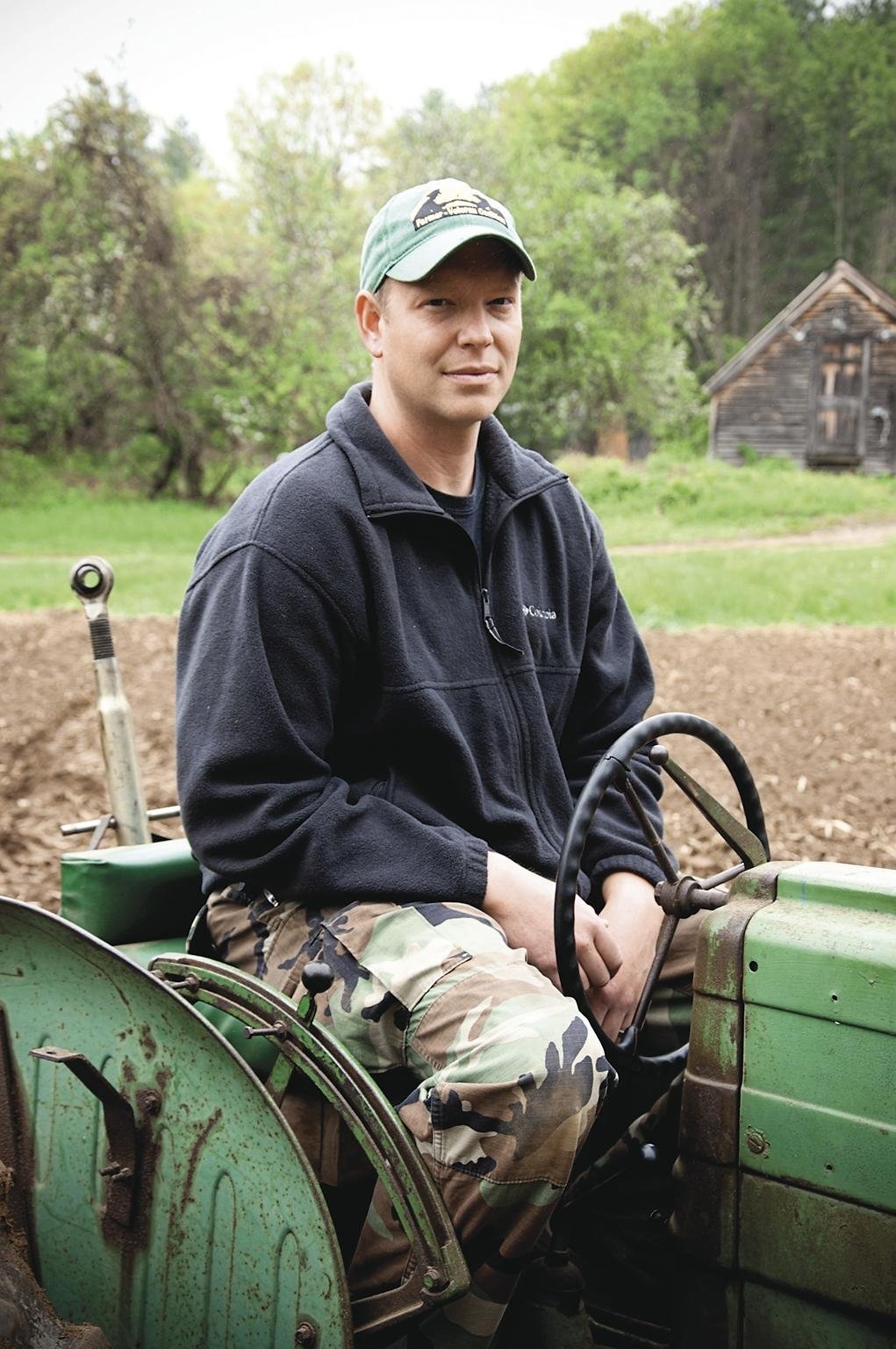
The foundation has given $18,500 to the Center for Rural Affairs, in Lyons, Neb., a national nonprofit that advocates for rural areas and farmers. The group has set up workshops to coach veterans on farming and buying land.
The center is working with the national Farmer Veteran Coalition, in Davis, Calif., to provide training, access to land, and other help for aspiring farmers, says Kathie Starkweather, director of the center’s rural opportunities and stewardship program. Many of the veterans who have attended are interested in running small operations, such as organic farms.
“The project is not huge, but we sure have gotten a lot of phone calls,” says Ms. Starkweather, who says they’ve helped about 25 veterans, most from Nebraska.
Stretching Resources
Other communities are trying to stretch resources by working with the Points of Light Institute, the Washington nonprofit. The institute is working with 16 communities nationwide that have committed to collaborating to better assist returning service members and sharing those ideas nationwide, says Tricia Thompson, Points of Light’s director of military initiatives. “It’s basically thinking about services in a holistic, community level,” she says.
Recent plans include a university that wants to offer mental-health counseling to veterans and a Georgia nonprofit that will train returning service members to work in construction, while providing them with a portfolio of services.
“It’s not just getting them a job but putting them in a supportive environment,” Ms. Thompson says.
Barbara Van Dahlen, a clinical psychologist in Bethesda, Md., is helping local groups offer better mental-health counseling to veterans and their families, especially in areas far from Veterans Administration hospitals. Her own nonprofit, Give an Hour, a national network of volunteers who provide counseling, is part of two pilot projects, in Norfolk, Va., and Fayetteville, N.C., that help mental-health groups learn how to coordinate their services.
Ms. Thompson says coordination is a far better approach than awarding money to nonprofits that don’t talk with one another.
“There is an urgency around meeting the needs,” she says. “If we get together and approach this together as a team, then I think we’ll get somewhere.”