Livestrong Loses Sponsors, Gains Others, and Jettisons Some Programs

By Doug Donovan
Contributor
August 11, 2013 | Read Time: 6 minutes
Austin, Tex.
The Livestrong Foundation’s licensing deals with corporations, most notably Nike, have been a hallmark of the charity’s innovative approach to generating revenue to finance its services to cancer patients.
But now that Nike is bowing out, the charity is pursuing new corporate supporters while cutting programs it can no longer afford. That is a big task because the group is involved in some 90 efforts, including services for cancer patients, fundraising races, corporate-product deals, and other programs.
When it tallied just how many projects were under way, says Doug Ulman, the charity’s chief executive, “we said, ‘That’s not going to work.’”
Prioritizing Efforts
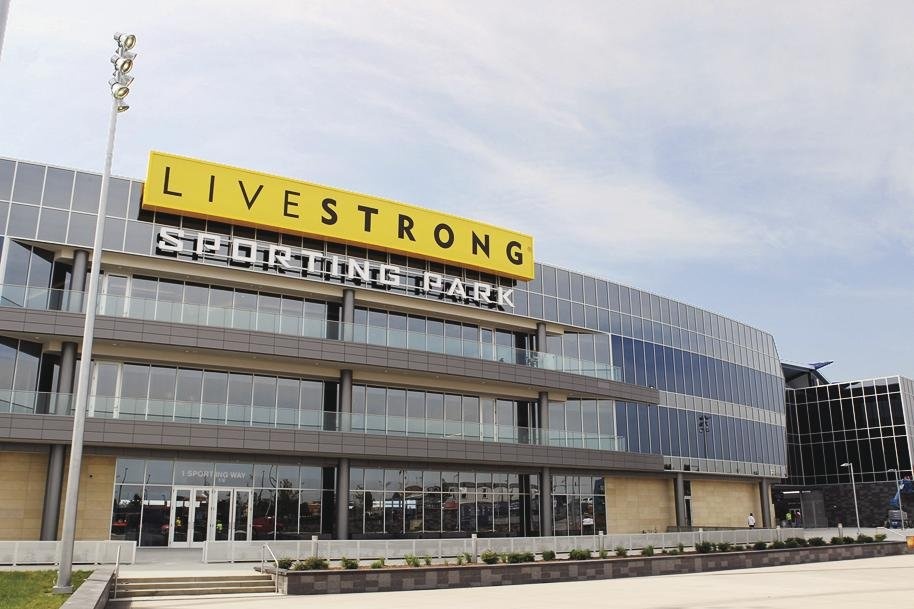
Over the years, corporations were so eager to be associated with the cyclist Lance Armstrong, the nonprofit’s founder, that they created Livestrong shirts, shorts, treadmills, sunglasses, sunscreen, a sports stadium bearing the charity’s name, and a mutual fund.
The charity also licensed the use of its name to a for-profit Web site, Livestrong.com, which generates traffic for the charity’s Web site, Livestrong.org, and revenue for its operations.
Livestrong connects cancer patients with organizations that provide help with treatment options, financial counseling, access to clinical trials, fertility preservation, insurance, transportation, and basic guidance on steps to improve their health.
It also lobbies for health-care legislation and supports a network of hospital research centers that study cancer survivors.
The plethora of efforts is one main reason the charity found widespread confusion about what it does when it conducted a poll of the public in December.
Groups that get “fat and rich” through support from well-heeled partners such as Nike and celebrities like Mr. Armstrong often struggle to stand out from exposure generated by such relationships, says Mark Lipton, a New School professor who studies nonprofit founders. Such charities often do not feel the need “to craft a very crystal-clear vision and make sure that all things are aligned to it,” he says.
That is Mr. Ulman’s job now. He recently asked top officials of the charity to determine which efforts should be scaled back, maintained, expanded, or eliminated.
They have been using a scorecard to judge each program according to its cost and how well it matches the charity’s image and mission, along with other measures.
“We said, ‘OK, pick your top 10 and your bottom 10,’” Mr. Ulman says. “The top 10 we knew we’re going to keep doing, and the bottom 10 we’re not going to do.”
Each week the executives jointly examine 10 programs, sometimes knowing only the numbers so as to help them objectively judge each program free of subjective allegiances.
“The efficiency becomes so obvious,” Mr. Ulman says. “That is such a healthy process. I take responsibility that we should have been doing that all along.”
‘Identity Problem’
The program-pruning has identified events, which generated $8.7-million last year, as an area for streamlining.
Biking, running, and triathlon races staged by sponsors cost the charity far less than the ones it runs on its own, and the sponsor-run events already make up nearly 65 percent of the total the charity earns from events. So Livestrong is considering cutting some of its events to rely more on those run by companies and other partners.
Livestrong has long relied on contractors to deliver its services. In 2012, the foundation paid 30 independent contractors more than $100,000, tax forms show.
From the start, the foundation has sought to support rather than duplicate efforts by other organizations focused on cancer survivors, says Howard Chalmers, a Livestrong board member and consultant from 1999 to 2001. “Did it get to the point that it confused people’s perception?” Mr. Chalmers asked. “Possibly.”
The charity struggled with communicating a clear mission from the start, he says, because “survivorship” spans so many issues—medical, financial, emotional.
Livestrong had enough money to keep its programs focused on helping survivors while its money-raising efforts centered on Nike and Mr. Armstrong. “The unintended consequence of that strategy was an identity problem,” he says.
Navigating Insurance
At the center of Livestrong’s support services are the 12 “navigators” at Livestrong’s call center in Austin. Those operators personally field calls and online questions from cancer patients. They then connect people with Livestrong contractors that help them negotiate problems with insurance companies and other issues. Last year 15,000 people called or sought help online, up from 8,000 when the call center started in 2009 and 11 percent more than in 2011.
The charity has contracts with 350 fertility clinics that provide discounts of 25 to 50 percent to patients referred by Livestrong.
Of the 2,000 people who inquired about how to preserve the sperm and eggs of cancer patients in 2012, 800 received discounts that saved them $4-million, says Melissa Stewart, director of navigation services.
Livestrong also provides free rides to treatment through a pilot program with an Austin nonprofit and awards grants to support healthy-living programs administered by the YMCA of the USA at 300 centers in 37 states. [Editor’s note: The previous sentence has been revised to correct the figures on the number of Y centers.] It also finances survivor research conducted at centers at seven hospitals, including the University of Pennsylvania.
New Sponsors
With donations and licensing fees declining, however, Livestrong needs to find new corporate supporters to generate the revenue necessary to maintain those programs.
Nike will stop selling Livestrong apparel this winter, and its annual $7.5-million contribution ends next year.
Other corporate donors—RadioShack, the helmet maker Giro, and Trek Bicycle Corporation—are already gone. A Kansas City soccer stadium last year discontinued its Livestrong name and stopped making payments for the right to use the name. And American Century Investments, which steers 40 percent of its profits to the Stowers Institute for Medical Research, stopped licensing the Livestrong name on one of its groups of mutual funds after seven years.
Mr. Ulman says he is optimistic that other companies will jump in to replace the losses. It has new marketing relationships with Car2go, Facebook, FTD, and UMB Visa.
“We’ve heard from so many companies,” he says. “There is opportunity.”
Products with the Livestrong name did not sell well in 2012—even before Mr. Armstrong admitted in January to lying about using performance-enhancing drugs.
Licensing and royalty fees generated $10.3-million last year, 35 percent less than in 2011, according to tax filings.
Greg Lee, Livestrong’s chief financial officer, attributed the drop to a one-time $2.6-million fee that inflated the 2011 total. That fee was generated when Demand Media, which runs Livestrong.com, became a publicly traded company. Still, Livestrong’s 2012 licensing revenue was the lowest in six years and was down 20 percent from 2010, its tax forms show.
“Given everything that’s out there, there’s probably a lot of people who are a little more hesitant to wear Livestrong blanketed across their chests,” Mr. Lee says.