

February 8, 2010 | Read Time: 2 minutes
The Decatur House has had many lives. Situated in a prime spot across from the White House in Washington’s Lafayette Square, it was first commissioned by Commodore Stephen Decatur Jr., a celebrated naval hero in the War of 1812. Over the years, it has served as an unofficial residence for secretaries of state, housed slaves, been used as a retirement home, stored Union Army uniforms, and played host to numerous diplomats.
Now the home’s current owner—the National Trust for Historic Preservation—has teamed up with the White House Historical Association to draw new guests to Decatur House.
The National Center for White House History at Decatur House, which opened last month, teaches children about the history of the White House, as well as housing historical documents and sponsoring research.
The collaboration was formed partially in response to the economic downturn. The trust owns the property and offers management and financial support to the center, while the association runs the educational programs and events.
Richard Moe, president of the trust, says such partnerships are increasingly important in the bad economy. “Visitation is not paying the way anymore. Historic sites have to reinvent themselves.”
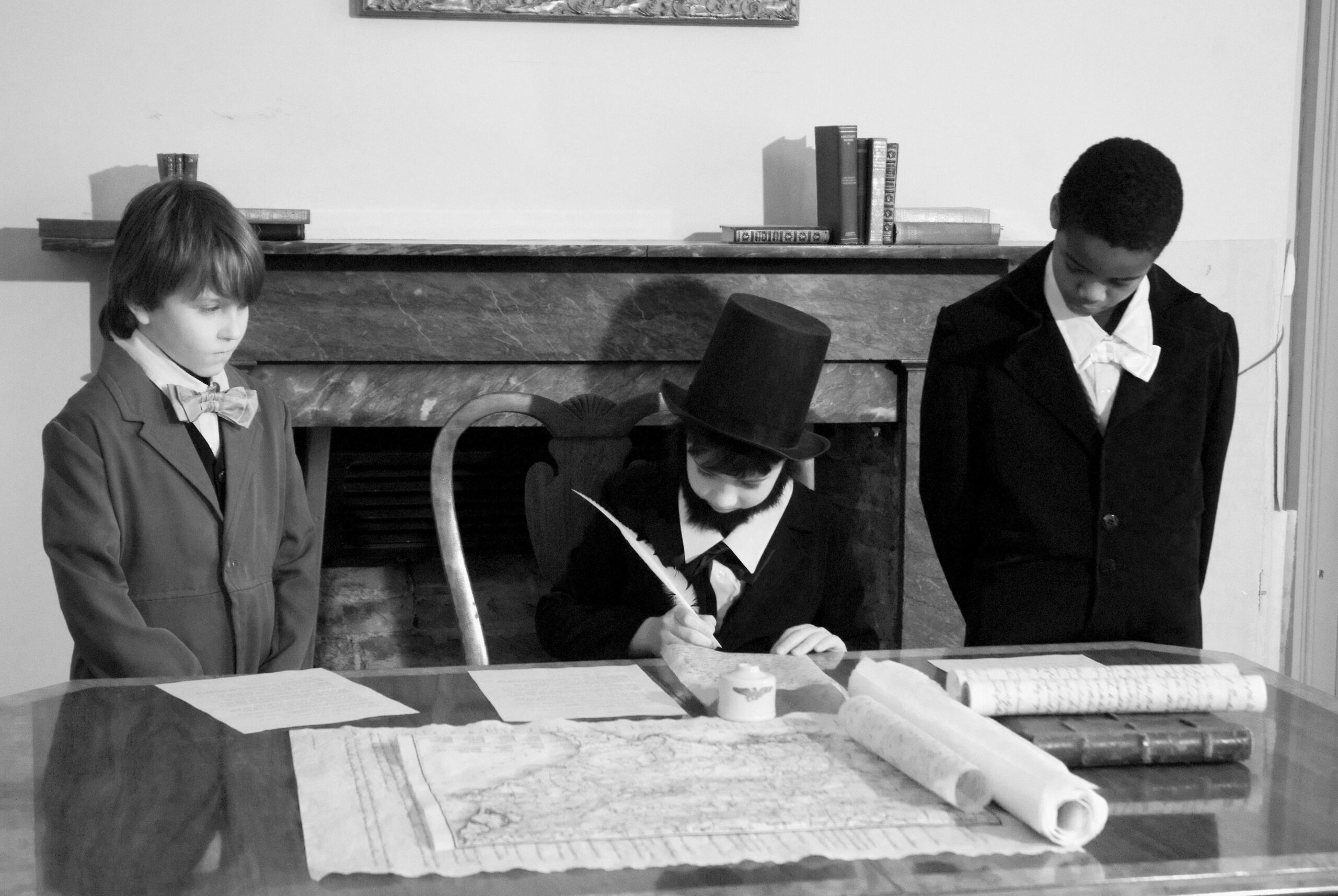
Through the center’s Paths to Freedom program, children in fourth through sixth grades get the opportunity to visit the center to re-enact events leading to the signing of the Emancipation Proclamation. Students are given scripts and biographies ahead of time and are expected to conduct research to prepare for their performances.
The association also provides the students with exercises and lessons right before the performance, period costumes, a DVD of the re-enactment, and acting tips.
Schools contact the association to participate in the free program, which shows early signs of becoming a popular attraction. So far, 4,000 children have participated in the pilot program, which takes place three days a week.
Here, students re-enact the events of January 1, 1863, by signing a replica of the Emancipation Proclamation.




