Local Stations Fear for the Worst in the Wake of NPR Controversy

By Lisa Chiu
Contributor
March 9, 2011 | Read Time: 4 minutes
As the NPR video controversy grabs headlines in Washington, public radio stations in local markets across the country are particularly worried that they will be the ones most hurt by the fallout.
Some Republican lawmakers have seized on the controversy to renew their call for an end to federal money for the Corporation for Public Broadcasting, which provides grants to public radio and television broadcasters.
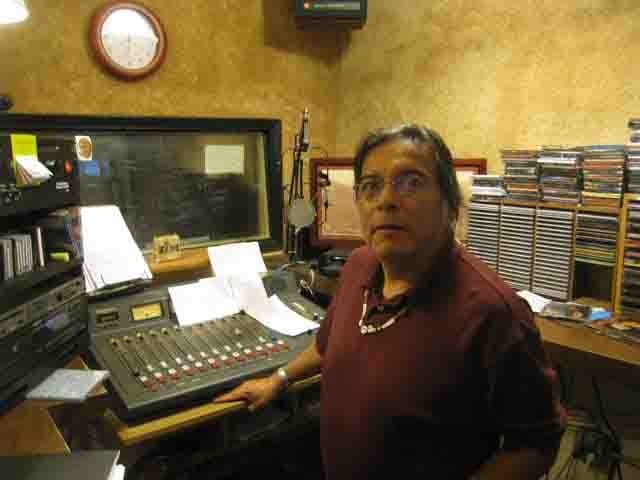
For NPR, which relies on federal money for only 2 percent of its revenue, the loss of federal money would not necessarily be devastating. But it would be for small stations like KIDE 91.3, a public radio station owned and operated by the Hoopa Valley Indian Tribe in rural Northern California. The station relies on federal money for 47 percent of its budget—a sum that totals $129,000 over two years.
Joseph Orozco, KIDE’s station manager, said a loss of federal money would mean that he would have to cut the station’s staff from four to three, and his station would probably go from broadcasting 24 hours a day to 12.
“It’s going to affect us greatly,” said Mr. Orozco, who notes that KIDE, which runs on solar power during the day, is the only radio station that provides local news and information in its region. “It could mean that we lose our electricity—all our operations feeds come out of the CPB grant. The station wouldn’t be able to be broadcast at night, and that’s when we do a lot of our live remote broadcasts of community activities.”
Larger stations are also concerned.
In Ohio, for example, although only 8 percent of Cincinnati Public Radio’s budget comes from the federal government, Richard Eiswerth, the station’s general manager, said a loss of federal money would lead to cuts in both staff and programs.
The controversy could also hurt the station’s ability to raise money on its own, since some listeners have already complained about the NPR video, Mr. Eiswerth said.
“We’ve been reminding people that we are not National Public Radio. We are a member station, but we are separate and distinct,” Mr. Eiswerth said. “We still stand by NPR’s tradition of excelling in news and cultural coverage, and we are hoping that they recognize that and that the mistakes or misstatements of a few people in management don’t reflect on NPR in general.”
‘No Political Agenda’
Because of the controversy and the nation’s political climate, local public radio stations need to make the distinction between Washington politics and what is happening in the cities and towns they serve, said Ginny Berson, vice president and director of federal services for the National Federation of Community Broadcasters, which provides fund-raising training to 170 small and rural stations.
“There is no political agenda behind public broadcasting except to provide information so that people can make their own decisions,” Ms. Berson said. “For smaller and rural stations, they are often the only local electronic broadcasting in their area, and they feel a very strong commitment to really providing that public service. They don’t think about their community in terms of right and left or conservative or liberal. The radio station may be the only ones covering local issues in depth, and they feel an obligation to fully present the issues from all sides.”
Other Attempts
Ms. Berson added that she has heard of at least two instances recently in which employees at member stations have reported being approached by people who wanted to donate large sums of money and attempted to trap them into making negative comments about Republicans and conservatives. She said those staff members were wary of the calls and did not take the bait.
Ronald Schiller, the former NPR fund raiser at the heart of the current scandal, wasn’t as careful—and local stations across the country are now left to deal with the damage. Mr. Eiswerth, of Cincinnati Public Radio, said it is human nature to be tempted to bend to potential donors, but fund raisers need to stand by strict ethics codes.
“This is a wound that is going to take some time to heal,” Mr. Eiswerth said. “We live in extremely polarized times right now, and those who may be opposed to public broadcasting … are going to be looking for any opportunity they can to highlight our failings. And it’s brought to a boiling point right now while Congress is debating continued funding.”