

August 25, 2020 | Read Time: 2 minutes
College Track’s mission is to help students of color as well as low-income and first-generation college students earn undergraduate degrees. The Oakland, Calif., charity starts working with young people in ninth grade to help them prepare. Then, when they get into college, the group provides advisory services, scholarships, and other support.
“We’re not just looking at one barrier that keeps our students from succeeding,” says Elissa Salas, CEO of College Track. “We understand that there are systemic barriers that have been put in place that prevent our students from being successful.”
The organization’s advisers largely work with college students remotely, so that part of the organization’s work stayed the same when Covid hit. But everything else had to move online. The group also provided devices and hot spots to students who needed them and opened its emergency fund up more broadly, for example, letting students who had lost their work-study jobs apply.
It’s been a lot of work, but College Track got some good news this summer. It is one of the 116 organizations that received substantial gifts from MacKenzie Scott, ex-wife of Amazon co-founder Jeff Bezos. Her giving since last fall has totaled nearly $1.7 billion.
The donation is one of the largest College Track has ever received, but it isn’t announcing the amount yet. The organization is in the quiet phase of a four-year, $150 million campaign. It’s figuring out how it can use the Scott gift as a challenge grant.
Salas says that as a first-generation college graduate and Latina, she was impressed by Scott’s emphasis on nonprofits with leaders who have direct experience with the issues their organizations tackle. In many cases, those leaders are people of color or LGBTQ.
“Oftentimes, philanthropy doesn’t follow us,” Salas says. She hopes Scott’s example might start to change that.
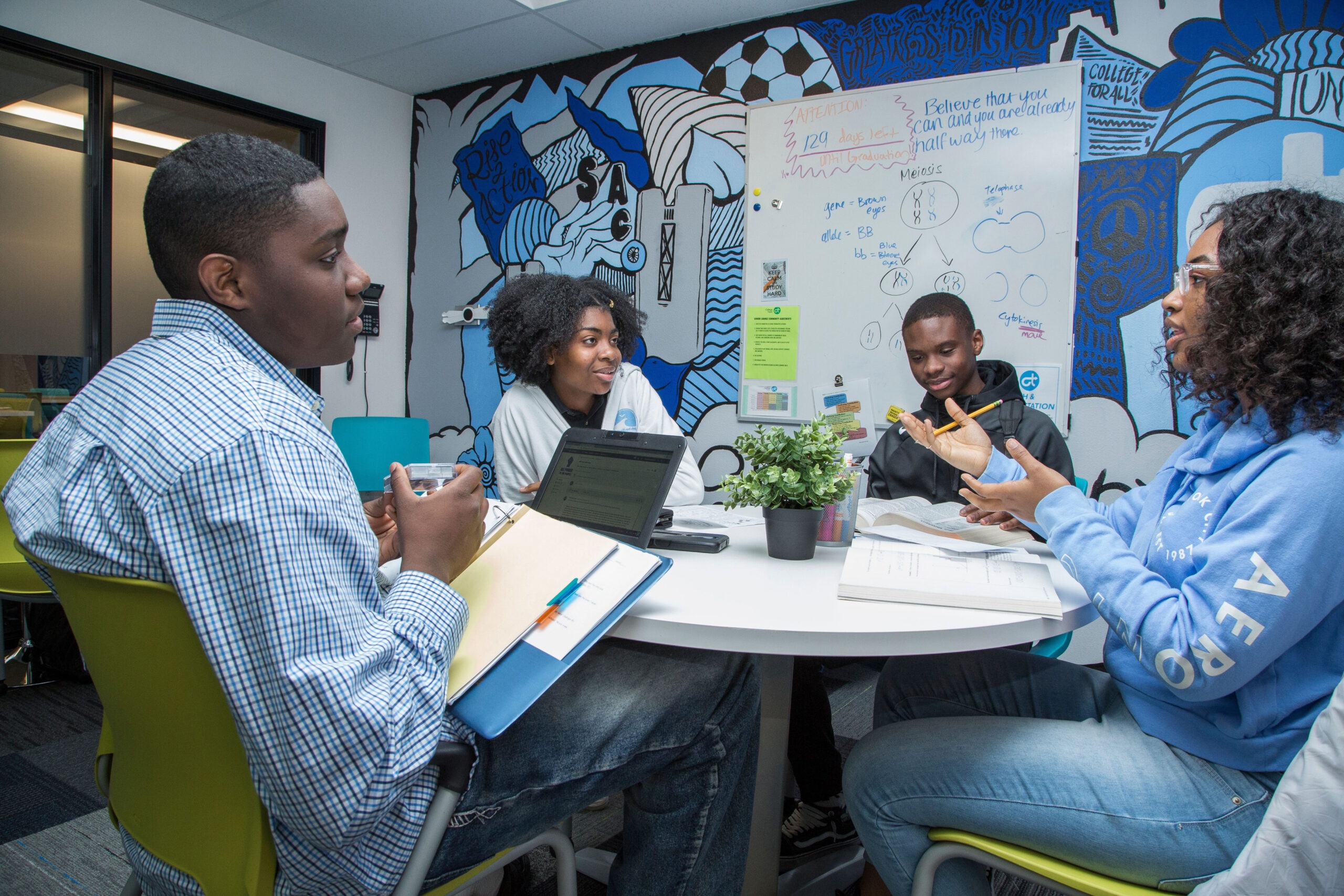
Here, high-school seniors studied for college admission exams in the College Track Sacramento center before the pandemic.





