

March 18, 2012 | Read Time: 5 minutes
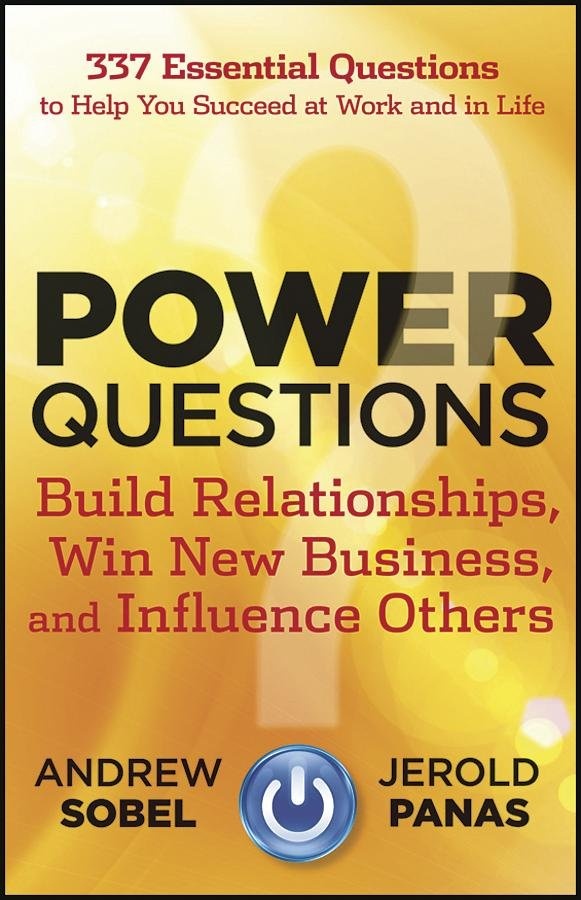
Nonprofit executives and others can do their jobs more effectively if they ask the right questions and learn how to listen, advises the veteran fund-raising consultant Jerold Panas in a new book he co-wrote with Andrew Sobel, a business consultant. In Power Questions: Build Relationships, Win New Business, and Influence Others, the authors show how to start provocative conversations. In an interview with The Chronicle, Mr. Panas discusses how the book is applicable to fundraisers and shares lessons from his 40-year career.
Why is the book about questions to ask?
I always talk about the importance of listening. It’s one of the most significant tools in a fundraiser’s tool chest. You can’t listen if you don’t know what questions to ask. I say at my seminars, “We’re not in the business of raising funds, we’re in the business of listening and probing.” It’s a book that’s very appropriate for fundraisers.
Every time you ask a question, it opens up a whole avenue for us and it helps us get inside the person. You raise more and more if you get to know what triggers a person and what’s in their heart. They want somebody calling on them that they feel understands them—that they’ve got joy and happiness, and problems and agony.
What questions have served you well in your career?
When I really want to get to know someone better, I ask, “Who has made the greatest impact in your life?” I tend not to ask direct questions that are yes or no.
I write about Alan Hassenfeld [a former head of Hasbro]. I have worked with Alan on about three or four projects in Rhode Island. His father founded Hasbro. One of the questions I posed to him was, “What gives you the greatest satisfaction in life?” He told me about playing Santa Claus and visiting patients at Christmastime at Hasbro Children’s Hospital, in Providence, and we talked about that. We were having dinner and he leans over to me and he says, “I want to tell you something that no one knows except mother and me, and now you. We’re making a large gift to health care in New York City.” None of that would have come out if I hadn’t asked my question. [Mr. Hassenfeld and his family later announced a $50-million gift to New York University Langone Medical Center.]
If you ask questions, people are willing to talk.
How did you start your career in fundraising?
I was pre-med and had to work my way through school. I took a job with the Pittsburgh YMCA. I was so lucky at an early age that they put me in charge of their fundraising program. I was 19 or 20. The day I was admitted to medical school I thought, I don’t want to be a doctor, I think fund-raising is the life. That led to being vice president of a college and that led to me starting my own firm. I have been in fund-raising my whole life. It’s been a great journey. A lot of people fall into it. I chose it.
Are fundraisers born or made? What qualities should they possess?
Integrity comes up first. Second, ability to listen. Some of the most important traits are inherent. You don’t take a class in integrity; you’re born with that. But listening is a skill that can be learned.
What advice can you offer to fundraisers?
Before every session, I always think about the questions I should ask. Usually I don’t get to ask all the questions. If I lead with the question of “Who has made the greatest impact in your life?,” that leads to five other questions I hadn’t planned. I don’t worry about structuring.
You talk 25 percent of the time and you listen 75 percent of the time. If you do all the talking, it’s your agenda. If you do all the talking, you find out nothing about the person that you’re visiting with. You get no clues. You get no ownership.
Read everything you can get your hands on. I find fundraisers don’t read enough. Read not only books within your profession. Read magazines that could be of help to you like Forbes, Town and Country—magazines that give you a broad outlook and a feeling for how some of the people you’ll be calling on live. Take part in professional societies, so you get to meet people. Get a mentor, get someone who is high in the profession and has done a great job, and attach yourself to them. Ask if you can use them as a mentor. As I talk to people who are successful in the field, they talk about the people who have been mentors to them.
When we’ve done a study on people who make gifts, I ask, “Tell me about the factors you like to see in a fundraiser that calls on you.” They mention enthusiasm, passion for the organization, energy, and empathy.
What challenges do you see ahead in fundraising?
In tough times people actually give more, but only to organizations they really care about, so the challenge is to get closer and closer to your friends and supporters. The big drop-off [turnover in fund-raising] is not necessarily they are not meant or properly prepared for the field; it may be that they’re at the wrong institution and need to find an institution that they can give their heart and spirit to.




