Master’s Programs in Fundraising Are Helping Students Meet Job Demands

By Ben Gose
Senior Editor
June 16, 2014 | Read Time: 7 minutes
As he pursued a master’s degree in fundraising management at Columbia University, Jonah Cardillo got a big-picture sense of how fundraising works—how efforts focusing on annual-fund drives, big gifts, bequests, and other kinds of donations work together to move a charity forward.
In a more direct benefit, the program led to Mr. Cardillo’s first fundraising job. One of his instructors helped him get freelance work writing grant proposals for a consulting firm. Later, another instructor hired him full time as a grant-proposal writer at the health-care organization where she worked.
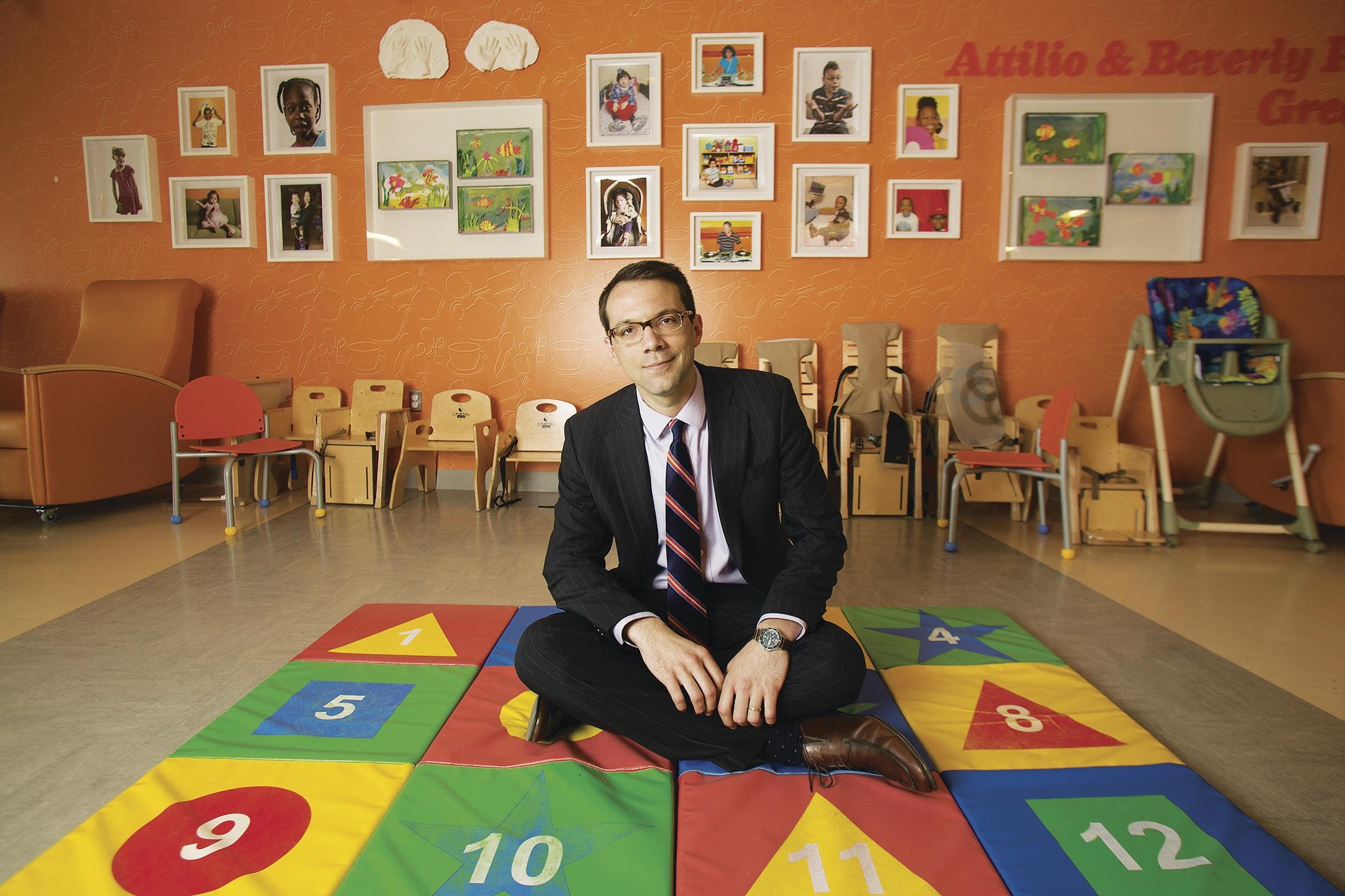
Mr. Cardillo, who graduated from the Columbia program in 2011, is now director of institutional gifts at St. Mary’s Healthcare System for Children, in Queens, N.Y.
The connections he made in the master’s-degree program were important in helping him land his first job, Mr. Cardillo says, and he believes the broad understanding of fundraising that he acquired will enable him to rise to a leadership position in the field.
“You get an academic grounding in fundraising and this connection to a network of professionals who are actively involved in advancing your career,” Mr. Cardillo says. “That combination is what is so great about these programs.”
New Interest
While programs in management of nonprofits have proliferated, there have been relatively few master’s-level programs in fundraising and philanthropy—perhaps a dozen or two nationally. Only a handful, including those at Saint Mary’s University of Minnesota and Indiana University, have been around for at least two decades.
But such programs are on the rise. More master’s programs in fundraising have sprung up in the past five to 10 years, at Columbia University, New York University, and the University of Denver, among other places.
LaGrange College, in Georgia, for instance, is offering a new master’s-degree program in philanthropy and development that can be completed in 25 months. Classes start next month, and the program requires that students spend two weeks on campus each summer.
David Garison, LaGrange’s provost, says the program will help students navigate fundraising jobs that have become increasingly complex and pressure-filled, as nonprofit leaders look for donations to make up for declining revenues from government and other sources.
Program directors say such master’s-degree programs are best suited to people with a clear sense of how they want to spend their careers. Many of the students have already been raising money professionally for a few years.
“If your dream job is to be deputy director for development at the Brooklyn Museum, we’re the right program for you,” says Lucas Rubin, who directed Columbia’s program before leaving this month for a new position. “If you want to be their executive director, maybe we’re not the best fit.”
The growth of the degree programs is part of the move toward greater professionalization in the field that began more than three decades ago with the introduction of credential programs like the certified fund-raising executive, or CFRE.
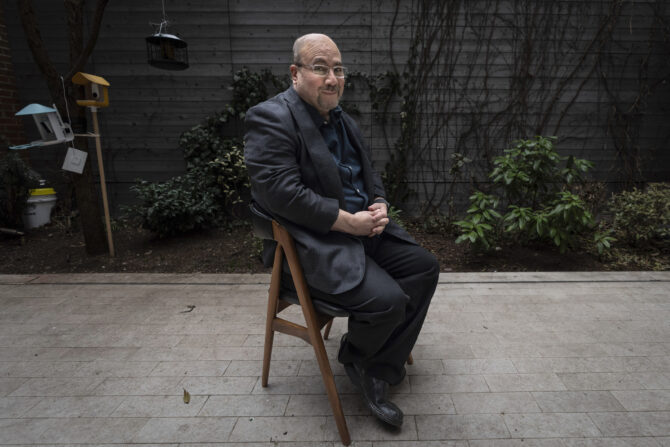
“When I started, if you had a good personality and some understanding of the cause, you could pretty much get yourself in the door,” says Doug White, a veteran fundraiser and the new director of Columbia’s program.
But Mr. White, author of the new book Abusing Donor Intent, expects advanced degrees to become increasingly common as fundraisers grapple with a growing body of knowledge.
“The fundraiser of the future will have an academic background to supplement his or her more personal skills,” Mr. White says. “Today, it’s a good idea. Tomorrow, it’s going to be essential.”
More Flexibility
Most of the master’s programs in the field take two to three years to complete, and the courses are often offered at night or online to meet the needs of working adults. Courses cover both practical and theoretical aspects, in areas like ethics, board governance, legal issues, financial management, strategic grant making, and cultivating and sustaining relationships with donors.
Some programs have adopted creative names that may in part be an effort to downplay the stressful core function of the job: asking for money. The University of Denver, for instance, offers a master’s degree with a concentration in what it calls “philanthropic leadership,” even though the program is intended for fundraisers.
“Fundraising has a negative connotation,” says Pat Greer, the program’s director. “Why would we want to scare them off right away?”
While students are typically required to complete 10 to 15 courses, programs in the field differ in significant ways. Saint Mary’s requires a capstone research project; students at New York University must complete a for-credit internship with a local nonprofit; Columbia University sends students to South Carolina to raise money on behalf of the Charleston Parks Conservancy, to give them experience in fundraising outside the hubbub of New York.
Costs vary widely, in part reflecting the location and reputation of the institutions. Tuition and fees at New York University and Columbia cost $55,000 to $60,000, while a master’s at the University of Denver runs $26,700 and the program at Saint Mary’s costs about $15,000.
Several of the programs offer financial aid, and some students are able to get their employers to help. Jim Ollhoff, director of the Saint Mary’s program, estimates that roughly a third of the program’s students receive tuition assistance from their employers. Mr. Cardillo, who worked in events planning at Columbia while pursuing his master’s degree, had most of his tuition covered by the university, thanks to its tuition-assistance policy.
Other charities can’t or won’t foot the bill, in part because they are not sure what kind of return they will get on their investment.
“One of the problems is that a lot of fundraisers don’t stick around for long,” says Mr. White.
Attracting Young People
The master’s-degree programs initially attracted midcareer professionals seeking to accelerate their climb up the ladder. But in recent years, students have increasingly been younger, as the challenging job market prompts new college graduates to look for ways to burnish their résumés.
The average age of students in the Columbia program was 34 in 2006, Mr. Rubin says. Now it’s 26.
“Advanced degrees are like the bachelor’s degrees of old,” Mr. Rubin says. “If you know your career is going to be in development, why not do a tailored, targeted degree?”
Andrea Groner, 26, has just finished her first year in Indiana’s master’s program. She decided she wanted to spend her career in the philanthropic world after a two-year stint in AmeriCorps helping a variety of charities. She worked on an urban garden, renovated homes for low-income residents, and counseled drug addicts.
“When I was covered in mud and still happy about being able to help somebody, that’s when I realized nonprofit work was calling to me,” she says.
She picked Indiana and its bachelor’s-degree program in philanthropic studies, possibly the only one of its kind nationwide, a program steeped in research on donors and giving. Ms. Groner completed her bachelor’s in 2013 and expects to finish her master’s next spring.
“In today’s job market, it’s in everyone’s best interest to have an advanced degree,” she says. “This will make me all the more employable.”
International Appeal
International students are increasingly interested in master’s programs in fundraising. The philanthropic industry in the United States is one of the most advanced in the world, and other countries are looking to adopt the American approach. About a quarter of the students in the Saint Mary’s program are from Canada.
Naomi Levine, director of NYU’s George H. Heyman Jr. Center for Philanthropy and Fundraising, says many European governments are too strapped to provide museums and other arts institutions with the level of support they once did, forcing groups to rely more heavily on philanthropy.
“They’re sending people overseas to ‘learn the American model,’ ” Ms. Levine says.
This summer, NYU is offering for the first time a program for international students that features 10 weeks of intensive study at the NYU campus, with additional online coursework.
Ms. Levine built a powerhouse fundraising operation at NYU after joining the institution in the 1970s. Today’s fundraisers need an advanced education, she believes, but their interpersonal skills still hold the key to success.
“I tell students that one of the most important aspects of being a good fundraiser is being an interesting human being,” Ms. Levine says. “You have to read a lot, you have to be able to talk about issues. Fundraising depends on relationships, just as much as on the program that you’re selling.”
Holly Hall contributed to this article.