October 14, 2025 | Read Time: 12 minutes
Foundations have poured $1.2 million into the Nonprofit Repositioning Fund, in Philadelphia, this year — more than twice as much as in 2024. The increasing interest is directly tied to the many local charities that may not have adapted soon enough — and were forced to close, says Lindsay Kijewski, the fund’s director.
In the past 18 months, the University of the Arts, the Greater Philadelphia Coalition Against Hunger, Visiting Nurses Association of Greater Philadelphia, and Benefits Data Trust have all shut down — in some cases, suddenly.
“We’ve had a tough go in Philadelphia,” says Kijewski, who is also a partner at SeaChange Capital Partners, which helps nonprofits facing financial challenges. “There’s now a lot more interest and appetite for putting into place safeguards and graceful off-ramps for nonprofits that are no longer financially viable or may be facing existential challenges, so that the majority of services that remain can stay intact.”
The challenges faced by charities nationwide have created a booming market for intermediaries like the Nonprofit Positioning Fund that can help charities explore options, including mergers. The increased activity is happening at the national level, within cities, and among specific categories of charities:
- America’s Promise Alliance, a membership organization for 150 youth-serving charities, recently started a mergers and acquisitions practice with Monitor Deloitte to help its members explore combinations. Eighteen percent of the alliance’s members are currently in active M&A negotiations, and 38 percent think they’ll be involved in a transaction by the end of the year, according to a survey conducted by Monitor Deloitte. More than three-quarters — 77 percent — say they’re exploring strategic partnerships.
- Civic Strength Partners, an intermediary focused on matchmaking for civil-society and international-development charities, started up this summer. The catalyst was concern about international-aid cuts in the United States and Britain, combined with a survey that found that 60 percent of the responding charities had reserves that would cover their expenses for only six months or less. “It’s a difficult time,” says Cheri-Leigh Erasmus, co-CEO at the Accountability Lab, a nonprofit that works globally to promote accountability and good governance, and a co-founder of Civic Strength Partners. “Some of the CEOs I talk to have their backs against the wall. They’re trying to figure out what’s next in an ecosystem where the dust hasn’t quite settled.”
- The Sustained Collaboration Network, a funder network that encourages nonprofit mergers and other collaborations (the Nonprofit Positioning Fund is a member) has grown to 11 member funds throughout the country since 2018, and new funds are in the works. “Our network is seeing a huge increase in inquiries from foundations that want to support nonprofits and their communities in whatever way is needed for them to be resilient,” says Emily Fischer, the network’s managing director. “I’m meeting several times a month with new community foundations who are getting board approvals to set up funds in their communities.”
- Nonprofit GPS, a new national program that will offer free consulting to help nonprofits navigate today’s disrupted revenue landscape, was started this month by Nonprofit Financial Commons and BDO’s Nonprofit & Grantmaker Advisory practice. “It’s very possible that the whole sector will look very different three years down the line than it does right now,” says Ruth McCambridge, a co-founder of the effort. “Who knows how it will play out, but we’re there to kind of be on the journey with people and support their creativity.”
Foundations are backing intermediaries as they realize that they can’t “fill the holes” left by federal and state cuts, says John MacIntosh, a managing partner at SeaChange.
“People use terms like radical restructuring or strategic transformation,” he says. “There are funders who are optimistic, as we are, that at least in some cases if you organize yourself right and you have the right resources, for at least some groups, you can help them successfully explore and complete that transformation.”
‘Before You’re in Trouble’
When challenges abound — as they do now — the nonprofit sector would seem ripe for mergers and program transfers. But mergers don’t happen naturally in the nonprofit world as they do in the for-profit sector, where the quest for increased profit drives most mergers.
In the nonprofit world, the way money flows — from foundations and wealthy donors to charities — can actually inhibit mergers. Amid ongoing scrutiny of the power dynamics in philanthropy, foundations often hesitate to even float the idea, not wanting to be seen as dictating strategy to their grantees. On the flip side, many charities are reluctant to go to their donors for support in seeking a merger partner — out of a fear that the donor will flee at the first sign of perceived weakness.

Mike O’Brien, chief executive at America’s Promise Alliance, says the leaders of charities in the alliance asked him to create the merger practice in part because they wanted to explore the option without the risk of going to their funders. “They were saying, ‘We don’t necessarily want our funders involved at the beginning of this process, when we don’t even know if this is going to be real or not,’” O’Brien says.
America’s Promise is creating a digital database that will include the areas in which charities are working — and details about what programs organizations might be looking to export or import — to help its members find merger partners more easily.
“There is renewed enthusiasm about joining forces in proactive ways before you’re in trouble,” O’Brien says. “There’s just a greater humility in the sector right now and a little less territoriality, for lack of a better word. And then there’s a peer effect. If you see a bunch of other organizations doing it, then it makes it even more comfortable for you to be open to exploring those kinds of options.”
PeerForward, an America’s Promise member, recently held a three-day retreat with consultants from La Piana Consulting, which specializes in mergers, to envision what the next decade might look like.
“When you have a headwind of financial instability, and when you have the market shifting in the college-access arena, with people questioning the value of a post-secondary degree, what does that look like for us, and how do we get ahead of it?” says Gary Linnen, PeerForward’s CEO.
Civic Strength Partners has raised $1.5 million from several foundations for its matchmaking service — and it has heard from nearly 200 organizations that are struggling financially. Civic Strength is partnering with consultants and others with merger expertise, including the International Senior Lawyers Project, which provides pro bono legal services.

“Our main aim is getting people services as quickly as we can so that they can make these decisions from a place of power and in alignment with their organizational values and mission, versus it getting to a fire sale,” Erasmus says.
Measurement Lab, or M-Lab, a research consortium that collects and shares internet performance data, turned to Civic Strength while looking for its third home since its founding in 2008. M-Lab spent its first decade at New America before becoming a fiscally sponsored project at Code for Science & Society in 2019.
Google has borne a lot of the consortium’s costs to date, but the company is looking to change its support model going forward, according to Georgia Bullen, the chair of M-Lab’s advisory committee. M-Lab’s concerns aren’t all financial — it’s also hoping to find a merger partner that is better aligned with the consortium’s focus on internet infrastructure and measurement.
Civic Strength is helping M-Lab explore a potential merger with a partner that Bullen declines to name, since the consortium is still in the process of determining whether the combination makes sense.
“The process has been hard and challenging,” Bullen says, “but I can tell that we will end up somewhere stronger and more resilient in the end, even if it’s not with the organization we are talking to now.”
MacIntosh at SeaChange says he’s having more conversations with charities that aren’t currently in distress but see trouble coming to their doorstep in the not-so-distant future.
“They’re open to having discussions in advance that might make them stronger by coming together with others,” MacIntosh says. “They just know, in this moment, that something might happen, and they don’t want, at that point, to say, ‘Oh my goodness, this thing has happened, and now we don’t have time to do the thing that would have made us stronger.’”
Chapters and Affiliates
The chapters and affiliates of big national charities have been consolidating for decades — sometimes due to financial pressures and at other times due to a leadership gap when a longtime CEO departs.
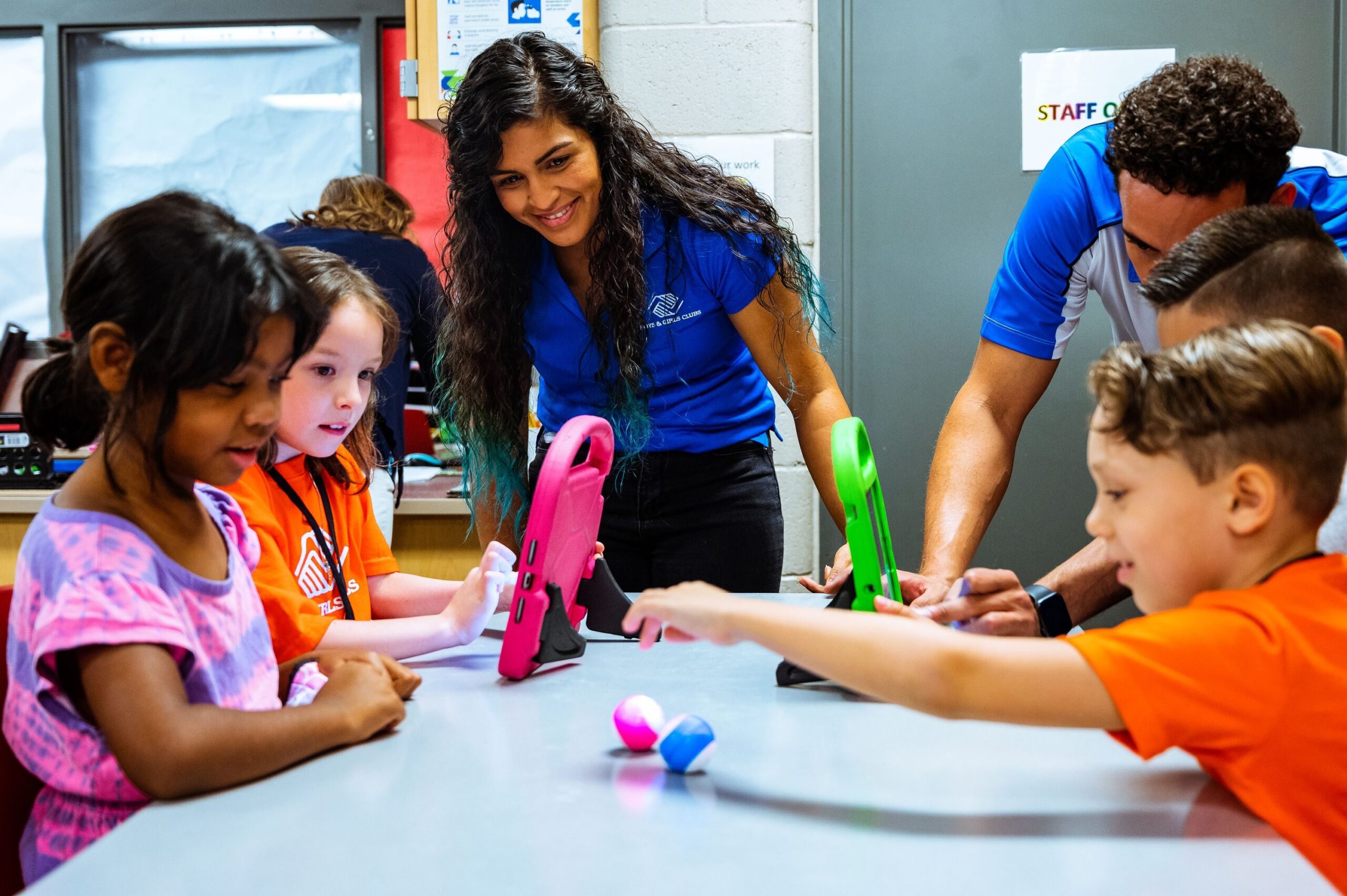
At the Boys & Girls Clubs of America, 140 mergers have been consummated in the past eight years. Club leaders initially had a lot of anxiety over mergers, fearing job cuts and the cutthroat approach common in the for-profit world, says Maurice Bostick, national director of innovative operating models. Now many leaders are seeing the upside of larger, combined clubs — including the potential to hire more specialists as costs are spread over a larger revenue base, he says.
Expectations for clubs are higher than in the past, Bostick says, especially around topics like addressing mental health. Bigger clubs following mergers might be in a better position to invest in a full-time social worker to address mental health, he says. Fundraising also typically improves when clubs merge — instead of a single person handling everything, a bigger fundraising team might be able to hire employees specializing in areas like events, corporate giving, and major gifts.
“Our role is to come in and facilitate conversations and help them think through what are the right questions that they should be asking,” Bostick says. “We give enough information so that then the boards can go back and make a decision as to what direction they want to go in.”
Charity boards always have the ultimate say, even as intermediaries and consultants encourage expansive thinking about options. CEOs and board chairs need to normalize talk about mergers — and even wind-downs — so that boards explore the full range of opportunities, says Kate Harris, a consultant specializing in nonprofit strategy and collaborations.
“It should be appropriate to say, ‘Do we need to continue to exist? Are we still relevant?’” Harris says. “You should be able to ask that question, and it should be OK for somebody in the room to say ‘No’ or ‘I’m not sure.’”
Spinning out assets to another nonprofit can be a quicker and easier process than a full merger, and it’s something that can be coupled with a wind-down, says Hilda Polanco, who leads BDO’s Nonprofit & Grantmaker Advisory practice and is one of the leaders of Nonprofit GPS.
“The term ‘responsible closure’ is one that we hear people feeling comfortable with,” Polanco says. “And often there’s an understanding that it would be really helpful to transfer some of the assets — or intellectual property — to save that legacy that’s been created.”

‘Honest Conversations’
Given the complexity of mergers, some argue that fiscal sponsorship is a better solution for a challenged organization, rather than pinning hopes on a merger. The traditional route is for organizations to go through fiscal sponsorship — in which accounting, payroll, human resources, and more are handled by a supporting nonprofit entity — before becoming an independent nonprofit. But the process can also go in reverse — with struggling charities giving up their nonprofit status to save money by being fiscally sponsored.
“In my mind, there’s a dangerously myopic focus on M&A,” says Thaddeus Squire, co-founder of Social Impact Commons, which advocates for fiscal sponsorship and connects projects with sponsors. Mergers take a lot of time and money, he says, and boards can become indecisive because of their emotional ties to their existing organization.
“Are we doing this two or three organizations at a time or by magnitudes of 100?” Squire asks. “If we’re serious about addressing the current crisis, fiscal sponsorship is going to be necessary.”
But when time and planning funds are available, a well-structured merger can increase efficiency and impact.
The Ralph C. Wilson Jr. Foundation, which has a program focused on parks and trails, has supported both the Michigan Trails and Greenways Alliance and the Michigan Trails Fund for years. When both charities came to the foundation seeking capacity grants in 2023, the foundation asked the two groups to explore ways they could work together.
The foundation is planning to spend down by 2035, and it wanted to make sure the organizations were in good financial health by then, says J.J. Tighe, senior director of the foundation’s parks and trails initiative.
Wilson ultimately gave the two groups a $360,000 grant through an intermediary, the Michigan Fitness Foundation, and Harris’s firm helped the charities explore how they could work together.
Late last month, after two years of work, the two charities finalized their merger.
“The most important element is providing space for them to have honest conversations about their long-term sustainability and financial health,” Tighe says. “And not predetermine what that outcome looks like.”